Sub-Total: $0.00

Medical Caps for Nurses: Style and Hygiene Guide
What if the smallest part of your uniform was actually the secret to finishing a twelve-hour shift with more energy and less physical strain? Your headwear does more than meet a protocol; it’s a functional tool for focus and a canvas for your professional identity. For many healthcare providers, finding the right medical caps for nurses is the difference between a shift spent adjusting slipping fabric and one spent in total clinical flow.
You’re familiar with the frustration of hair escaping during a procedure or the sharp ache behind your ears from mask elastics. It’s difficult to maintain your best when you’re battling trapped heat or feeling invisible in standard gear. You deserve a solution that protects your patients while supporting your own well-being; it’s about professional pride and physical readiness. Discover how the right medical cap balances professional hygiene with personal style to elevate your clinical performance and comfort. We’ll explore how to choose breathable fabrics, secure every hair type, and use your gear to express the person behind the profession.
Key Takeaways
- Master the balance between clinical hygiene and personal expression to ensure your hair remains secure and your environment sterile.
- Identify the ideal silhouette for your specific hair type to eliminate tension and keep you focused on patient care.
- Evaluate performance fabrics to find the perfect blend of breathability and durability for your most demanding shifts.
- Utilize ergonomic features in modern medical caps for nurses to alleviate ear pain and reduce physical fatigue from daily mask-wearing.
- Transform your daily uniform into a source of professional pride and a vital component of your clinical self-care routine.
Beyond the Wardrobe: The Essential Role of Medical Caps in Healthcare
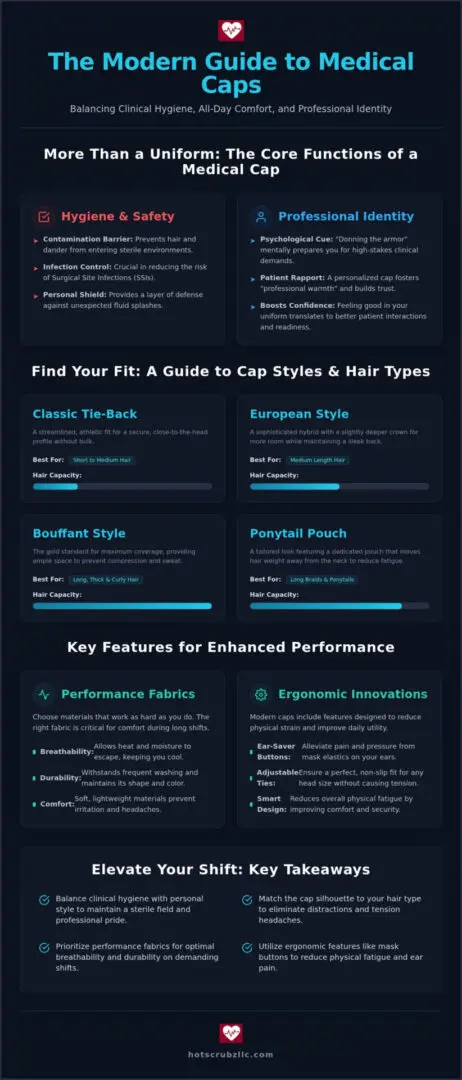
Medical caps for nurses are far more than a simple uniform requirement; they are specialized head coverings engineered for clinical hygiene and meticulous hair management. At its core, the primary clinical purpose of a cap is to act as a barrier, preventing hair and dander from contaminating sterile environments. In a fast-paced unit, your focus needs to be on the patient, not on a stray strand of hair falling into your field of vision. By securing your hair completely, you create a controlled, professional environment that prioritizes safety above all else.
Choosing your gear is a ritual that marks the transition into your clinical role. Donning your cap is like “donning the armor,” a psychological cue that prepares you for the high-stakes demands of a twelve-hour shift. We’re seeing a significant industry shift away from flimsy, disposable paper caps toward sustainable, reusable fabric options that offer better durability and a more polished look. This evolution makes your headwear a seamless extension of your essential nurse accessories, ensuring you’re equipped with tools that work as hard as you do.
Hygiene and Safety Standards
In the operating room and other critical care areas, medical caps for nurses play a vital role in reducing the risk of surgical site infections (SSIs) by containing potential contaminants. Beyond protecting the patient, these caps serve as a personal shield for you, providing an essential layer of defense against unexpected fluid splashes during procedures. They keep you clean and dry, allowing you to maintain your composure during intense moments. Proper attire management dictates a clean-to-dirty flow where you secure your head covering before entering the patient care area and remove it only after the risk of contamination has passed.
The Psychology of Professional Identity
Personalizing your uniform with a high-quality cap does more than just meet a dress code; it builds an immediate bridge of rapport with your patients. Modern healthcare is moving away from a strictly “clinical sterile” aesthetic toward a feeling of “professional warmth,” where your personality is allowed to shine through your gear. When you feel confident in your appearance, that self-assurance translates into better patient interactions and a stronger sense of readiness. Visibility and style aren’t just about looking good; they’re about the professional pride that comes from wearing a uniform that reflects your dedication and expertise, which can be further personalized with custom logos from Transfers by MoreTranz.
Selecting Your Silhouette: A Guide to Medical Cap Styles and Hair Types
Finding the right silhouette is about matching the physics of your hair to the pace of your shift. When you choose medical caps for nurses that align with your hair density and length, you prevent the distraction of slipping fabric and the dull ache of tension headaches. A well-fitted cap creates a cohesive profile when paired with high-performance scrubs scrub tops, ensuring your entire uniform moves as one unit during emergencies. Your headwear should feel like a natural extension of your body, providing security without sacrifice.
The Classic Tie-Back and European Styles
The tie-back remains a staple for those with short to medium hair who prefer a streamlined, athletic fit. It offers a close-to-the-head profile that feels secure without adding unnecessary bulk. For those needing more room, the European style acts as a sophisticated hybrid; it provides a slightly deeper crown for medium hair while maintaining a sleek back. To ensure comfort for a full twelve hours, tie the straps at the base of the skull rather than the crown. This allows the fabric to grip the occipital bone, providing a stable fit that won’t pull on your hairline.
Bouffant and Ponytail Caps for Long Hair
Managing long hair or thick, curly textures requires a silhouette that respects volume rather than compressing it. The bouffant style is the gold standard for maximum coverage, providing ample space so hair isn’t forced against the scalp, which helps prevent sweat buildup. If you prefer a tailored look for long braids, the ponytail cap features a dedicated pouch. This design shift moves the weight of your hair away from your neck, reducing physical fatigue over time. Always tuck your hair from the bottom up to eliminate flyaways and keep your clinical field clear. Choosing the right silhouette is the first step toward a more comfortable shift. You can explore our diverse range of medical caps to find the style that best supports your clinical routine.
Security during rapid movement is non-negotiable in a high-stakes environment. A cap that is too loose becomes a hygiene risk, while one that is too tight disrupts your focus. By selecting a style designed for your specific hair type, you ensure that your gear stays in place from the first morning huddle to the final hand-off. This attention to detail reflects your professional standards and honors the demands of your workday.
Performance Fabrics: Balancing Breathability with Long-Shift Comfort
Fabric choice is the primary factor in preventing “nursing cap fatigue,” that heavy, trapped feeling that often sets in mid-shift. In high-intensity units, heat retention can quickly lead to discomfort and a loss of focus. You need materials that breathe with you while standing up to the rigors of high-temperature industrial laundering. Balancing medical caps for nurses between natural fibers and synthetic blends is the key to lasting clinical endurance. Your gear should support your performance, not hinder it with excess weight or trapped moisture.
The Case for Premium Cotton
High-thread-count cotton offers unmatched breathability and a soft, skin-friendly touch that synthetic fibers often lack. 100% cotton is the gold standard for non-stretch medical caps because it provides a stable, structured fit that allows for maximum airflow. This natural fiber excels at thermoregulation, helping you stay cool when the unit gets busy and warm when the hospital air conditioning kicks in. It’s a reliable choice for those who prioritize a classic, crisp feel that remains comfortable from the first morning huddle to the final hand-off.
Satin-Lined Caps for Hair Protection
When your shift demands constant movement, performance blends offer the flexibility you need. These fabrics often incorporate antimicrobial and moisture-wicking technologies to keep you dry and fresh in high-perspiration environments. The added “give” of a stretch blend allows for a more custom fit that adapts to your head shape without causing pressure points. Quick-dry properties ensure that your gear is ready for the next day, maintaining its shape and performance wash after wash.
Choosing the right fabric is about honoring your own physical needs throughout the day. Whether you prefer the natural breathability of cotton or the technical advantages of a performance blend, your choice impacts your overall well-being. By selecting high-quality materials, you invest in your own comfort and readiness. This attention to detail allows you to focus entirely on the care you provide, knowing your uniform is working just as hard as you are.
Functional Innovations: Buttons, Ties, and Daily Utility
Small design details transform a standard garment into a high-performance tool. The post-pandemic era accelerated the ergonomic evolution of medical caps for nurses, moving from simple hair coverings to sophisticated pieces of equipment designed for total support. When you’re managing a heavy patient load, you need gear that anticipates your physical needs and reduces the friction of a long shift. Integrating your headwear into your broader system of clinical organization ensures you’re always prepared and organized for the next task.
Evaluating the durability of your closure system is essential for long-term use. Elastic ties offer a flexible, quick fit that adapts to rapid movement, while high-quality ribbon ties provide a more customizable, secure anchor that doesn’t lose tension over time. Choosing the right closure means your cap stays exactly where you put it, shift after shift. This stability allows you to move with confidence, knowing your professional profile remains crisp and secure during emergencies.
The Mask Button Revolution
Constant pressure from mask elastics often leads to “mask ear” and significant skin irritation, creating a persistent source of physical distraction. The solution lies in caps featuring strategically placed buttons that act as anchors for mask loops. By shifting the tension from your delicate skin to the durable fabric of your cap, you eliminate a major pain point of modern nursing. This simple innovation allows you to maintain your clinical focus without the nagging discomfort of raw skin or ear fatigue. It’s about removing barriers to your performance so you can provide the best care possible.
Sweatbands and Forehead Comfort
Vision must remain clear during procedures, and built-in terry cloth sweatbands play a vital role in managing moisture. These absorbent layers prevent perspiration from reaching your eyes, ensuring your field of vision is never compromised in high-intensity units. Additionally, a padded forehead area helps prevent the dreaded “cap lines” that often linger long after your shift ends. Look for designs utilizing flat-lock seams to prevent pressure points, especially if you regularly wear headlamps or surgical loupes. These subtle design choices prioritize your comfort and visibility throughout the day.
Your uniform should be a source of ease, not a cause of irritation. You can shop our collection of functional medical caps to find the perfect balance of utility and style for your workday.
Elevate Your Shift: Why Premium Headwear Matters for Professional Pride
A well-chosen cap completes your professional armor. It serves as the final, intentional piece that signals your readiness for the day ahead. When you view your uniform as a tool for self-care and confidence, you shift the perspective from a mandatory requirement to a personal choice that supports your well-being. You deserve gear that reflects your dedication. High-quality medical caps for nurses provide the durability and style necessary to maintain this sense of pride through even the most challenging rotations.
Your headwear should be a source of empowerment. When you feel polished and prepared, your clinical performance follows suit. This isn’t just about meeting a hygiene standard; it’s about the psychological readiness that comes from wearing apparel that fits your body and your identity. Choosing premium gear is an act of professional respect for the work you do and the person you are behind the scrubs.
Building Your Professional Collection
Creating a versatile cap wardrobe allows you to rotate your headwear, which significantly extends the lifespan of each piece while ensuring peak hygiene standards. Rotating your gear prevents the wear and tear of daily laundering from impacting the fabric’s integrity too quickly. You can match your cap to your unit’s culture while still maintaining a touch of personal flair that makes you feel seen. Consider coordinating your headwear with your compression socks for nurses or specific scrub sets to create a cohesive, intentional look. Investing in premium headwear means you’re choosing fabrics that won’t fade or shrink, keeping your professional image sharp for the long term.
The HotScrubz Difference
At HotScrubz, our commitment to quality, style, and empathetic design is rooted in a deep understanding of the long-shift reality. We focus on the emotional and physical well-being of the healthcare professional, ensuring every item we offer acts as a supportive ally in your workday. Our curated selection of medical caps for nurses represents the pinnacle of modern clinical style, balancing aesthetic appeal with the functional endurance you require. We believe that those who dedicate their lives to the care of others deserve apparel that honors that dedication. It’s time to elevate your uniform with pieces that work as hard as you do.
Your uniform is more than just clothing; it’s a reflection of your commitment to excellence. By choosing gear that prioritizes your comfort and identity, you empower yourself to face every challenge with self-assurance. Explore the HotScrubz collection of premium medical caps and discover how the right fit can elevate your entire shift experience.
Master Your Clinical Style
Your uniform is a testament to your expertise and a shield for your well-being. By selecting the right silhouette for your hair type and prioritizing breathable, high-performance fabrics, you transform a clinical requirement into a personal advantage. You’ve learned how functional innovations like mask buttons can eliminate physical fatigue, allowing you to focus entirely on patient care. These small adjustments create a significant impact on your daily comfort and professional readiness.
Investing in quality medical caps for nurses is an investment in your own endurance and professional pride. HotScrubz designs are built for 12-hour shift comfort, utilizing premium fabrics that breathe and maintain their vibrant color wash after wash. Our empathetic designs recognize the person behind the profession, ensuring you feel seen and supported during every hour of your workday. You dedicate your life to the care of others; you deserve apparel that cares for you in return.
Elevate your professional look with premium medical caps from HotScrubz LLC. Step into your next shift with the confidence and comfort you’ve earned.
Frequently Asked Questions
Why do nurses wear medical caps instead of just tying their hair back?
Tying hair back only manages length; medical caps for nurses provide a complete barrier against hair and dander shed. This is essential for maintaining a sterile environment and preventing contamination during procedures. Beyond hygiene, caps offer a psychological cue that you’re entering a high-stakes zone. They ensure that stray strands don’t distract you or compromise patient safety during intense clinical moments.
How often should I wash my fabric medical caps?
You should wash your fabric caps after every single shift to maintain peak clinical hygiene. Because these garments act as a barrier against fluids and airborne contaminants, treating them as single-use items between launderings is vital. Use high-temperature settings to ensure deep cleaning and sanitize the fibers. Rotating through a collection of several caps ensures you always have a fresh, sterile option ready for your next rotation.
Are satin-lined medical caps better for my hair?
Yes, satin-lined caps are significantly better for hair health because they reduce friction and moisture absorption. Traditional cotton can pull at delicate strands, leading to breakage and frizz after a long shift. The smooth surface of satin allows your hair to glide, preserving curls and protecting textured hair types. This innovation ensures you don’t have to sacrifice your personal hair care routine while adhering to strict hospital hygiene protocols.
What is the best medical cap style for very long or thick hair?
The bouffant style is the most effective choice for high-volume hair because it provides ample space without compression. If you prefer a more tailored look, the ponytail cap features a dedicated pouch that securely holds long braids or buns. Both styles prevent the tension headaches often caused by stuffing thick hair into smaller silhouettes. Choosing these designs ensures your hair remains fully contained while keeping the weight off your neck.
Do medical caps really help with ear pain from masks?
Caps equipped with side buttons provide immediate relief by acting as anchors for your mask elastics. Instead of the elastic pulling on the sensitive skin behind your ears, the tension is transferred to the durable fabric of the cap. This simple ergonomic adjustment prevents skin breakdown and reduces the physical distraction of ear pain. It’s a game-changer for those working twelve-hour shifts where mask-wearing is a constant requirement.
Can I wear a medical cap in any hospital department?
While caps are standard in the OR and ICU, many other units now encourage them for added hygiene and professional identity. Always check your specific facility’s dress code policy, as some departments have specific color or style requirements. In non-surgical areas, fabric medical caps for nurses provide a way to express personality while maintaining a tidy, professional appearance. They bridge the gap between clinical necessity and personal comfort in diverse healthcare settings.
How do I choose the right size medical cap?
Most premium caps are designed as one size fits most with adjustable ties or elastic toggles for a custom fit. To find your ideal match, consider the volume of your hair rather than just your head circumference. If you have thick hair, look for styles with deeper crowns or expandable pleats. A well-sized cap should feel secure enough to stay in place during movement but loose enough to prevent pressure marks on your forehead.
What is the difference between a bouffant cap and a ponytail cap?
A bouffant cap is a rounded, voluminous style that covers the entire head and accommodates any hair length or texture. In contrast, a ponytail cap is a more structured silhouette with a specific pouch at the back to hold gathered hair. While the bouffant offers maximum airflow and space, the ponytail cap provides a sleek, athletic profile. Your choice depends on whether you prefer a loose, airy fit or a more tailored, secure feel.