Sub-Total: $0.00

Ultimate Guide to Compression Socks for Nurses
Imagine finishing a grueling 12-hour rotation without the familiar, heavy throb in your calves or the visible swelling around your ankles. For many healthcare professionals, choosing the right compression socks for nurses is the difference between a shift defined by physical struggle and one defined by professional performance. You dedicate your day to the movement and recovery of others, yet your own ease often takes a backseat to the relentless demands of the ward. It’s a quiet burden; a cycle of fatigue that begins with a heavy step and ends with an exhausted trek to your car.
We believe your gear should work as hard as you do. This guide shows you how high-performance hosiery can transform your workday into a showcase of endurance and style. You will discover how graduated pressure promotes better circulation and protects your long-term vascular health, keeping you light on your feet from first rounds to final handovers. We will explore the technical benefits of medical-grade support and how to find styles that match your favorite scrubs, ensuring you feel empowered, protected, and perfectly polished throughout every shift.
Key Takeaways
- Understand how graduated pressure supports your natural venous return to prevent shift-end swelling and long-term fatigue.
- Master the art of decoding mmHg levels to select the ideal compression socks for nurses that match your specific physical demands.
- Prioritize technical design elements like moisture-wicking fabrics and seamless toes to eliminate irritation and maintain focus during high-stakes moments.
- Protect your investment by following specialized care routines that preserve the elasticity and performance of your high-performance medical hosiery.
Why Every Nurse Needs Compression Support
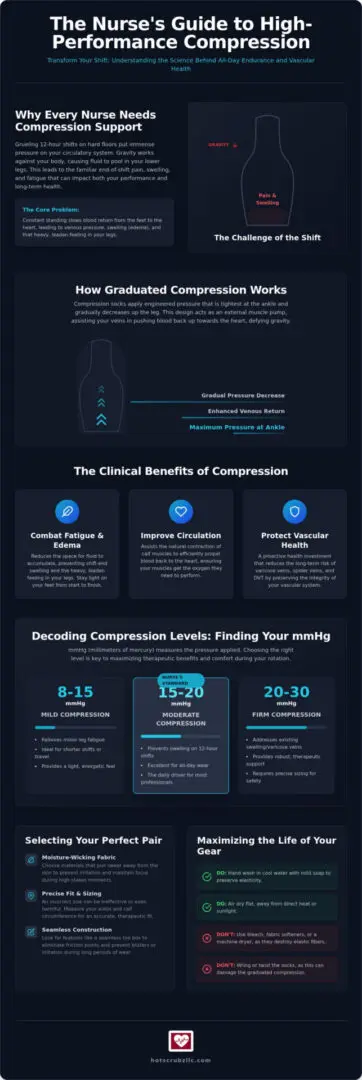
Standing for hours on hard hospital floors puts immense pressure on your circulatory system. Your heart works tirelessly to pump blood down to your feet, but returning that fluid against the force of gravity is a different challenge altogether. This is where compression stockings become essential clinical gear. Unlike standard hosiery, specialized compression socks for nurses use graduated pressure to bridge the gap between physical ease and professional responsibility. The fabric is tightest at the ankle and gradually loosens as it moves up the calf, supporting your body’s natural rhythm.
This design acts as an external muscle pump. It supports the natural contraction of your calf muscles to squeeze the veins and propel blood back toward your heart. When you’re constantly moving between patient rooms, this mechanical assistance ensures your circulation remains efficient. It prevents the sluggishness that often sets in by mid-shift, allowing you to maintain your focus and energy. We call this clinical endurance. It’s the ability to finish a long rotation with the same poise and readiness you had at the start.
Combatting Leg Fatigue and Edema
Gravity is a constant adversary during a 12-hour rotation. When you stand or walk for extended periods, fluid naturally begins to pool in the lower extremities. This leads to edema, the clinical term for the visible swelling and puffiness you might notice around your ankles after a busy day. It isn’t just an aesthetic concern. It’s a primary driver of that heavy, leaden feeling in your legs that makes the walk to your car feel like a marathon. High-quality compression socks for nurses provide the structural support needed to keep this fluid moving. By maintaining consistent pressure, they reduce the space available for fluid to accumulate in the tissues, ensuring you feel light and capable until the final handover. To further support your physical recovery, using a mobility app like Flexor to stretch after your shift can help release the muscle tension that builds up during long hours on your feet.
Decoding Compression Levels: Finding Your mmHg
Understanding the numbers on your gear is the first step toward reclaiming your physical comfort. When you shop for compression socks for nurses, you’ll see a numerical range followed by the letters mmHg. This stands for millimeters of mercury, the same unit of measurement used to track blood pressure. In the context of hosiery, it indicates the specific amount of pressure the fabric applies to your limbs. Choosing the right level ensures you receive the maximum therapeutic benefit without feeling restricted or uncomfortable during a long rotation.
Graduated compression is the anatomical tapering of pressure to promote upward blood flow. This specific engineering is what separates professional gear from standard athletic wear. Research into Graduated compression stockings confirms that this tapering is vital for preventing blood from pooling in the lower legs. By applying a consistent and measured force, these garments help your vascular system overcome the weight of gravity. It’s a sophisticated way to support your body’s natural processes while you focus on patient care.
Mild vs. Moderate: The Daily Drivers
Finding your ideal pressure level depends on your daily activity and personal health history. For most healthcare professionals, the 15-20 mmHg range is the standard choice for a 12-hour shift. It provides enough support to prevent swelling while remaining comfortable enough for all-day wear. If you are working a shorter shift or simply want a touch of extra energy for your commute, the 8-15 mmHg range offers a lighter feel. These daily drivers focus on maintaining a sense of readiness and ease throughout your routine. You can explore a curated selection of socks and stockings to find the right balance for your next shift.
Firm Compression: When to Level Up
Sometimes, your body requires a more robust intervention to maintain clinical endurance. The 20-30 mmHg level is classified as firm compression and is often recommended for those addressing existing swelling or varicose veins. Because the pressure is more intense, precision in sizing is non-negotiable. A sock that is too tight can impede circulation; one that is too loose will fail to provide the necessary support. When you level up to firm compression, take the time to measure your calves accurately. This ensures your gear functions as a stylish ally rather than a distraction. High-performance hosiery should feel like a supportive second skin, empowering you to move with confidence and poise.
Selecting Your Pair: Fabric, Fit, and Style
Choosing the right compression socks for nurses involves more than picking a color. It’s about the technical synergy of fabric and fit. High-performance blends typically utilize nylon and spandex for their superior recovery and stretch. These materials ensure the sock retains its graduated pressure throughout a long shift without sagging or losing its shape. A critical design feature to look for is the seamless toe. Standard seams can cause friction, leading to blisters or irritation during high-intensity movements. By eliminating this bulk, you protect your feet from the small distractions that can derail your focus.
Sizing is where many professionals falter. While shoe size is a helpful starting point, your calf circumference is the most accurate predictor of a perfect fit. If the sock is too loose at the calf, it won’t provide the necessary venous support; if it’s too tight at the top, it can actually restrict flow. Referencing guides on Compression stockings and socks can help you understand how different classes of support should feel against your skin. Measure your calf at its widest point in the morning, before any shift-related swelling occurs, to ensure your gear acts as a supportive ally rather than a hindrance.
Breathability and Temperature Control
Managing temperature is vital when you’re moving between climate-controlled wards and high-activity environments. Synthetic blends are specifically engineered to wick moisture away from the skin, preventing the uncomfortable “hot foot” sensation. Modern designs often incorporate mesh venting zones along the top of the foot to encourage airflow. This breathability is most effective when paired with high-quality slip resistant nursing shoes. Together, they create a comprehensive system that manages moisture, heat, and stability, allowing you to move with grace and confidence.
The Aesthetic Ally: Matching Your Scrubs
Your professional attire is an extension of your personality. While your uniform might be neutral, your socks offer a canvas for self-expression. Choosing bold patterns or vibrant colors can provide a subtle psychological boost during a challenging shift. It’s a way to maintain your individuality while adhering to professional standards. These items are more than just hosiery; they are essential nurse accessories that bridge the gap between clinical necessity and personal style. When you look as good as you feel, your confidence radiates, impacting both your performance and your patient interactions.
Maximizing the Life of Your Compression Gear
Investing in high-quality compression socks for nurses is a commitment to your long-term comfort and professional endurance. However, the technical fibers that provide that essential squeeze are delicate. Heat is the primary enemy of spandex and elastic components. When exposed to high temperatures, these materials become brittle and lose their ability to snap back into place. To maintain the therapeutic integrity of your gear, you must treat your hosiery with the same precision you bring to your clinical duties. Protect your comfort; preserve your investment.
Longevity begins with a smart rotation. We recommend following the “rule of three” for your work week. By maintaining at least three pairs of compression socks for nurses, you ensure that one pair is on your legs, one is being cleaned, and one is resting. This rest period is vital. It allows the elastic fibers to fully contract and recover their shape between shifts, preventing premature stretching and ensuring consistent support every time you step onto the ward. A rested fiber is a resilient fiber.
Washing and Drying Best Practices
Your cleaning routine should prioritize fiber protection. Always wash your technical hosiery in cold water to prevent heat damage. Using a mesh laundry bag is a simple but effective way to prevent snags from zippers or hooks during the cycle. You should also avoid fabric softeners at all costs. These products leave a waxy coating on the fibers that degrades the elastic over time and reduces the moisture-wicking capabilities of the fabric. While a low-heat tumble dryer setting is sometimes acceptable, air drying is the safest route to ensure your gear remains in peak condition for as long as possible.
When to Say Goodbye to Your Favorite Pair
Even with meticulous care, the physical demands of your environment will eventually take their toll. You should regularly inspect your socks for signs of wear that indicate a loss of performance. Look for sagging around the ankle or a general loss of tension when you pull them on. Pilling in the fabric is another sign that the structural integrity is beginning to fail. Compression socks typically require replacement every six months to maintain therapeutic pressure levels. If your current set feels less supportive than it did on day one, it’s time to refresh your collection with new medical hosiery that restores your professional poise and readiness.
Elevate Your Shift with HotScrubz Clinical Gear
Your shift is a marathon of empathy and expertise. At HotScrubz, we believe the person behind the profession deserves more than just functional attire; you deserve a wardrobe that uplifts your spirit while protecting your body. While high-quality compression socks for nurses provide the essential foundation for physical endurance, they are only one part of a larger clinical ensemble designed for excellence. We’ve positioned ourselves as a one-stop shop for the modern clinician, ensuring that every layer you wear contributes to your overall well-being and professional pride. When you feel supported from the ground up, you can focus entirely on the care you provide.
Choosing the right gear is an act of self-care. It’s a recognition that your health is just as important as the health of your patients. By integrating premium compression socks for nurses into your daily routine, you are making a proactive investment in your future comfort. We are here to ensure that investment looks as good as it feels. Our curated selection bridges the gap between medical necessity and lifestyle-oriented design, allowing you to walk into every room with a sense of readiness and poise.
Beyond the Sock: A Complete Professional Look
True professional poise comes from a cohesive aesthetic. When your technical hosiery matches the polished finish of your uniform, you project a sense of authority and self-assurance. We’ve designed our collections to ensure a seamless synergy between our high-performance socks and our premium scrub lines. For those looking to complete their professional transformation, our Guide to Scrubs Scrub Tops offers deep insights into choosing pieces that balance modern style with clinical functionality. Beyond the basics, we offer medical caps for nurses and nurse tote bag for work options to ensure every detail of your workday gear is as purposeful and stylish as you are. A unified look doesn’t just change how others see you; it changes how you see yourself.
Our Commitment to Your Comfort
We stand as your stylish and supportive ally in a high-stakes workplace. Our commitment goes beyond the fabric; it’s about acknowledging the unique rigors of your environment and providing solutions that make your routine feel lighter. We understand that a 12-hour shift demands more than just endurance; it demands a sense of personal ease. We invite you to join a community of healthcare professionals who refuse to compromise on their appearance or their physical well-being. With national shipping available for easy access, your next shift upgrade is closer than you think. Explore our current collection today and discover how the right combination of apparel can redefine your professional experience and elevate your clinical excellence.
Take the Next Step Toward Clinical Endurance
Your physical well-being is the engine that drives your professional excellence. By understanding the science of graduated pressure and prioritizing technical fabric blends, you’ve taken the first step toward transforming your 12-hour rotation. Choosing high-quality compression socks for nurses isn’t just about managing today’s fatigue; it’s a long-term investment in your vascular health and career longevity. When you pair the right support with a consistent care routine—which can include advanced wellness tools like a molecular hydrogen generator canada to help manage systemic inflammation—you ensure that every shift begins with readiness and ends with poise.
As an empathetic ally to healthcare heroes, we’re dedicated to providing style-focused clinical accessories that never compromise on performance. Our gear is specifically designed for 12-hour endurance, helping you feel as light on your feet during final rounds as you did at the morning huddle. It’s time to reclaim your comfort and elevate your professional appearance with tools that work as hard as you do. Elevate your shift comfort with HotScrubz compression gear and discover the difference that premium support makes. You dedicate your life to caring for others; it’s time to let your gear care for you.
Frequently Asked Questions
Do compression socks actually help nurses during long shifts?
Yes, they provide vital support by assisting your circulatory system in moving blood back toward your heart. By applying consistent pressure to the lower legs, compression socks for nurses prevent blood from pooling in the ankles and feet. This mechanical aid reduces the heavy, aching sensation that often follows a long rotation. Many healthcare professionals find that wearing them results in significantly less leg fatigue and a more energized recovery after work.
What is the best compression level for a 12-hour shift?
The most frequently recommended range for a standard 12-hour rotation is 15-20 mmHg. This moderate level of pressure offers a balanced experience, providing enough support to prevent swelling without feeling overly restrictive during constant movement. It’s the ideal “sweet spot” for most clinicians. If you have specific vascular concerns or experience significant edema, you might consider stepping up to a firmer 20-30 mmHg level after consulting with a professional.
Can I wear compression socks every day?
You can safely wear compression socks for nurses every day that you are on your feet. Consistent use is actually the most effective way to protect your vascular health and prevent the early development of spider veins. To keep your gear effective, ensure you have a rotation of at least three pairs. This allows the technical fibers in each pair to rest and recover their original shape between your busy shifts.
How do I know what size compression socks I need?
You should prioritize your calf and ankle measurements over your standard shoe size for the most accurate fit. Use a soft measuring tape to find the circumference of your ankle at its narrowest point and your calf at its widest point. It’s best to take these measurements in the morning before any shift-related swelling begins. A precise fit ensures the graduated pressure is applied exactly where your body needs it most.
Should I wear compression socks to sleep after a long shift?
Generally, you don’t need to wear compression gear while sleeping unless a medical provider has specifically instructed you to do so. When you are lying down, your heart doesn’t have to work against gravity to return blood from your lower limbs. Removing your socks at night allows your skin to breathe and your legs to rest naturally. Save the specialized support for the hours when you are upright and active.
What is the difference between graduated compression and regular socks?
Regular socks provide uniform pressure across the foot, while graduated compression is engineered with a specific pressure gradient. The fabric is tightest at the ankle and gradually becomes looser as it moves up the leg. This anatomical tapering is what encourages blood to flow upward against gravity. Regular socks lack this medical-grade engineering and cannot provide the same level of circulatory support or fatigue reduction required for clinical endurance.
How often should I replace my nursing compression socks?
You should plan to replace your technical hosiery every three to six months to maintain therapeutic effectiveness. Over time, the elastic fibers and spandex components naturally begin to break down from repeated wear and washing. Even if the socks still look good, they may have lost the specific mmHg pressure required to support your veins. Refreshing your gear regularly ensures you always have the high-performance support your career demands.
Can compression socks be too tight?
Yes, if your socks are the wrong size or an inappropriately high pressure level, they can become uncomfortable or even restrict circulation. You should feel a firm, supportive hug rather than a painful squeeze. Signs that your socks are too tight include numbness, tingling, or deep indentations in your skin that don’t fade quickly. Always check the manufacturer’s sizing chart to ensure your gear functions as a supportive ally rather than a distraction.