Sub-Total: $0.00

Best Shoes for Surgeons: 2026 OR Comfort Guide
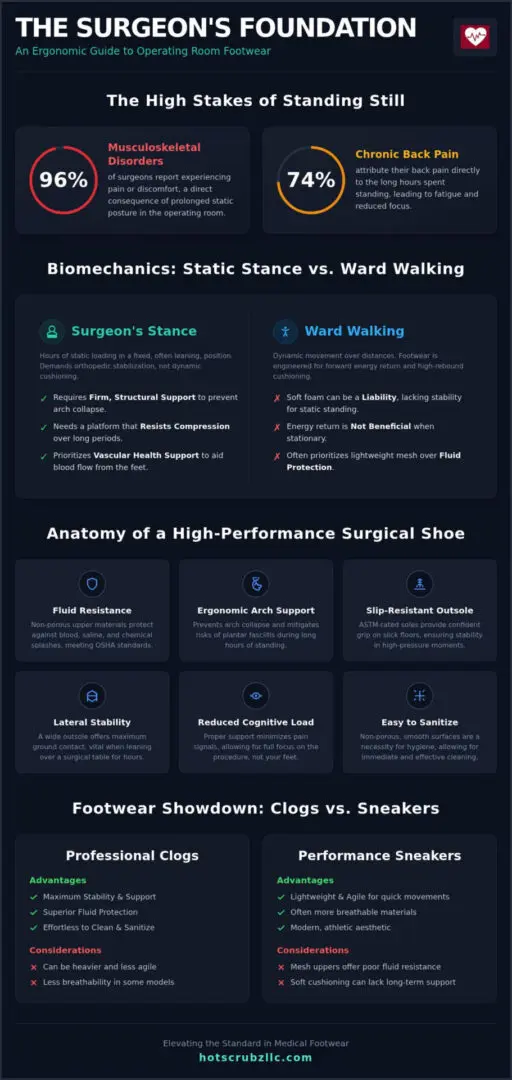
Recent studies show that 96% of surgeons have experienced musculoskeletal disorders, with nearly 74% attributing their back pain directly to prolonged standing in the operating room. When your foundation is compromised, your focus inevitably follows. Finding the best shoes for surgeons isn’t just a matter of convenience; it’s a critical investment in your long-term health and your ability to perform with precision. You dedicate your life to the care of others, yet the physical toll of a 10-hour shift often leaves you drained long before the final stitch is placed.
We understand that the clinical environment demands more than just basic utility. You need footwear that balances sophisticated style with the rigorous safety standards of 2026. This guide explores the essential features and top-tier styles that allow you to maintain peak focus while protecting your joints from chronic strain. We’ll preview the latest innovations in cushioning, fluid protection, and ergonomic support to help you find a pair that feels as professional as it looks. Discover how the right footwear can transform your workday from a test of endurance into a showcase of effortless expertise.
Key Takeaways
- Master the “Surgeon’s Stance” by selecting footwear that provides the orthopedic stabilization required for long, static shifts in the OR.
- Prioritize fluid-resistant materials and ergonomic arch support to identify the best shoes for surgeons that protect your long-term health.
- Evaluate the functional trade-offs between the classic stability of professional clogs and the modern, lightweight agility of performance sneakers.
- Implement a strategic sanitization and rotation schedule to maintain a sterile foundation without compromising the longevity of your footwear.
- Elevate your professional presence by choosing styles that harmonize aesthetic appeal with the functional endurance your demanding environment requires.
The Biomechanics of the Operating Room: Why Surgeon Footwear is Unique
Surgeons occupy a physical space unlike any other professional. While floor nurses may walk miles during a shift, the “Surgeon’s Stance” involves hours of static loading in a fixed, often leaning, position. This prolonged immobility creates specific Ergonomic hazards that can lead to long-term musculoskeletal damage. Without a stable foundation, the body begins to compensate; this leads to the chronic lower back and joint pain that plagues many in the field. Defining the best shoes for surgeons requires looking beyond simple comfort to find a specialized tool for orthopedic stabilization.
Proper footwear choice directly influences your vascular health and structural integrity. Static standing forces the heart to work harder to move blood from the feet back to the torso. High-quality surgical shoes provide the necessary compression and support to mitigate the risk of varicose veins and plantar fasciitis. When your base is secure, your body doesn’t have to fight gravity. This physical ease translates directly into your hands, where fine motor skill precision depends on a steady, tremor-free posture.
Static Standing vs. Ward Walking
It’s a common mistake to assume that high-rebound running shoes are ideal for the OR. These shoes are engineered for dynamic movement and forward energy return. For a surgeon standing still, that same soft foam can be a liability. It often lacks the firm, structural support required to prevent arch collapse during a six-hour case. You need a platform that resists compression. Firm footwear ensures that your weight is distributed across the entire foot, which maintains healthy blood flow even when you’re stationary for hours at a time.
The Cognitive Cost of Discomfort
Mental fatigue often begins in the feet. When your arches ache or your heels throb, your brain is forced to process those pain signals alongside complex surgical data. This “distraction by pain” subtly erodes your ability to maintain peak focus during high-stakes moments. Orthopedic readiness is the foundation of surgical performance. A stable foundation reduces the subconscious effort your nervous system spends on maintaining posture. This allows you to channel every ounce of your energy into the procedure, ensuring you remain as sharp in the final hour as you were in the first.
Essential Features of the Best Shoes for Surgeons
In the intense environment of the operating room, your focus is your most valuable asset. Every distraction, no matter how small, adds to your cognitive load. When you choose the best shoes for surgeons, you aren’t just buying footwear; you’re securing your concentration. A sudden spill or a nagging ache in your arch shouldn’t be what you’re thinking about during a critical procedure. Precision starts from the ground up.
Safety is non-negotiable. You need absolute protection against blood, saline, and chemical splashes. This is why fluid resistance is a primary feature of premium footwear. According to OSHA’s foot protection requirements, protective footwear must be used in hazardous environments. For surgeons in 2026, this means selecting shoes that meet the ASTM F2413-18 standard while providing slip-resistant outsoles. These soles grip slick floors with confidence, ensuring you remain stable even in high-pressure moments.
Finding the right balance between breathability and protection is essential. While mesh might feel cool, it offers little defense against hazardous spills. Modern designs solve this by using advanced, non-porous materials that allow for internal airflow without compromising the external barrier. You can explore a curated selection of medical footwear that prioritizes this harmony of safety and style.
Anatomy of a High-Performance Sole
Identifying the best shoes for surgeons involves looking for a wide outsole that provides maximum ground contact. This lateral stability is vital when you’re leaning over a surgical table for hours. Look for shock-absorbing materials that offer consistent support. Unlike standard athletic foam that compresses permanently, high-performance soles maintain their integrity throughout a 12-hour shift. A zero-drop or slight heel-lift is often preferred; it promotes natural spinal alignment and reduces the strain on your lower back.
Safety and Sterilization Standards
Hygiene is a cornerstone of the surgical suite. Non-porous surfaces are a necessity because they allow for immediate, thorough wiping. When evaluating designs, consider the trade-offs of closed-back vs. open-back styles. Closed-back shoes offer superior protection against spills and meet stricter hospital safety protocols. Your footwear must also withstand frequent disinfection with hospital-grade chemicals. Choosing materials designed for this level of rigor ensures your professional foundation remains sterile and durable.
Clogs vs. Sneakers: Evaluating the Best Silhouette for Your Practice
Choosing between clogs and sneakers is more than a style preference; it’s a strategic decision for your orthopedic health. While both silhouettes have evolved significantly by 2026, they serve different biomechanical purposes. The best shoes for surgeons are those that align with the specific physical demands of your surgical specialty, whether you’re anchored at a microscope for hours or moving rapidly between trauma bays. Understanding how these designs interact with your posture will help you maintain your edge during the most demanding cases.
Analyzing the heel-to-toe drop is vital for managing lower back strain. A higher drop, common in traditional clogs, can shift pressure away from the heels and calves, which often provides relief during static standing. Conversely, a lower drop in performance sneakers encourages a more neutral foot position. You can compare these specialized designs with the best nursing shoes for long shifts to see how footwear engineered for constant movement differs from the stabilization required in the OR.
Professional Clogs: The Traditional Gold Standard
For many, the professional clog remains the undisputed champion of the surgical suite. Its high-walled construction provides essential protection for the dorsum of your foot, shielding you from heavy equipment or hazardous spills. These shoes are built for functional endurance; a premium pair often outlasts athletic sneakers by several years. The integrated “rocker bottom” mechanism is a subtle but powerful feature. It allows for a gentle, rhythmic weight shift that keeps your muscles engaged and your circulation active even when you’re standing in a fixed position.
Performance Sneakers: Agility for the Modern Surgeon
The growing preference for high-performance sneakers in medical environments reflects a shift toward blending clinical utility with premium style. For professionals who value this balance, LK Sneakers offers a curated perspective on the exclusive urban footwear trends shaping the lifestyle of 2026.
Performance sneakers have claimed a significant place in the medical field thanks to advancements in synthetic knit materials. These aren’t your standard gym shoes. Medical-grade sneakers are engineered with non-porous overlays and reinforced lateral support to handle the rigors of a hospital environment. If your practice involves frequent movement or navigating large hospital complexes between procedures, the lightweight agility of a sneaker is invaluable. They offer a modern aesthetic appeal that transitions seamlessly from the hospital to your post-shift routine, ensuring you feel polished and prepared at every turn. Finding the best shoes for surgeons in this category means looking for models that prioritize structural integrity over simple cloud-like softness. For healthcare professionals seeking specialized footwear, SSKButiken offers a variety of models that combine these high-performance features with everyday comfort.
Your footwear is a precision instrument. Like any tool in the surgical suite, its efficacy depends on meticulous maintenance and timely replacement. Investing in the best shoes for surgeons is the first step; preserving their orthopedic integrity is what ensures you remain pain-free through years of practice. A polished, sterile appearance isn’t just about hospital protocol. It reflects your professional readiness and provides the emotional ease that comes with a well-ordered uniform. Ensure your full uniform is up to standard with our guide to professional lab coats.
Hygiene in the operating room is non-negotiable. Beyond the surface, the structural health of your shoes dictates your physical endurance. While high-quality medical clogs are designed for longevity, even the most durable materials succumb to the rigors of 80-hour weeks. By establishing a dedicated care regimen, you protect your musculoskeletal health and maintain a pristine professional aesthetic that commands respect.
Rotation for Recovery
The “24-hour rest rule” is the secret to extending the life of your footwear. Performance foam, especially in modern surgical sneakers, requires time to decompress after hours of supporting your body weight. Alternating between two pairs of shoes allows the internal support structures to fully regain their shape. This practice also manages moisture and microbial growth. Storing your shoes in a cool, well-ventilated area between shifts ensures that the materials remain resilient and odor-free. This simple rotation can double the functional lifespan of your support system.
Deep Cleaning and Sterilization
Maintaining a sterile environment requires footwear that can withstand aggressive sanitization. For most synthetic and treated leather surfaces, hospital-grade bleach-based wipes are safe for daily use. However, you must verify the specific 2026 standards for autoclave-safe materials if your facility requires high-level heat disinfection. While the outer shell may look new, you should evaluate your insoles every three to four months. Replacing insoles is a cost-effective way to restore arch support and shock absorption without retiring the entire shoe. When the outsole tread begins to smooth or the lateral support feels “mushy,” it’s time to replace your foundation entirely.
To further enhance your comfort, consider pairing your footwear with medical-grade compression stockings. These work in harmony with the best shoes for surgeons to promote vascular health and reduce lower-extremity swelling during long cases. Ready to refresh your professional wardrobe? You can shop our complete collection of medical footwear to find your next pair of high-performance shoes.
Elevating the Surgical Suite: The HotScrubz Perspective
You dedicate your life to the care of others, and your professional attire should honor that commitment. At HotScrubz, we believe that the best shoes for surgeons do more than just stabilize your stance; they elevate your entire professional presence. When your footwear harmonizes with premium scrubs and a tailored lab coat, it creates a cohesive image of authority and ease. This isn’t about vanity. It’s about the psychological readiness that comes from knowing you’re fully prepared, from your head to your foundation. You deserve a uniform that works as hard as you do.
The Intersection of Style and Endurance
We’re seeing a definitive shift away from sterile, purely clinical aesthetics toward a professional lifestyle approach that prioritizes your comfort and confidence. Your uniform is a direct reflection of your dedication, and a coordinated look provides a significant psychological boost during high-intensity shifts. By choosing footwear that matches the quality of your apparel, you acknowledge the person behind the profession. You can explore our curated collection of comfortable nursing shoes for women to find styles that bridge the gap between rigorous performance and modern elegance.
Your Readiness Starts from the Ground Up
Think of your footwear as a career-long investment in your most valuable asset: your own longevity. While the OR requires maximum protection, your clinic days might allow for a different aesthetic. You can easily combine performance footwear with leather nursing shoes for women to maintain a polished, professional look while navigating patient consultations. Our “precision foundation” thesis remains clear: when your body is supported, your mind is free to focus on the intricate work at hand. Your shoes are the silent partner in every successful outcome.
Final Checklist: 5 Questions Before You Buy
- Does this shoe meet 2026 safety standards for fluid resistance and slip protection?
- Is the arch support firm enough to prevent collapse during a 6-hour static procedure?
- Does the silhouette provide the lateral stability required for my specific surgical specialty?
- Can the material withstand frequent disinfection with hospital-grade chemical wipes?
- Does the design complement my professional wardrobe and boost my sense of readiness?
Finding the best shoes for surgeons is about more than just avoiding pain. It’s about empowering yourself to perform at your peak, shift after shift, year after year. Elevate your standard and feel the difference that a truly supportive foundation makes.
Step Into Your Next Shift with Confidence
Precision in the operating room begins with a stable foundation. By prioritizing orthopedic stabilization and adhering to the latest safety standards, you protect your long-term health while maintaining the focus your patients depend on. Whether you prefer the structural integrity of a classic clog or the modern agility of a performance sneaker, the best shoes for surgeons are those that harmonize functional endurance with a polished professional aesthetic. Remember that regular rotation and meticulous hygiene are essential to preserving the support your body requires during those demanding cases.
You deserve footwear that mirrors your dedication and supports you through every 12-hour shift. Our collection is designed to empower healthcare professionals with premium style and reliable performance. Plus, you can enjoy free shipping on qualifying orders to make refreshing your wardrobe even easier. Elevate your professional foundation with HotScrubz Medical Footwear and experience the difference that true quality makes. Your focus is your greatest asset; let us help you protect it.
Frequently Asked Questions
What are the most important features to look for in surgeon shoes?
The most critical features include fluid resistance, slip-resistant outsoles, and ergonomic arch support. You need a wide toe box to accommodate natural swelling during long shifts. Finding the best shoes for surgeons also requires looking for non-porous materials that meet 2026 safety standards. These elements work together to provide a stable foundation, which reduces physical strain on your joints and allows you to maintain peak focus during complex procedures.
Are clogs or sneakers better for long surgical procedures?
Clogs are often superior for static procedures because their rocker bottom design and firm support prevent arch collapse. They offer high-walled protection against spills. Sneakers provide lightweight agility if your practice requires frequent movement between units. The best choice depends on your specific surgical specialty. Many professionals find that a structural clog offers the best shoes for surgeons who spend six or more hours in a fixed position.
How often should a surgeon replace their work shoes?
You should replace your surgical footwear every six to twelve months depending on your shift volume. Performance foam in sneakers tends to compress faster than the dense materials found in professional clogs. If you notice the outsole tread is smoothing or you feel new aches in your heels, it’s time for a refresh. Rotating between two pairs can extend this timeline by allowing the support structures to decompress between uses.
Can I wear regular running shoes in the operating room?
Regular running shoes are generally unsuitable for the operating room because they lack essential fluid protection. Most athletic mesh allows blood and saline to penetrate the shoe, which creates a significant hygiene risk. Running shoes are also designed for forward motion rather than static standing. This can lead to increased fatigue and lower back pain. You need specialized medical footwear that provides a stable, non-porous barrier and firm orthopedic support.
What is the best way to disinfect shoes after a surgery?
The safest way to disinfect your shoes is by using hospital-grade, bleach-based wipes on non-porous synthetic or leather surfaces. This effectively removes contaminants without compromising the material’s integrity. Always check if your footwear is specifically rated as autoclave-safe before using heat sterilization. For daily maintenance, a thorough wipe-down after every shift prevents microbial growth and preserves the polished, professional appearance of your foundation. Using dedicated cleaning protocols protects your health and your gear.
How do I prevent lower back pain during long hours in the OR?
Preventing lower back pain requires a combination of firm arch support and proper spinal alignment. Look for shoes with a slight heel lift or a zero-drop design that encourages a neutral posture. Pairing your footwear with medical-grade compression socks also helps by improving circulation and reducing leg fatigue. A stable foundation minimizes the subconscious muscle effort needed to stay upright, which protects your musculoskeletal health during the most demanding shifts.
Why do many surgeons prefer closed-back shoes?
Many surgeons prefer closed-back shoes because they offer superior protection against hazardous spills and heavy equipment. Closed-back designs provide a more secure fit, which reduces the risk of the shoe slipping off during critical movements. Many hospital safety protocols also mandate closed-back styles to meet standard safety requirements. This design ensures your entire foot is shielded from saline, blood, and chemical splashes while providing maximum lateral stability throughout your entire shift.
Do I need special insoles for my surgical footwear?
While high-quality surgical shoes come with integrated support, special insoles can be a valuable addition for those with specific orthopedic needs. Removable insoles allow you to customize the level of arch support as your original padding begins to compress. Replacing your insoles every three to four months is a cost-effective way to restore shock absorption. This ensures your footwear continues to provide the precision foundation required for long hours in the surgical suite without needing a full replacement.