Sub-Total: $0.00

White Nursing Shoes for Women: 2026 Style & Comfort Guide
Your lightweight mesh sneakers might be the silent saboteur of your most demanding shifts. While they feel airy at first, they often lack the structural integrity to fight off foot fatigue or provide the fluid-resistant barrier needed in a high-stakes clinical environment. You deserve a professional look that commands respect without the constant worry of yellowing materials or the sharp ache of plantar fasciitis. It is time to stop settling for footwear that quits before you do.
We understand that your footwear is an investment in your professional well-being. Finding the right leather nursing shoes for women means choosing a pair that feels like a sneaker but protects like a boot. This guide reveals how to select the perfect white leather options that balance sophisticated elegance with the rigorous technical support required for 12-hour endurance. We will explore the latest 2026 style trends, focusing on long-term durability and the innovative features that keep you moving with confidence. From superior arch support to easy-clean finishes that defy cracking, you are about to discover how the right pair of shoes can elevate your performance and your presence on the ward.
Key Takeaways
- Understand why white leather remains the gold standard for fluid resistance and building patient trust through a polished, professional aesthetic.
- Identify critical technical features like dual-density midsoles and anatomical arch support that protect your health during demanding 12-hour shifts.
- Evaluate the differences between natural grain and synthetic leather nursing shoes for women to find the perfect balance of custom fit and stain resistance.
- Learn essential maintenance rituals and the benefits of shoe rotation to ensure your footwear remains pristine and durable over time.
- Discover how to coordinate your professional footwear with premium scrub sets to elevate your confidence and command respect in any clinical environment.
The Professional Standard: Why White Nursing Shoes Define Modern Clinical Style
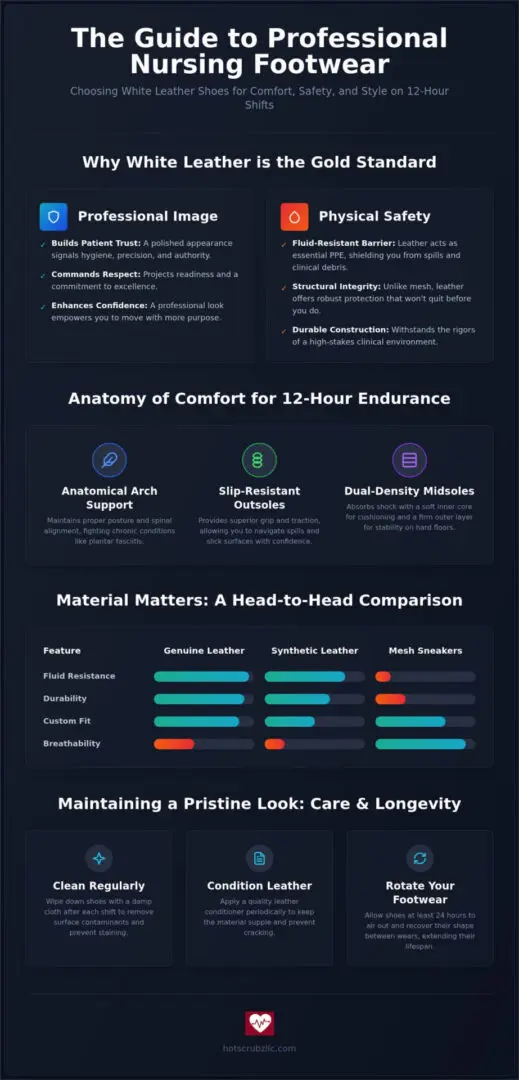
A crisp, white uniform does more than meet a dress code; it establishes an immediate psychological bridge between you and your patient. In a fast-paced clinical setting, the color white signals hygiene, precision, and professional authority. When you step into the room wearing polished leather nursing shoes for women, you aren’t just dressed for work. You are projecting a level of readiness that builds instant trust. This visual clarity often helps calm patient anxiety, providing a sense of stability before a single word is spoken. It is a silent communication of your commitment to excellence.
Beyond the psychological benefits, choosing leather is a strategic decision for your physical safety. While mesh sneakers allow fluids to penetrate almost instantly, leather acts as a high-performance barrier. It functions as essential PPE for your lower body, shielding you from accidental spills and clinical debris. By balancing a sleek lifestyle aesthetic with these rigorous protection protocols, you ensure that your style never compromises your safety. It is about creating a professional look that commands respect while maintaining the technical integrity required by hospital environments.
The Evolution of the Medical Aesthetic
The history of nursing uniforms shows a fascinating transition from heavy, restrictive garments to the functional, modern apparel we see today. We’ve moved past the era of clunky, wooden-soled clogs in favor of streamlined silhouettes that offer a more refined profile. Even as hospital dress codes evolve, white remains the most requested color for nursing school clinicals because of its timeless association with the profession. In 2026, the trend is about merging athletic performance with classic finishes. Finding the right leather nursing shoes for women today means looking for designs that offer the bounce of a running shoe with the sophisticated durability of a leather exterior.
Empowerment Through Every Step
There is a profound connection between your professional appearance and your internal confidence. When you feel put together, you move with more purpose and self-assurance. The physical demands of a healthcare hero’s journey are immense, often involving miles of walking across hard surfaces in a single shift. Selecting footwear that reflects the prestige of your medical career is an act of self-care. It acknowledges that your work is high-stakes and that you deserve equipment that matches your dedication. By choosing premium materials, you invest in a professional presence that feels as good as it looks, ensuring you remain visible and empowered from the first hour to the twelfth.
Anatomy of Comfort: Essential Features for 12-Hour Shift Endurance
Hard hospital floors don’t give. Every step you take on linoleum or concrete sends a micro-shock through your heels, up your shins, and into your lower back. When you’re halfway through a 12-hour shift, these tiny impacts add up to significant fatigue. This is where the engineering behind modern leather nursing shoes for women becomes your greatest ally. High-performance footwear utilizes dual-density midsoles to solve this problem. These midsoles feature a softer inner core for immediate cushioning and a firmer outer layer for structural stability. This balance prevents the shoe from collapsing under pressure, ensuring your joints remain protected. Pair this with slip-resistant outsoles, and you gain the freedom to navigate spills or slick surfaces with total confidence. Padded collars and tongues further enhance the experience by eliminating the friction that causes blisters during constant movement.
The Role of Orthopedic Support
Maintaining proper posture starts from the ground up. A neutral footbed is critical for long-term spinal alignment, preventing the cascading aches that often follow a double shift. Scientific reviews concerning Foot and Ankle Disorders in Nurses emphasize that structural support is a primary defense against chronic conditions like plantar fasciitis. The same principle applies across all medical specialties; for example, the best shoes for surgeons are also engineered around orthopedic support to combat the musculoskeletal strain of prolonged standing in the operating room. If you have specific needs, choosing shoes with removable insoles allows for seamless custom orthotic integration. Shock absorption is the capacity of a shoe’s midsole to dissipate the kinetic energy generated when your foot strikes a hard surface, protecting your joints from repetitive stress. Investing in premium medical footwear helps you maintain this essential alignment while you care for others.
Breathability in Leather Footwear
Leather is often praised for its durability, but modern designs also prioritize airflow. Perforated leather panels enhance circulation without sacrificing the fluid-resistant barrier you need in high-stakes environments. Inside the shoe, moisture-wicking linings work to keep your feet dry during high-intensity rounds, reducing the risk of skin irritation. You should also look for a wide toe box. Your feet naturally expand as the day progresses, and a spacious forefoot allows for this natural movement without painful constriction. This combination of space and airflow ensures your feet feel as fresh at the end of your shift as they did at the start. When your gear supports your biology, you can focus entirely on the patient in front of you.
Material Matters: Comparing Genuine Leather, Synthetic, and Athletic Alternatives
Choosing the right material for your leather nursing shoes for women is a decision that impacts your safety as much as your style. In the high-stakes environment of a hospital, the surface of your shoe is your first line of defense. Natural grain leather remains a premier choice because it offers superior durability and a custom fit that eventually molds to the unique shape of your foot. It’s a material that evolves with you, becoming more comfortable the longer you wear it. While synthetic options and athletic fabrics have their place, understanding how each material performs under pressure is essential for your long-term well-being.
The modern healthcare professional needs a material that can keep up with a fast-paced routine. Consider how these common options compare:
- Natural Grain Leather: Offers unmatched durability and a custom fit that molds to your foot over time.
- Synthetic Leather: Provides a cost-effective, vegan-friendly option with exceptional stain resistance.
- Athletic Mesh: Delivers high breathability but offers minimal protection against fluids and sharps.
- Hybrid Designs: Merges leather’s protective shell with the responsive flexibility of a sneaker.
The most innovative 2026 styles often utilize a hybrid approach, merging the protective qualities of a leather exterior with the lightweight flexibility of athletic footwear. This ensures you don’t have to choose between a shoe that protects like a boot and one that feels like a runner.
Fluid Resistance and Hygiene Standards
Leather acts as a superior barrier against both chemical and biological spills. Unlike porous fabrics that absorb contaminants, smooth leather allows you to sanitize the surface quickly between patient visits. This hygiene factor is a critical reason why leather remains the gold standard for clinical environments. When you compare the lifespan of materials, a high-quality leather shoe typically outlasts fabric alternatives by several months in a demanding medical setting. It’s a sustainable choice that saves you money and reduces the stress of frequent replacements.
Weight vs. Protection
It’s a common myth that all leather nursing shoes are heavy and clunky. Modern tanning and construction processes have revolutionized the industry, creating footwear that is remarkably lightweight yet resilient. Your specific department should guide your choice. If you’re in the ER, the added protection of a full leather upper is non-negotiable for safety. For those in a private practice or clinic setting, a lighter hybrid model might offer the perfect balance of ease and professional polish. You don’t have to sacrifice your energy levels to stay protected and prepared.
Maintaining the Pristine Look: Care and Longevity for Your Footwear
Your footwear is a silent partner in your clinical success. Keeping your leather nursing shoes for women in peak condition isn’t just about vanity; it’s about preserving the professional image you’ve worked hard to build. White leather requires a dedicated approach to stay bright and functional. Start with a simple daily ritual. Wipe your shoes down with a damp, soft cloth immediately after every shift to remove clinical debris before it has a chance to set. This prevents the gradual buildup of grime that leads to permanent discoloration. Between shifts, give your shoes at least 24 hours to breathe. Leather is a natural material that absorbs moisture from your feet. Rotating between two pairs allows the fibers to dry completely and recover their shape, significantly extending the life of the internal cushioning.
Conditioning is the secret to a supple feel. Every few weeks, apply a white-specific leather conditioner to prevent the material from drying out or cracking. When storing your shoes, avoid tossing them into a cramped locker. Placing them upright ensures the heel counter maintains its structural integrity, providing the consistent support your ankles need. If you’re ready to upgrade your professional kit, you can explore our curated selection of premium medical footwear designed for lasting durability.
Stain Removal for Medical Professionals
Standard household bleach is the enemy of white leather. It often reacts with the tanning agents to cause irreversible yellowing. Instead, use a specialized leather cleaner or a mixture of mild dish soap and warm water. For organic stains like blood, use cold water immediately, as heat will set the proteins into the leather grain. Iodine and saline require a more delicate touch; a small amount of rubbing alcohol on a cotton swab can often lift these if caught early. Gently rub a damp magic eraser over scuffed rubber midsoles to restore their bright white finish without using abrasive chemicals on the leather itself.
When to Replace Your Nursing Shoes
Even the best shoes have a shelf life. While the leather exterior might still look polished, the internal foam eventually suffers from structural fatigue. For full-time clinicians working three to four 12-hour shifts per week, six months is the standard benchmark for replacing your footwear. After this point, the midsole loses its ability to absorb impact, which can lead to renewed foot and back pain. Check your outsoles regularly for visual cues. If the tread appears smooth or “bald” in high-pressure areas like the heel or ball of the foot, your slip-resistance is compromised. Don’t wait for an injury to tell you it’s time for a new pair. Your body will thank you for the consistent protection of fresh, responsive support.
Elevate Your Shift: Finding Your Perfect Pair with HotScrubz
Your shift is more than a series of tasks; it’s a performance of care and expertise. To perform at your peak, every element of your uniform must work in harmony. Finding the right pair of leather nursing shoes for women is the final piece of that professional puzzle. When your footwear offers the technical support of a high-performance tool and the polished look of a lifestyle brand, you move with a different kind of energy. You aren’t just surviving the day. You are excelling in it. At HotScrubz, we curate our selection to ensure that style and endurance are never mutually exclusive. We believe that those who dedicate their lives to others deserve gear that respects their hard work and their physical well-being.
Completing Your Professional Look
A cohesive aesthetic does more than look good; it projects a sense of organized authority. Pairing your high-quality leather nursing shoes for women with modern scrubs scrub tops creates a streamlined silhouette that looks as professional as it feels. To maximize the benefits of your new shoes, consider the role of compression socks. They work in tandem with the shoe’s internal support to maintain circulation and reduce swelling during those final, critical hours of your shift. Our versatile designs also mean you don’t have to change before heading into the community. Whether you are running errands after work or meeting a friend for coffee, your shoes provide a polished transition from the clinic to your personal life.
Why Shop with HotScrubz?
We approach medical apparel with a deep sense of empathy. We know that your income is hard-earned, so we prioritize durability in every item we offer. Our goal is to provide expert guidance that helps you navigate the demands of your workplace with more self-assurance. Choosing HotScrubz means choosing a partner that values the person behind the profession. We act as a champion for your comfort, ensuring you have access to the latest innovations in medical footwear. It’s time to take the next step toward a pain-free, professional workday. Explore our collection of comfortable nursing shoes for women and discover the difference that premium support can make for your 2026 career journey.
Step Into Your Future with Confidence
You provide the care; let your gear provide the foundation. Choosing the right leather nursing shoes for women is a commitment to your long-term health and professional presence. We’ve explored how the right footwear balances technical features like dual-density midsoles with the sophisticated look of premium leather. By prioritizing fluid resistance and anatomical support, you protect your body during the most demanding shifts. Proper maintenance and regular rotation remain the keys to ensuring your investment lasts as long as your dedication. You deserve to feel as empowered at the end of your shift as you do at the start.
Step into comfort with our curated medical footwear collection. Our selection is trusted by healthcare professionals nationwide and specifically designed for 12-hour shift endurance. Enjoy free shipping on qualifying orders as you elevate your professional wardrobe. Your journey is demanding, but your footwear shouldn’t be. Keep moving forward with the style and support you’ve earned.
Common Questions About Medical Footwear
Are white leather nursing shoes better than sneakers for 12-hour shifts?
White leather nursing shoes for women offer superior protection against fluids and sharps compared to standard mesh sneakers. While athletic shoes provide airflow, they often fail to meet the hygiene standards of high-intensity wards. Leather provides a wipeable surface and a structural barrier that maintains its professional appearance through messy shifts. It is a choice that prioritizes your safety without sacrificing the responsive feel of a modern athletic sole.
How do I keep my white nursing shoes from turning yellow?
You can prevent yellowing by avoiding harsh chemicals like bleach, which react with leather tanning agents to cause permanent discoloration. Instead, use a pH-neutral leather cleaner and a soft cloth for daily maintenance. Store your shoes in a cool, dry place away from direct sunlight, as UV rays can degrade the white finish over time. Regular conditioning also keeps the material from drying out and absorbing stains that lead to a dingy look.
What features should I look for in shoes for plantar fasciitis?
Look for anatomical arch support and a deep heel cup to stabilize your foot and reduce strain on the plantar fascia. A firm, slightly elevated heel helps redistribute pressure away from the most sensitive areas of your foot. Shoes with dual-density midsoles provide the necessary shock absorption to handle hard hospital floors. These features work together to keep you mobile and pain-free, even during the final hours of a long shift.
Can I wash leather nursing shoes in the washing machine?
No, you should never put leather nursing shoes in a washing machine. The excessive water and agitation can cause the leather to crack, peel, or lose its shape, while the heat often weakens the structural adhesives. Hand-cleaning with a damp cloth and mild soap is the most effective way to preserve the integrity of the material. This gentle approach ensures your footwear remains a reliable, professional part of your daily uniform for much longer.
Why is slip-resistance so important for medical footwear?
Slip-resistance is critical because hospital environments are prone to unexpected spills and recently mopped surfaces. A high-quality rubber outsole with a multi-directional tread pattern provides the traction you need to move quickly and safely during emergencies. This feature acts as a safety insurance policy, protecting you from workplace injuries and allowing you to focus entirely on your patients. Confidence in your footing translates to confidence in your care.
How often should a nurse replace her work shoes?
Most healthcare professionals should replace their work shoes every six months to ensure consistent joint protection. Even if the leather exterior still looks pristine, the internal cushioning typically loses its shock-absorbing capacity after approximately 500 to 800 miles of walking. If you notice new aches in your knees or back, it is likely a sign that the structural foam has reached its limit. Regular replacement is an essential investment in your long-term physical well-being.
Do leather nursing shoes need a break-in period?
Yes, premium leather nursing shoes for women usually require a brief break-in period of two to three shifts. Natural leather is a dynamic material that needs time to mold to the unique contours of your feet. We recommend wearing them for shorter periods at home before committing to a full 12-hour shift. This allows the material to soften and adapt, ensuring you experience the full spectrum of comfort and support when you finally hit the ward.
Are there vegan leather options that are just as durable for nursing?
High-quality synthetic or vegan leather options offer impressive durability and are often more stain-resistant than natural grain leather. These modern materials are engineered to withstand rigorous medical cleaning protocols while maintaining a polished, professional aesthetic. While they may not mold to your foot quite as much as natural leather, they provide a consistent fit and excellent fluid protection. They are a reliable, compassionate choice for professionals who prioritize animal-friendly materials in their gear. If you work in a surgical setting, you may also want to explore our guide on the best shoes for surgeons, which covers how advanced materials and ergonomic support address the unique demands of prolonged standing in the operating room.