Sub-Total: $0.00

Why Doctors Wear White Lab Coats: History & Care in 2026
Your white lab coat is far more than a uniform; it’s a centuries-old promise of safety and scientific rigor draped over your shoulders. It’s the first thing patients notice and the last thing you want to see marred by coffee stains or the dull yellowing that often follows a week of grueling shifts. You understand that your appearance is a silent communicator of your competence. Mastering how to keep lab coat white is essential for any clinician who wants to command respect and project a sense of calm authority. It’s about ensuring your external image matches the internal dedication you bring to every patient interaction.
We know the frustration of watching a premium garment lose its luster after only a few washes. That’s why we’re diving deep into the professional history of this medical icon and sharing expert secrets to keep your clinical attire bright. You’ll discover the fascinating origins of the “White Coat Effect” and learn a modern laundry routine designed for high-performance fabrics. This guide provides the tools you need to feel empowered, polished, and ready to face the demands of your profession with confidence. Let’s explore how to honor the tradition of the white coat while keeping your wardrobe looking effortlessly pristine.
Key Takeaways
- Trace the transformation of the medical uniform from somber black robes to the brilliant white symbol of the antiseptic revolution.
- Explore the science of enclothed cognition and how wearing a pristine coat enhances your focus and clinical performance.
- Uncover the expert routine for how to keep lab coat white without using damaging bleach that leads to premature yellowing.
- Gain practical skills for erasing stubborn stains, including specialized methods for removing ink leaks and biological fluids.
- See how modern fabric technology allows you to maintain a polished, professional presence throughout even the most demanding shifts.
The Evolution of the White Coat: Merging Science with Style
Your daily attire carries the weight of a powerful legacy that spans over a century. Before the late 1800s, doctors didn’t wear the bright, hopeful white we see today. Instead, they donned black “clerical” robes. These dark garments were chosen to reflect the somber, often grim reality of 19th-century medicine. It was an era where a physician’s presence was frequently associated with the finality of life rather than the hope of a recovery. The dark fabric hid the stains of a difficult profession, but it also masked the lack of hygiene that defined the period.
From Black Robes to Clinical White
The visual shift in medical history is perfectly captured in the art of the time. Thomas Eakins’ 1875 painting, *The Gross Clinic*, shows surgeons in dark, formal street clothes. Just fourteen years later, his work *The Agnew Clinic* depicted a radical change: physicians in light-colored smocks. The transition from somber robes to scientific white served as a critical 19th-century pivot that redefined the physician’s role in society. This transformation was more than a fashion choice; it was a declaration that medicine had entered the age of science. As documented in the History of the White Coat, this new uniform signaled a commitment to transparency and empirical evidence.
The Symbolism of Purity and Hygiene
White was specifically chosen as a visual representation of the “Listerism” antiseptic revolution. Joseph Lister’s groundbreaking work on sterility proved that cleanliness saved lives. White fabric became the ultimate tool for visibility because it immediately revealed contamination. If a coat was pristine, it signaled a safe environment. This psychological link between brightness and sterility is why mastering how to keep lab coat white is still a vital skill in 2026. A bright coat doesn’t just look professional; it projects a sense of calm authority and clinical excellence to every patient you meet.
Modern perspectives continue to view the coat as a symbol of professional readiness. While the silhouette has evolved, the core purpose remains the same: to inspire trust. Today’s designs, like a high-performance women’s lab coat, bridge the gap between historical tradition and modern utility. Because the fabric is a canvas for your professional identity, knowing how to keep lab coat white ensures that your appearance always reflects the high standards of your practice. You aren’t just wearing a uniform; you’re wearing a legacy of care and scientific progress.
Myth vs. Reality: Does the White Coat Actually Improve Care?
The white coat is more than a layer of protection; it’s a mental trigger. While we explored its historical roots as a symbol of hygiene, modern science suggests its impact goes much deeper. The way you dress influences how you think, how you act, and how your patients perceive your ability to heal. In the fast-paced environment of 2026, the coat remains a vital tool for establishing immediate rapport and clinical focus, a standard upheld by practitioners like John Abroon M.D. who prioritize both professional presence and personalized patient care.
The Enclothed Cognition Effect
Psychological research into “enclothed cognition” reveals that the clothes we wear can significantly alter our mental state. When you don a lab coat, your brain associates the garment with scientific rigor and careful attention to detail. This isn’t just a feeling; it’s a measurable increase in focused attention. The emotional shift from “person” to “practitioner” happens the moment you button up. A crisp, well-fitted men’s white lab coat doesn’t just look professional. It acts as a psychological anchor that boosts your confidence and sharpens your diagnostic skills. Understanding how to keep lab coat white is therefore a matter of maintaining your clinical edge; a dingy coat can’t provide the same mental clarity as a pristine one.
Professionalism and Patient Trust
Despite the rise of casual clinical wear, patient preference remains rooted in tradition. Many surveys indicate that patients feel more comfortable and secure when their physician wears a white coat. It serves as a visual shorthand for expertise, making you easily identifiable in a crowded hospital ward. Critics often cite “White Coat Hypertension” as a reason to abandon the uniform, but this phenomenon is usually managed through better communication rather than a change in wardrobe. The symbolism of the white coat carries a weight of authority that patients still look for during their most vulnerable moments.
Balancing this power with empathy is the hallmark of a great clinician. You want to appear authoritative yet approachable. When you prioritize how to keep lab coat white, you’re signaling to your patients that you value precision and cleanliness in every aspect of their care. It shows you respect the profession enough to maintain its most visible standards. To elevate your daily presence while ensuring your gear stands up to the challenge, consider investing in high-performance medical apparel that blends traditional style with modern durability.
Debunking Maintenance Myths: How to Keep Your Lab Coat White
Maintaining a brilliant clinical appearance shouldn’t feel like a second job. While you focus on patient care, your uniform should stay bright and professional. Many clinicians struggle with how to keep lab coat white because they rely on traditional methods that actually do more harm than good. Understanding the science of fabric care is just as important as following clinical protocols. When you treat your gear with the right techniques, you ensure that your professional image remains as sharp as your diagnostic skills.
The Bleach Fallacy: Why Chlorine Isn’t Always the Answer
Chlorine bleach is often the first thing people grab, but it’s frequently the culprit behind a ruined garment. Most premium coats today are crafted from high-performance synthetic-cotton blends that prioritize comfort and durability. Chlorine is an aggressive chemical that can strip away protective finishes and weaken the structural integrity of these fibers. Yellowing is often a chemical reaction between chlorine and polyester. This reaction creates a dingy, aged look that no amount of extra washing can fix.
Instead of harsh bleach, embrace oxygen-based whiteners. These laundry boosters are gentler on your clothes and more effective at lifting organic stains. For that extra professional edge, look for detergents containing optical brighteners. These microscopic additives stay on the fabric and transform invisible UV light into visible blue light. This clever trick of physics masks any hint of dullness and restores factory-level brightness to your coat, ensuring you always look polished and ready for your rounds.
Hot Water vs. Cold Water for Bio-Stains
In a high-stakes medical environment, you deal with specialized spills that require a strategic approach. Blood, sweat, and other biological fluids are protein-based. If you toss a stained coat directly into a hot wash, you’re essentially cooking those proteins into the fabric. This sets the stain permanently, making it nearly impossible to remove later. Heat is a finisher, not a pre-treatment tool for organic matter.
Adopt the 30-minute cold soak rule for any clinical spills. Submerge the affected area in cold water with a gentle enzymatic cleaner before it ever sees the inside of a washing machine. This allows the enzymes to break down the proteins without locking them into the fibers. Once the stain has visibly lifted, you can transition to a warm wash to sanitize the garment. This two-step process is the most effective strategy for how to keep lab coat white while protecting the fabric from the damaging effects of high-heat cycles. By avoiding common pitfalls like overloading your machine, you’ll prevent soil redeposition and keep your whites looking pristine for years to come.
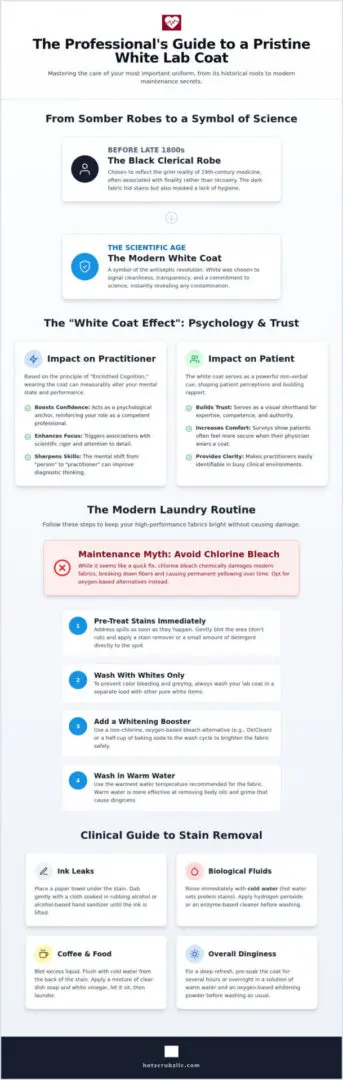
The Clinical Guide to Stain Removal and Brightness
Your lab coat is a testament to your dedication and the high standards you uphold. When a shift gets demanding, your clinical attire shouldn’t show the struggle. Mastering how to keep lab coat white involves more than just a standard wash cycle; it requires a targeted approach to the specific hazards of your environment. By treating your coat with the same precision you apply to patient care, you preserve the vibrant, professional presence that defines your role.
Tackling Ink, Blood, and Coffee
The three most common clinical stains require distinct strategies to prevent them from becoming permanent reminders of a busy day. For ink leaks in your pocket, reach for a high-percentage isopropyl alcohol. Place a clean paper towel behind the stain and blot the area with an alcohol-soaked cloth. Blot. Never rub. The friction of scrubbing forces microscopic ink particles deeper into the weave, turning a temporary spill into a permanent blemish.
Biological fluids and coffee respond best to enzymatic cleaners that digest the organic matter. If you notice a yellowing collar, the culprit is likely a buildup of skin oils. A drop of clear dish soap applied directly to the collar before washing can break down these lipids effectively. This simple pre-treatment is a secret weapon in the quest for how to keep lab coat white, ensuring the areas closest to your skin remain as bright as the rest of the garment.
- Ink: Blot with isopropyl alcohol.
- Coffee/Blood: Use enzymatic pre-treatments.
- Collar: Apply clear dish soap to lift skin oils.
Drying Techniques to Prevent Fabric Breakdown
While a commercial dryer is convenient, the intense heat can be the enemy of a pristine coat. High temperatures can cause residual minerals in the water to “bake” into the fabric, leading to that dreaded gray tint over time. Whenever possible, air-dry your coat. If you’re lucky enough to have a sunny spot, use the “Sunlight Strategy.” UV rays act as a natural, gentle whitening agent that brightens the fabric without the chemical stress of bleach.
When you must use a dryer, choose a medium-heat setting and remove the coat while it’s still slightly damp. This prevents the fabric from becoming brittle and makes ironing much easier. A quick press with a warm iron provides that crisp, “first-day” look that commands respect. To ensure your wardrobe is built to withstand these frequent care routines, choose premium lab coats designed for durability and long-term brightness. Balancing hygiene with garment longevity is easy when you have the right gear and the right routine.
Elevating Your Presence with HotScrubz Professional Gear
Your dedication to patient care is a constant. Your uniform should be just as reliable. While mastering the technical side of how to keep lab coat white is essential, the quality of your base layer determines your long-term success. We design for the intersection of aesthetic appeal and functional endurance because we understand that a coat isn’t just a covering; it’s a tool that supports your movement, your mindset, and your professional identity. When you start with a garment engineered for the demands of 2026, maintaining that pristine image becomes an effortless part of your routine.
Innovative Fabric for the Modern Shift
Our material selection prioritizes both breathability and whiteness retention. We utilize high-performance synthetic-cotton blends that are specifically engineered to resist common clinical stains before they have a chance to set into the fibers. This advanced fabric technology means that when you’re practicing how to keep lab coat white, you’re working with a garment that’s already on your side. The sensory experience is equally important. We’ve crafted our apparel for 12-hour movement, ensuring you feel as comfortable during a late-night consult as you did during morning rounds. Investing in premium gear is a direct reflection of your dedication to the profession. It’s about choosing a partner that understands the rigors of your day and provides the visibility you deserve.
Ready for the Shift: A Wardrobe Designed for You
A professional silhouette does more than look polished; it builds clinician confidence from the inside out. When your coat fits perfectly and retains its brilliant luster, you project an image of readiness and precision to every patient you encounter. We’ve streamlined the process for busy healthcare professionals through an intuitive e-commerce experience. With national shipping across the United States, your next professional upgrade is only a few clicks away. We remain committed to the person behind the profession, acting as a supportive ally for those who dedicate their lives to the care of others.
It’s time to elevate your daily routine with attire that matches your ambition. You deserve gear that feels as good as it looks and lasts as long as your passion for healing. Discover the next generation of professional lab coats today. Browse our premium collection and step into your next shift with the confidence of a polished, empowered professional who values both style and substance.
Step Into Your Clinical Legacy
The white lab coat is more than just a garment; it’s a centuries-old promise of safety and a psychological tool that sharpens your focus. You’ve explored the historical shift from somber black to scientific white and learned that your appearance directly impacts patient trust. Mastering how to keep lab coat white isn’t just about laundry; it’s about preserving the authority and empathy you bring to every consultation. By replacing harsh bleach with gentle enzymatic care and UV whitening, you ensure your uniform reflects the precision of your practice.
Your dedication to others deserves apparel that works as hard as you do. HotScrubz provides healthcare heroes with durable fabrics designed for long shifts and an empowering style that commands respect. Ready to upgrade your clinical wardrobe? Elevate your professional look with HotScrubz Premium Lab Coats today and enjoy free shipping on qualifying orders. You’ve dedicated your life to the care of others; let’s take care of the gear that carries you through the day. Step into your next shift with a presence that shines as bright as your expertise.
Frequently Asked Questions
How do I get yellow sweat stains out of my white lab coat?
You can remove yellow sweat stains by applying an enzymatic pre-treatment or a paste of baking soda and water directly to the area. Let it sit for 30 minutes before washing in cool water. Avoid chlorine bleach; it reacts with proteins and synthetic fibers to make the yellowing permanent. Regular maintenance using oxygen-based boosters is the most effective strategy for how to keep lab coat white and vibrant throughout a demanding clinical year.
Can I wash my lab coat with my regular medical scrubs?
You should only wash your lab coat with your scrubs if the scrubs are also pure white. Mixing white coats with colored scrubs leads to dye transfer; this makes your coat look dull or gray over time. For the best results, dedicate a separate load to your whites. This prevents lint from darker fabrics from clinging to your coat and preserves the crisp, professional silhouette you need to maintain clinician confidence.
Is it better to dry clean or machine wash a professional lab coat?
Machine washing is generally better for professional lab coats because it allows for the use of enzymatic detergents that break down biological stains. Dry cleaning uses chemicals that might not effectively remove protein-based spills like blood or sweat. Always check the care label on your garment first. High-performance synthetic-cotton blends are designed to withstand frequent machine cycles, provided you use medium heat and avoid over-drying in commercial machines.
How often should a doctor change or wash their white coat?
You should wash your lab coat after every shift if you’ve had direct patient contact or worked in a high-risk environment. If your work is primarily administrative, washing every two to three days is acceptable. Frequent laundering prevents oils and dust from settling into the fibers, which helps maintain the fabric’s factory-level brightness. Regular cleaning is essential for maintaining a sterile environment and projecting a polished, professional image to your patients.
What is the best way to remove ink stains from a lab coat pocket?
The most effective way to remove ink stains is by using isopropyl alcohol or an alcohol-based hand sanitizer. Place a clean towel behind the fabric to catch the ink and blot the stain gently with a saturated cloth. Never scrub the area; this forces the ink deeper into the weave. This targeted approach ensures your pockets stay pristine and professional, even after a long day of charting and patient rounds.
Does the type of fabric affect how white a lab coat stays?
Fabric type plays a significant role in whiteness retention and overall durability. 100% cotton tends to absorb stains more deeply and yellow faster than modern blends. High-performance synthetic-cotton blends are engineered to resist liquid absorption and maintain their brightness through repeated laundering. Choosing the right material is the first step in mastering how to keep lab coat white, as these innovative fabrics are designed for the rigors of a 12-hour movement.
Can I use baking soda and vinegar to whiten my medical uniform?
You can certainly use baking soda and vinegar as natural whitening boosters in your laundry routine. Add half a cup of baking soda to the wash cycle and a cup of white vinegar to the rinse cycle to break down mineral buildup and soften the fabric. These household staples are gentle on the environment and your skin. They provide an effective alternative to harsh chemicals while keeping your medical uniform looking sharp and sterile.
Why do some lab coats turn gray after only a few months?
Lab coats often turn gray due to soil redeposition or mineral buildup from hard water during the wash cycle. If you overload your machine, the dirt lifted from the fabric has nowhere to go and settles back onto the white fibers. Using a water softener and ensuring your garments have enough room to move freely prevents this dulling effect. Proper care keeps your attire looking as polished and authoritative as the day you first put it on.