Sub-Total: $0.00

What Do Physical Therapists Wear for Comfort at Work?
Can a sports bra be your clinic top? Only if your workplace explicitly allows it. What physical therapists wear otherwise depends on the clinic’s dress code. Choose clothing that supports movement, looks professional, and suits the work setting.
It makes sense to want an outfit that stays comfortable through active sessions while meeting workplace expectations. The right choices make it easier to bend, reach, and move while helping you feel polished and ready for the day. Here’s practical guidance on dress codes, supportive shoes, easy layers, and tops and bottoms that allow room to move.
Key Takeaways
- Let your workplace dress code guide choices like leggings, joggers, and athletic tops. Wear a sports bra as a standalone top only when your clinic explicitly permits it.
- Choose supportive, closed-toe shoes suited to your setting and the movement your workday requires.
- Use comfortable layers and flexible clothing that let you bend, reach, kneel, and move without pulling or pinching.
- Explore scrub tops, scrub pants, and lab coats from HotScrubz when you want workwear that brings comfort and a polished professional look together.
1. Dress codes across physical therapy settings
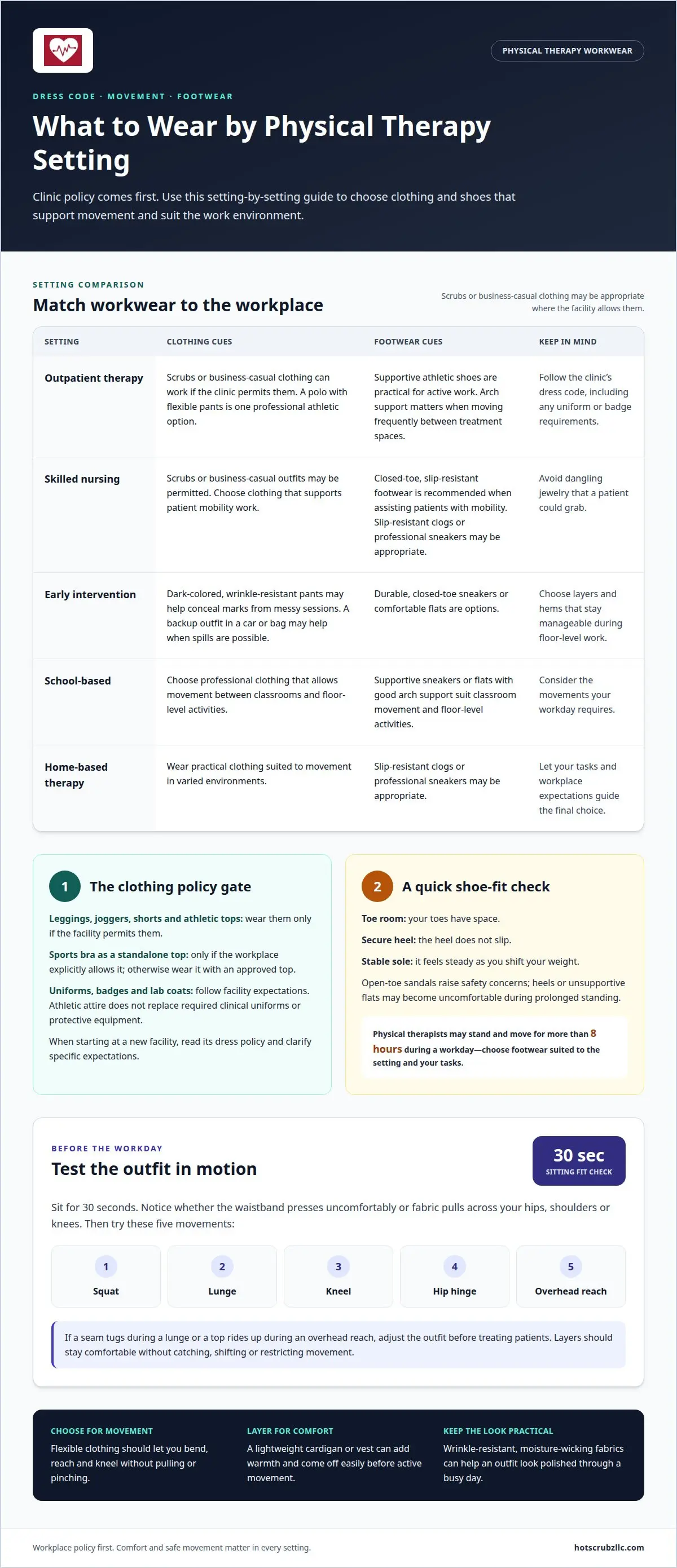
Physical therapists may wear scrubs or business-casual clothing, depending on the setting and workplace policy. In outpatient therapy, either can work if the clinic’s dress code allows it. Skilled nursing facilities may also permit scrubs or business-casual outfits. Follow the facility’s policy rather than assuming one outfit suits every session. Clothing should allow movement, look professional, and support safe work without restricting bending or reaching.
Uniforms, name badges, and lab coats depend on facility expectations. A clinic may require a uniform or badge, while another may allow professional athletic clothing, such as a polo and flexible pants. Wear a lab coat when workplace policy calls for one. Athletic attire doesn’t replace required clinical uniforms or protective equipment. Before starting at a new facility, read its dress policy and clarify any specific expectations.
Leggings, joggers, shorts, and athletic tops are all subject to workplace policy. Wear leggings or joggers only when the facility permits them, and choose a fit that stays in place during demonstrations. A sports bra is suitable as a standalone clinic top only if the workplace explicitly allows it. Otherwise, wear it with an approved top. Avoid clothing that restricts movement or falls short of the clinic’s professional standards. This keeps comfort aligned with the rules for each session.
Different settings call for different details. In skilled nursing facilities, choose attire that supports patient mobility work, and avoid dangling jewelry that a patient could grab. For home-based therapy, wear practical clothing suited to movement in varied environments. Early intervention or skilled nursing work can involve spills, so keeping a backup outfit in a car or bag may help. If you’re unsure about a garment, let the facility’s policy guide your choice. This keeps your clothing professional and appropriate for the workplace.
2. Suitable footwear for therapy exercises
Physical therapists need footwear that stays secure while standing, walking, and demonstrating exercises. Supportive athletic shoes are a practical choice for active work in schools and outpatient centers. Arch support matters when a shift involves frequent movement between treatment spaces. A shoe that feels comfortable while standing still may feel different during a lunge or quick turn, so consider how it moves with you. For clinicians working in sports rehabilitation or gym-based therapy where grounding and grip are essential during strength exercises, resources like otomixshoes.com offer footwear engineered specifically for stability and weight training.
Choose shoes suited to the setting, too. In skilled nursing facilities, closed-toe, slip-resistant footwear is recommended when assisting patients with mobility. Early intervention therapists can choose durable, closed-toe sneakers or comfortable flats. For school-based work, supportive sneakers or flats with good arch support suit the movement between classrooms and floor-level activities.
Physical therapists may stand and move for more than 8 hours during a workday, making supportive footwear a practical part of a work outfit. A secure fit helps shoes stay in place during walking and demonstrations. Check that your toes have room, the heel doesn’t slip, and the sole feels stable as you shift your weight. These simple fit checks can help you choose shoes for the movements your role involves.
Some styles are less suited to active clinic work. Open-toe sandals raise safety concerns, while heels or unsupportive flats may become uncomfortable during prolonged standing. In skilled nursing or home-based therapy, slip-resistant clogs or professional sneakers may be appropriate. The right choice still depends on the facility’s footwear expectations and your tasks.
Patients also benefit from secure shoes during walking or balance activities. Clean sneakers and socks are suitable for those exercises; sandals, flip-flops, slip-ons, and high heels are best avoided. For your own work wardrobe, medical footwear can complement clothing selected for movement and comfort, while the shoe’s fit and your workplace rules guide the final choice.
3. Layers that do not interfere with work
Choose layers that keep you comfortable without catching or shifting during patient care. Compression activewear isn’t a default work requirement. A polo or clinic-branded top with flexible pants can look professional while allowing a full range of motion. Keep sleeves and hems manageable so they don’t get in the way when you demonstrate exercises or work near the floor.
For a practical fit check, sit for 30 seconds before wearing an outfit to work. Notice whether the waistband presses uncomfortably or the fabric pulls across your hips, shoulders, or knees. Then try five movements: squat, lunge, kneel, hip hinge, and overhead reach. If a seam tugs during a lunge or a top rides up during an overhead reach, adjust the outfit before treating patients.
Temperature can affect clothing choices throughout a shift. A lightweight cardigan or vest can add warmth in a cool facility and come off easily before active movement. Choose a layer that doesn’t restrict your arms during a shoulder demonstration or bunch around your waist when kneeling. Wrinkle-resistant, moisture-wicking fabrics can also help your outfit look polished through a busy day.
Some settings call for extra attention to stains and floor work. Early intervention therapists may prefer dark-colored, wrinkle-resistant pants to help conceal marks from messy sessions. Skirts and dresses can restrict movement during floor-based activities, so flexible pants are often more practical for kneeling or getting up repeatedly. Consider the day’s tasks, from seated exercise demonstrations to overhead reaches, and choose layers that stay comfortable as you move.
4. Loose, comfortable tops and bottoms
For treatment sessions, choose comfortable tops and bottoms that allow movement without pulling or pinching. Flexible clothing makes it easier to demonstrate stretches, assist patients, and change positions smoothly. Athletic pieces can work when your workplace permits them, but comfort should still fit the dress code. A shirt that stays in place as you reach or lean helps you focus on the session.
For bottoms, joggers offer a less body-contouring option than leggings when athletic pants are allowed. Their relaxed fit can feel practical during floor-based activities, while leggings may suit therapists who prefer a closer fit. Either way, fabric should move with you rather than restrict a squat, kneel, or hip hinge. In schools, flexible pants can make it easier to kneel on the floor and move between classrooms.
Fit also matters when treatment involves equipment or hands-on care. Loose garments can be easier to manage during sessions that include heat, ice, or electrical stimulation. In musculoskeletal care settings such as Dr. Horine Chiropractic, flexible attire allows clinicians to deliver hands-on treatments and guide exercises effectively. Tight or stiff clothing can limit stretches and make prescribed exercises harder to perform. Choose a top that allows arm movement and bottoms that don’t pinch when you bend. Aim for ease without excess fabric getting in the way.
Match clothing to the treatment area and activity. A session with repeated floor exercises, for example, calls for pants that stay comfortable while kneeling and standing. A top should allow overhead reaching without riding up or restricting your shoulders. These fit details help you look professional while demonstrating movement and assisting patients. Before a shift, try a squat and an overhead reach in your outfit. Notice any fabric that pulls, slips, or limits motion. A comfortable fit supports confident movement and focused patient care.
HotScrubz
HotScrubz helps you build a comfortable, polished work wardrobe with medical apparel suited to your professional routine. Scrub Tops and Scrub Pants offer options for clinic attire, while Lab Coats provide another layer when appropriate for your workplace. You can also explore Medical Footwear for the practical demands of standing and moving through treatment sessions.
Choose pieces with your facility’s dress code and daily movement in mind. A professional outfit should feel comfortable through bending, reaching, and patient demonstrations while meeting workplace expectations. HotScrubz also offers Mini Tote Bags for everyday essentials. Explore HotScrubz’s medical apparel and footwear to find workwear suited to your routine.
Make comfort part of your workday
Let your workwear evolve with the rhythm of your practice. What physical therapists wear doesn’t have one permanent answer; your needs may shift with your schedule, setting, and responsibilities. Treat comfort as part of preparing for the work ahead, not an afterthought. Notice which choices help you feel composed and ready to move, then keep those preferences in mind as your routine changes.
Your next step can be simple: choose apparel that reflects your professional style and supports how you show up for patients. HotScrubz offers medical workwear for healthcare professionals seeking pieces for their routine. Explore options at a pace that feels right, keeping your personal comfort and workplace expectations in view. Contact HotScrubz about workwear to take the next step. You deserve to feel confident and comfortable as you bring your best to each new workday.
Frequently Asked Questions
Can I wear a sports bra as my clinic top?
Only if your workplace explicitly allows a sports bra as a standalone clinic top. If the policy doesn’t permit it, wear an approved shirt over it. A clinic may allow athletic clothing but still require tops that provide more coverage during patient sessions. Treat the written dress code as the standard rather than assuming workout attire is automatically acceptable.
What do physical therapists typically wear at work?
Physical therapists typically wear attire allowed by their workplace, such as scrubs, professional athletic clothing, or business-casual pieces. A polo and flexible pants can suit a clinic that permits athletic styles; another workplace may require a uniform. Consider your tasks as well as appearance: clothing should stay in place while you demonstrate a movement or change position beside a treatment table.
What shoes are best for physical therapists?
Supportive shoes suited to the work setting are a practical choice. Athletic shoes with arch support can work well in active environments, while mobility assistance in skilled nursing calls for closed-toe, slip-resistant footwear. A therapist helping someone stand, for example, needs shoes that feel secure during weight shifts. Avoid open-toe sandals, which raise safety concerns, and styles that feel unsupportive during active work.
What do physical therapists wear in hospitals versus outpatient clinics?
Hospital and outpatient attire depends on each facility’s policy. A hospital may require clinical uniforms or protective equipment for particular duties, while outpatient clinics may permit scrubs or well-fitted business-casual clothing. Don’t assume every hospital has the same uniform rules. For a new role, review the facility’s policy before choosing clothes, especially if it specifies a uniform, protective gear, or identification.
Are there dress code requirements for physical therapists in the United States?
Dress expectations depend on the workplace; there isn’t one outfit for every physical therapy setting in the United States. A clinic, hospital, school, or skilled nursing facility may set its own rules for uniforms and acceptable clothing. Follow your workplace’s policy, including any requirements for clinical attire or protective equipment, rather than treating athletic wear as a universal standard.
Do physical therapists wear special clothing for home visits or sports settings?
There isn’t one special outfit for every home visit or sports setting. For home-based care, professional sneakers or slip-resistant clogs can suit work that involves moving around a patient’s home. In active settings, supportive athletic shoes and clothing that permits movement may fit the work, provided the employer allows them. Choose attire suited to your tasks and the applicable workplace policy.