Sub-Total: $0.00

Tucking in scrub tops: pros and cons for comfort and style
Tucking in scrub tops can create a polished silhouette, but it may also feel restrictive or warm during a demanding shift. The pros and cons depend on the top’s cut and length, your pants’ waistband, and how freely you need to move. The right choice balances comfort with the look you want.
It makes sense to want a neat, confident appearance without adjusting your uniform all day. A tuck can define your waist and keep fabric in place, while an untucked top may feel easier when bending, lifting, and moving around. Neither option suits every scrub style or workday.
This guide explains how tucking can affect comfort and range of motion, when it may suit your personal style, and how workplace expectations factor into the decision. You’ll have a practical way to choose a fit that feels comfortable and looks right for your shift.
Key Takeaways
- Try bending and reaching in your uniform to see whether a tuck stays comfortable and allows easy movement.
- Consider the top’s cut, length, pockets, and waistband to find a silhouette that feels balanced and suits your style.
- Workplace expectations can vary, so let your facility’s dress code guide whether you tuck your scrub top.
- A tucked top is a styling choice, not a replacement for your workplace’s infection-control and safety practices.
Comfort and range of motion
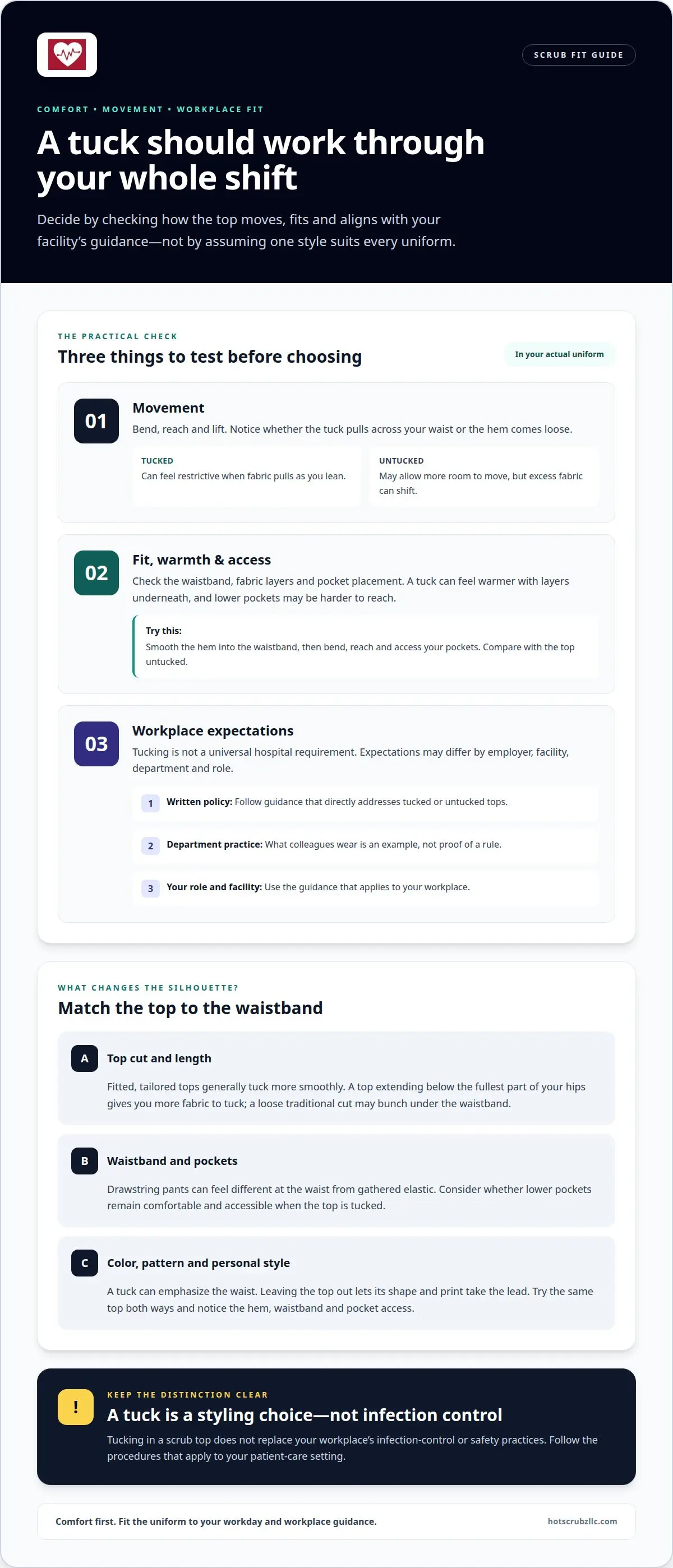
A tucked scrub top can feel neat at the start of a shift, then restrictive when you bend, reach, or lift. For example, a tight tuck may pull across your waist as you lean over a patient. That tension can make movement less comfortable, especially when your work involves frequent changes in position. A looser fit may allow more room to move, but excess fabric can shift as you work.
Heat is another consideration. Tucking can feel warmer if you wear layers beneath your top because the fabric sits close around your waist. If a tucked top feels uncomfortable during a busy stretch, try it untucked while moving and compare the difference. The goal is ease during ordinary tasks, not a silhouette that needs constant adjustment.
Expectations about tucking scrub tops vary by workplace and specialty, so don’t assume one rule applies everywhere. Follow your facility’s dress code for your role, whether you work in an operating room, emergency department, or another setting.
If your top keeps coming loose, start with its fit and length. Tuck the hem smoothly into the waistband, then bend and reach to see whether the fabric pulls free. A top that extends below the fullest part of your hips may give you more fabric to tuck. Drawstring scrub pants can feel different at the waist from gathered elastic, which may feel tight when a top is tucked in.
- Choose a top with enough length to stay tucked as you bend.
- Smooth folds around the waistband instead of pulling the hem tight.
- Use a fit that allows movement without tugging at the waist.
Check the placement of lower pockets, too. If you use them often, tucking can make them harder to access or cause the fabric to shift. Test the tuck by bending, reaching, and accessing your pockets to see whether it works for your shift.
Personal style and preference
A tuck changes the line of a uniform, so the top’s cut and details matter. Choose a look that feels like you while keeping your workday needs in mind.
Scrub Styles for Tucking
Fitted, tailored scrub tops generally tuck more smoothly than loose, traditional cuts. Their closer shape can create a polished outline, while excess fabric from a loose top may bunch under the waistband and look bulky. Length matters, too: a top that reaches below the fullest part of your hips gives you more fabric to tuck securely.
Consider the pockets and pants together. A chest-pocket top may sit neatly when tucked, while lower pockets you use often can become awkward under a waistband. Scrub pants with a drawstring may feel different from pants with gathered elastic, so the best pairing depends on your preferred fit and how the fabric falls.
Common Tucking Habits
Healthcare workers do wear scrub tops tucked in, but the look isn’t universal. Tucked scrubs can be seen among operating-room staff, emergency-department workers, and some intensive-care nurses. These examples show that tucking occurs across different clinical settings, not that everyone in those roles tucks in.
Personal style varies with the top and the wearer. A fitted top may look streamlined when tucked in, while a loose, traditional cut can add bulk. Bright colors or busy patterns may feel more balanced untucked; darker, solid colors can create a simpler line either way.
Try the same top both ways in front of a mirror. For example, tuck a solid, tailored top and compare it with an untucked patterned one. Notice where the hem lands, how the waistband sits, and whether the pockets remain accessible. A tuck can emphasize the waist, while leaving the top out lets its shape and print take the lead.
There’s no single silhouette that suits every scrub uniform. Let the top’s fit, pocket placement, and pattern guide your choice, then wear the version that feels comfortable and expresses your style.
Do hospitals require scrub tops to be tucked in?
A tucked scrub top isn’t a universal requirement across hospitals or healthcare roles. Operating-room staff have described tucking as a choice, rather than a rule they understood their workplace to enforce. That distinction matters: seeing colleagues tuck their tops doesn’t prove the facility requires it.
Some workers have said they hadn’t found an AORN policy requiring scrub tops to be tucked in. That reflects their understanding, not a rule covering every hospital or workplace. One operating-room worker likewise described no tuck requirement to their knowledge. These examples don’t establish a single rule for all operating rooms.
Expectations can differ between employers, facilities, and departments. An operating room, emergency department, and outpatient clinic may each have their own uniform guidance. The examples here don’t establish a state-by-state rule, either. Don’t assume a practice you see in one department applies to another specialty or workplace.
For a clear answer at your workplace, use the written dress code or uniform guidance for your role. Look for language that specifically says whether scrub tops must be tucked, rather than relying on how one coworker wears theirs. If the guidance is unclear, ask the appropriate workplace supervisor to explain the expectation. This helps distinguish personal preference from a workplace requirement.
- Written policy: Follow instructions that directly address tucked or untucked tops.
- Department practice: Treat what colleagues wear as an example, not automatic proof of a rule.
- Role and location: Apply the guidance for your own department and facility.
In short, operating-room workers’ reports don’t describe a universal tuck requirement, and examples from other departments don’t establish every employer’s policy. Your facility’s written guidance is the practical reference for your role. Once you know its expectations, choose a comfortable scrub fit that follows the dress code.
Are there infection control or safety reasons to tuck in scrubs?
A tuck is a uniform choice, not an infection-control measure on its own. Tucking in a scrub top, for example, doesn’t replace workplace procedures for patient care. Keep clothing choices separate from protocols for hand hygiene, protective equipment, and handling workwear. Each addresses a different part of professional practice.
Think about the task as well as the outfit. During a shift involving patient contact, follow the procedures used in that setting, whether your top is tucked or untucked. A neatly tucked hem can change how your uniform sits, but that appearance alone doesn’t show whether infection-control steps have been followed. The same distinction applies in an operating room, clinic, or emergency department.
For safety, consider how your uniform behaves during actual work. If a loose hem shifts while you reach for supplies or bend beside a patient, it may distract you or need adjustment. If a tuck presses tightly at the waist, it can also affect comfort during repeated movement. Neither fit automatically makes a uniform safer; the practical question is whether it stays comfortable and out of your way during your duties.
- Separate the issues: A tucked hem doesn’t replace care procedures.
- Consider the task: Notice whether fabric shifts during a routine movement, such as reaching for supplies.
- Follow workplace guidance: Use your facility’s protocols for clothing and patient-care practices.
If you work in a setting with specific uniform instructions, follow them over personal styling preferences. If tucking isn’t required, choose a fit that lets you move comfortably without constant readjustment. Infection-control practices depend on the procedures followed, not simply on whether a top is tucked.
For a uniform fit that suits your preferences, explore scrub tops and consider how their shape works with your shift.
HotScrubz: Scrub Tops
HotScrubz offers scrub tops and scrub pants for healthcare professionals choosing a uniform that suits their preferred fit. After weighing comfort, movement, and style, consider how a top pairs with its waistband and whether the overall fit feels right for your workday.
Explore scrub tops alongside scrub pants to build a coordinated uniform, or consider lab coats and mini tote bags as additional apparel and accessories. The right choice depends on your workplace expectations and personal preferences, not on a tuck being universally better. If you’d like to discuss your options, contact HotScrubz.
Make Your Next Shift Feel Like Yours
Your uniform can support the way you want to show up at work. Treat the pros and cons of tucking in scrub tops as a guide, not a fixed rule for every shift. Your preferred look may change with your tasks, your mood, or how a particular outfit feels. Giving yourself room to choose can make getting dressed feel more intentional.
For your next shift, choose the fit that helps you feel ready and comfortable. Notice what works, then adjust your routine as your needs change. Confidence doesn’t come from following one styling rule. It comes from feeling at ease in what you wear while focusing on the care you provide.
Share your uniform questions with HotScrubz, and keep building a workday look that feels like you.
Frequently Asked Questions
What are the pros and cons of tucking in scrub tops?
Tucking can define the waist and create a tidy outline, but it may feel restrictive or add bulk. To weigh the pros and cons of tucking in scrub tops, consider your whole shift: a tuck might suit desk-based tasks, while an untucked fit may feel easier when you bend frequently. Your top’s cut and your comfort both matter.
How does tucking in scrub tops affect comfort and range of motion during a shift?
A tight tuck can pull at the waist when you reach overhead, sit, or lean forward. Before wearing it for a full shift, try those movements in your uniform and notice whether the hem shifts or the waistband presses. If either distracts you, adjust the tuck or wear the top untucked. Comfort depends on the pairing, not just the top.
Does tucking in scrubs affect fit, appearance, or professional dress code?
Yes, tucking changes the silhouette, but it doesn’t automatically determine whether an outfit meets workplace expectations. For instance, a fitted top tucked into scrub pants can look more structured, while a loose top may appear fuller at the waist. Follow your facility’s dress guidance first, then choose a look that feels appropriate and comfortable within it.
How can you prevent bunching or discomfort when tucking in scrub tops?
Choose a top with enough length, then spread the hem evenly inside the waistband instead of folding the fabric into one thick section. Check the result while standing, sitting, and reaching. If bunching appears near a side seam or pocket, reposition the fabric rather than tightening the waistband. A top that’s too short may keep coming loose as you move.