Sub-Total: $0.00

Top Slip-Resistant Nursing Shoes: 2026 Safety & Style
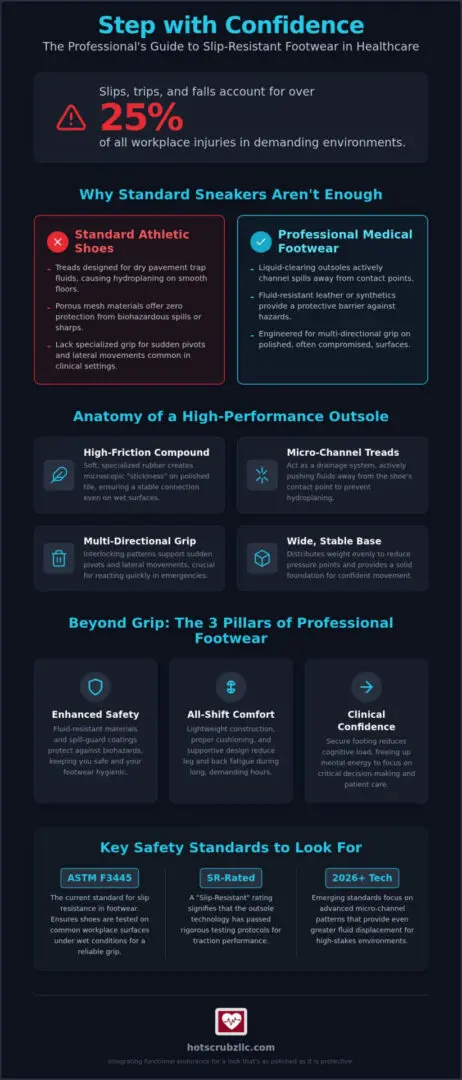
Did you know that slips, trips, and falls account for more than 25% of all workplace injuries? For a healthcare professional, a spilled saline bag or a freshly mopped hallway is a genuine hazard that can disrupt a shift or even a career. Finding the right slip-resistant shoes for nurses shouldn’t mean choosing between your safety and your personal style. You deserve a pair that holds the floor with ASTM F3445 precision while looking as polished as your professional reputation.
We know that by the tenth hour of your shift, your focus should be on your patients, not the nagging ache in your back or the fear of a slick surface. You’ve likely dealt with shoes that lose their grip within months or offer little support during those long hours on your feet. This guide will show you how to master the balance of clinical safety and all-day comfort to keep you moving confidently through every high-stakes moment. We’ll explore the latest 2026 standards in traction technology, the importance of SR-rated outsoles, and the footwear styles that prioritize your well-being as much as your performance.
Key Takeaways
- Understand why professional traction is about more than just grip; it’s about reducing the mental load so you can focus entirely on patient care.
- Explore the 2026 standards for slip-resistant shoes for nurses, focusing on micro-channel tread patterns that move fluids away from your contact points.
- Learn how to select footwear that balances rigorous safety requirements with the lightweight comfort needed to survive a high-stakes shift.
- Identify the right silhouette for your specific unit, whether you need the structured support of a professional clog or the agile responsiveness of a sneaker.
- Discover how to integrate functional endurance into your daily uniform for a look that’s as polished as it is protective.
The Role of Traction in Clinical Confidence
In the fast-paced environment of a hospital, your focus belongs on your patients, not your feet. Slip-resistance is more than a label; it’s the invisible foundation of your professional poise. While many brands use “non-slip” stickers as a marketing hook, true traction is a technical achievement. It’s the difference between hesitating at a corner and moving with the decisive speed that emergency situations demand.
When you wear high-quality slip-resistant shoes for nurses, you experience a distinct sensory connection to the floor. You can feel the outsole engage with the polished tile, providing a reliable “bite” even when fluids are present. This physical stability allows you to navigate wet surfaces without the constant, draining mental calculation of where to place each step.
Why Standard Sneakers Aren’t Enough
Most athletic sneakers are engineered for road-running, where treads are designed to grip dry pavement or push through loose dirt. In a clinical setting, these patterns often trap fluids, creating a hydroplaning effect on smooth hospital floors. High-performance medical footwear uses specialized liquid-clearing outsoles that channel spills away from the contact point rather than trapping them.
Beyond the tread, standard sneakers often feature porous mesh materials that offer zero protection against biohazardous spills. To ensure you’re truly protected, look for footwear evaluated through rigorous slip resistance testing methods. The ASTM F2913-19 standard defines slip-resistance through a test method that measures the coefficient of friction between the footwear’s outsole and the floor surface under various conditions.
The Emotional Impact of Secure Footing
Your workplace is a high-stakes arena. When a code is called or a patient needs immediate assistance, your brain shouldn’t be distracted by the fear of a fall. Secure footing reduces your cognitive load, freeing up mental energy for critical decision-making. It’s about empowerment; knowing your gear can handle the environment as well as you can.
There is a deep connection between your physical stability and your professional presence. When you walk with confidence, you project a sense of readiness and calm to your colleagues and patients alike. Choosing the right slip-resistant shoes for nurses is an act of self-care that transforms how you carry yourself through the final hours of a demanding shift.
Decoding Slip-Resistant Technology: Outsoles and Materials
Choosing the right footwear requires looking beneath the surface. It isn’t just about a “non-slip” label; it’s about the sophisticated chemistry of rubber compounds. High-quality slip-resistant shoes for nurses utilize soft, high-friction rubbers that create a microscopic stickiness on polished tiles. This ensures your footing remains stable even when the floor is compromised by water or cleaning agents.
The tread pattern acts as the primary drainage system for your feet. Effective outsoles feature micro-channels that actively push fluids away from the contact point. Fluids need a place to go. Without these channels, a thin layer of liquid can sit between your shoe and the floor, leading to a dangerous hydroplaning effect. This technical detail is why professional medical footwear outperforms casual sneakers in the ward. Maintaining this grip is vital; as noted in the CDC guidelines for healthcare footwear, worn-out soles significantly increase the risk of workplace falls.
The Anatomy of a High-Performance Outsole
Look for interlocking patterns that offer multi-directional grip. Clinical work often requires sudden pivots and lateral movements that a standard linear tread cannot support. A wider base provides a stable foundation, distributing your weight more evenly to reduce pressure points. Rubber density also plays a critical role. A denser compound offers enhanced durability and a firmer grip, while a lighter, air-infused rubber can reduce overall shoe weight to prevent leg fatigue during those final hours.
Material Choice: Fluid Resistance and Durability
While mesh is popular for breathability, it’s often a liability in high-stakes environments. Porous materials allow liquids and sharps to penetrate, compromising your safety. Leather or premium synthetics provide a solid barrier against biohazardous spills. These materials are also easier to sanitize, ensuring your gear stays professional and hygienic for years. Many modern designs now include spill-guard coatings that repel fluids, keeping your shoes looking polished through every shift.
Durability is a long-term investment in your well-being. A shoe that maintains its structural integrity and grip for 12 months is far more valuable than a cheaper pair that fails after three. Investing in professional slip-resistant shoes for nurses ensures you stay grounded when the pace accelerates. For more on choosing gear that stands up to the clock, read our Best Nursing Shoes for Long Shifts: 2026 Guide. If you’re ready to upgrade your professional kit, explore our latest medical footwear designed for the demands of the modern nurse.
Beyond the Grip: Balancing Safety with All-Day Comfort
Many professionals believe that high-traction outsoles require heavy, industrial-looking frames. This is a misconception that can lead to unnecessary physical strain. Modern engineering allows slip-resistant shoes for nurses to remain lightweight and agile without sacrificing a single ounce of safety. You don’t have to carry extra weight on your feet just to stay secure on wet floors. You deserve a shoe that works as hard as you do, providing a foundation of ease that lasts until your final chart is signed. When your footwear is balanced correctly, it preserves your energy for the moments that matter most.
Arch Support and Spinal Alignment
The physical toll of a 12-hour shift isn’t just felt in your toes. It travels upward, impacting your ankles, knees, and lower back. This “referred pain” is often the result of poor spinal alignment caused by inadequate arch support. While soft cushioning feels pleasant during the first hour, it’s structural support that prevents shift-end exhaustion. Proactive foot health is an investment in your career longevity. By choosing footwear with a firm, supportive midsole, you ensure your body stays aligned and resilient through years of high-stakes clinical work. This structural integrity keeps your posture upright and your movements fluid.
Breathability vs. Protection
Maintaining a professional appearance while staying cool is a constant challenge in busy wards. Modern medical footwear utilizes innovative moisture-wicking liners to manage heat without compromising the fluid-safe exterior. These materials pull sweat away from the skin, keeping your feet dry and preventing the friction that leads to blisters. Unlike standard athletic shoes that lose their silhouette over time, professional-grade options are built to maintain their shape after months of heavy use. This ensures that the protection you feel on day one remains consistent throughout the shoe’s lifecycle. Choosing a pair that balances heat management with spill protection allows you to focus on your patient’s needs rather than your own discomfort.
Proper weight distribution is the final piece of the comfort puzzle. When a shoe is designed with a nurse’s gait in mind, it reduces the strain on your calves and hamstrings. This thoughtful construction transforms your daily uniform from a basic requirement into a high-performance tool. By prioritizing both safety and comfort, you elevate your professional experience and protect your long-term physical well-being. It is about more than just avoiding a fall; it’s about arriving home without the chronic aches that often follow a dedicated day of service.
Selecting Your Pair: Guide for High-Stakes Environments
Your daily routine dictates your gear. A nurse in the Emergency Room has different traction needs than a professional in a quiet outpatient clinic. Choosing the right slip-resistant shoes for nurses depends entirely on the rhythm of your specific unit. You need a pair that mirrors your pace, whether that means standing for hours during a complex procedure or sprinting to a bedside during a code. Selecting the right silhouette is about matching the shoe’s technical strengths to your environmental challenges.
Clogs vs. Sneakers: The Great Debate
Professional clogs are the gold standard for shifts where standing is the primary activity. They offer a structured heel and significant arch support that prevents the heavy leg feeling that often sets in by mid-afternoon. If your role involves constant movement between units, the flexibility of a nursing sneaker provides the agility you need. Sneakers are generally lighter and offer more lateral stability for quick turns. Clogs usually offer a wipe-clean surface that resists stains better than the mesh panels found on many athletic styles.
Environment-Specific Recommendations
In the Operating Room, fluid protection and anti-static properties are your top priorities. You need a closed-surface shoe that acts as a shield against spills while maintaining a firm grip on potentially slick floors. For clinical or outpatient settings, you might prioritize style-forward, lightweight options that look polished during patient consultations. Evaluate a shoe’s readiness by checking the tread depth and the snugness of the fit; a shoe that slips at the heel will cause blisters regardless of its floor grip.
Busy clinical days don’t leave room for fumbling with complicated laces. Easy-on, easy-off features are a subtle luxury that makes a big difference when you need to change quickly for a sterile zone or simply want to give your feet a moment of air during a rare break. Your footwear is a critical component of your professional image and your physical health. See how your shoes fit into a total look by reading our guide on building a medical capsule wardrobe.
Finding a pair that balances these needs allows you to walk into any unit with total self-assurance. If you’re ready to upgrade your professional kit, explore our collection of medical footwear designed to handle the unpredictable nature of your workday.
Elevate Your Shift with HotScrubz Medical Footwear
At HotScrubz, we view you as more than a healthcare professional; we see you as a high-performance athlete in a high-stakes arena. Your shift is a marathon of focus, precision, and physical endurance. Because we intimately understand the rigors of your workplace, we’ve curated a selection of gear that meets your highest standards for safety and style. Choosing the right slip-resistant shoes for nurses is the first step toward a workday defined by ease rather than effort. We are here to ensure that every part of your uniform empowers your movement and reflects your commitment to excellence.
The HotScrubz Commitment to Quality
Our footwear selection is built on the belief that safety should never feel sterile or clinical. We prioritize your emotional state by offering styles that are as polished as they are protective. Each pair is chosen for its ability to provide physical ease during those critical final hours of a long shift. We focus on modern materials and accessible designs that bring a sense of prestige to your everyday routine. With the convenience of national shipping across the US, we deliver professional-grade support directly to your door. You can trust that our offerings are tested for the real-world challenges you face, allowing you to move with total self-assurance.
Completing the Professional Look
A cohesive image does more than impress colleagues; it provides a significant psychological boost. When you pair your footwear with premium medical scrubs, you create a total look that projects confidence and readiness. Shopping for your entire uniform in one place ensures that your colors, styles, and functional features work in perfect harmony. This integration allows you to step onto the ward feeling visible, valued, and prepared for any situation. Your gear is a critical component of your professional identity, and it should honor the vital work you do.
Investing in high-quality slip-resistant shoes for nurses is an investment in your own well-being. You spend your life caring for others; it’s time your equipment cared for you. By choosing gear that balances aesthetic appeal with functional endurance, you elevate your professional experience from the ground up. Don’t settle for footwear that merely meets a requirement when you can have a pair that inspires your performance. Step into your next shift with confidence at HotScrubz and discover the difference that professional-first gear makes.
Step Into Your Next Shift with Total Confidence
You carry the weight of patient care every day, and your footwear should be the last thing on your mind. We’ve explored how advanced traction reduces your mental load and why structural arch support is vital for your physical resilience. Whether you prefer the structured stability of a professional clog or the agile flexibility of a nursing sneaker, the right choice empowers you to move with purpose and poise.
Investing in high-quality slip-resistant shoes for nurses is a powerful act of self-care that honors the work you do. At HotScrubz, we prioritize your professional image with modern styles that are empathetically designed for 12-hour shift endurance. With national shipping on all professional footwear orders, we ensure you have the support you need, wherever you practice. You deserve gear that works as hard as you do while reflecting the excellence you bring to every patient bedside.
Find your perfect pair of slip-resistant nursing shoes at HotScrubz today. You’ve dedicated your life to the service of others; let us provide the foundation that keeps you moving forward with total self-assurance.
Frequently Asked Questions
What is the difference between non-slip and slip-resistant shoes?
“Non-slip” is often a marketing term, while “slip-resistant” implies testing against recognized standards like ASTM F3445. The latter provides a verified coefficient of friction to ensure safety on wet or oily hospital floors. Choosing slip-resistant shoes for nurses ensures your gear meets specific technical requirements for traction rather than relying on vague manufacturer promises. It’s about having verified confidence in every step you take during a demanding shift.
How often should nurses replace their slip-resistant shoes?
Most medical professionals should replace their footwear every six to twelve months, depending on usage and shift frequency. You should inspect your outsoles regularly for signs of tread wear or smoothing. Once the micro-channels in the rubber begin to flatten, the shoe’s ability to clear liquids decreases significantly. Fresh outsoles are essential for maintaining the grip needed to prevent workplace injuries and ensure your long-term physical comfort.
Can I make my regular sneakers slip-resistant with a spray or cover?
No, external sprays or covers are not a reliable substitute for professionally engineered outsoles. While these products might offer a temporary increase in friction, they lack the durability and standardized testing of dedicated medical footwear. They also don’t provide the fluid protection or structural support required for clinical environments. It’s always safer to invest in a pair designed from the ground up to handle high-stakes workplace hazards.
Are clogs or sneakers better for nurses with plantar fasciitis?
Clogs often provide the superior arch support and heel elevation needed to alleviate plantar fasciitis pain. The rigid construction helps distribute weight evenly across the foot, reducing strain on the fascia. However, some high-performance nursing sneakers offer advanced orthotic footbeds that can be just as effective. The best choice depends on your specific foot shape and whether you prioritize the structured stability of a clog or the cushioned flexibility of a sneaker.
How do I clean my medical footwear to maintain the slip-resistant grip?
Clean your outsoles with warm water and a mild detergent to remove floor wax, grease, or debris that can clog the tread. Use a soft brush to clear the micro-channels, ensuring nothing interferes with the rubber’s contact with the floor. Avoid using harsh chemicals or bleach directly on the slip-resistant soles, as these can degrade the rubber compound over time. Regular maintenance preserves the technical integrity of your footwear and extends its lifespan.
What should I look for in a shoe if I work 12-hour shifts?
Prioritize a balance of lightweight construction, high-rebound cushioning, and a wide toe box. Your feet will naturally swell during a long shift, so having extra room prevents painful pressure points. Look for slip-resistant shoes for nurses that feature moisture-wicking liners to keep your feet dry and cool. A secure heel fit is also critical to prevent friction and blisters, allowing you to move with total focus until the very last hour.
Is there a specific certification for slip-resistant medical footwear?
You should look for footwear tested under the ASTM F2913-19 standard, which measures the coefficient of friction on various surfaces. In 2026, the ASTM F3445 specification sets the minimum requirements for slip resistance that professionals should expect. These certifications provide a technical benchmark that goes beyond basic marketing claims. Checking for these standards ensures your shoes provide the verified protection required by modern safety regulations in healthcare settings.
Do slip-resistant shoes require a “break-in” period?
Most modern medical shoes are designed for comfort right out of the box, but a short break-in period is still recommended. Wear your new pair for a few hours at home before committing to a full 12-hour shift. This allows the materials to adapt to your foot’s unique shape and ensures there are no unexpected rubbing points. A gradual introduction helps you transition into your new gear with total ease and confidence.