Sub-Total: $0.00

The Ultimate Guide to Stethoscopes: Choosing the Heartbeat of Your Practice
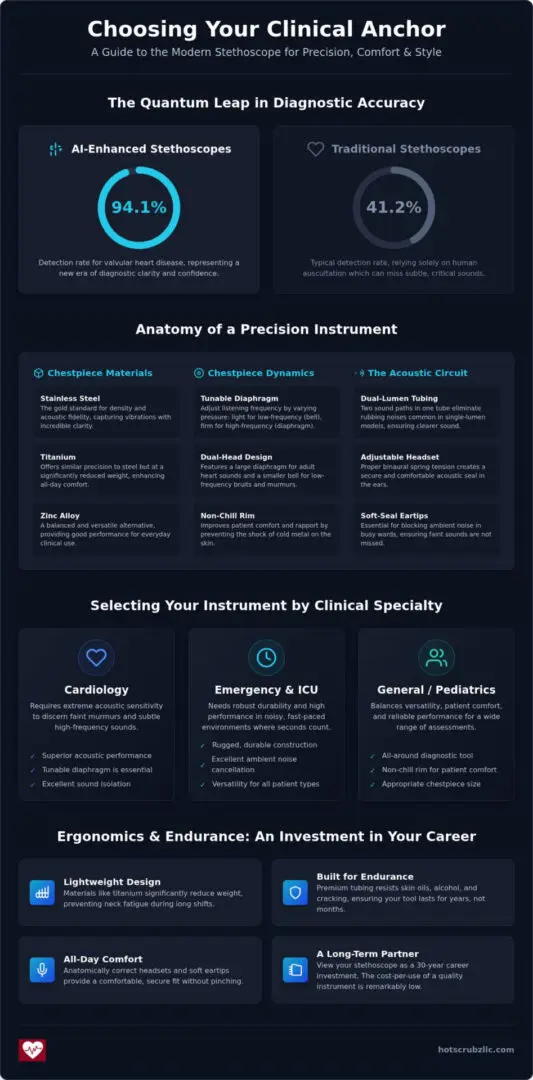
Did you know that AI-enhanced stethoscopes now achieve a 94.1% detection rate for valvular heart disease, compared to just 41.2% for traditional models? This massive leap in diagnostic clarity shows how quickly the heartbeat of your practice is evolving. You rely on your tools to bridge the gap between clinical skill and patient trust. However, the wrong choice often leads to more than just missed sounds. It leads to aching ears, neck fatigue, and tubing that wears out far too soon.
We agree that your gear should work as hard as you do without weighing you down. You’ve likely felt the frustration of straining to hear a faint murmur in a crowded ward or dealing with a headset that pinches during a long shift. You deserve a tool that empowers your assessments while complementing your professional uniform. This guide helps you select a stethoscope that balances acoustic precision, all-day comfort, and refined style. We’ll explore the latest ergonomic designs and durability features that ensure your investment lasts for years, not months.
Key Takeaways
- Identify how your choice of instrument functions as a clinical anchor, bridging the gap between your expertise and patient trust.
- Learn to evaluate chestpiece materials and diaphragm designs to ensure you achieve the acoustic clarity required for your specific role.
- Select stethoscopes that match your clinical specialty, balancing the need for extreme sensitivity with the demands of a mobile, high-energy ward.
- Master the art of ergonomic selection to prevent neck fatigue and ensure your diagnostic tools support your physical well-being.
- Discover how to pair premium diagnostic accessories with your professional wardrobe for a cohesive look of authority and enduring quality.
The Clinical Anchor: Why Your Stethoscope Defines Your Practice
The image of a clinician is rarely complete without a tool draped around their neck; it’s a universal symbol of expertise that signals readiness to help. This instrument serves as your primary connection to the patient’s internal world. While the Stethoscope has evolved since its invention in 1816, its core purpose remains the same. It is the gateway to auscultation, which is the sophisticated art of listening to the body’s internal rhythms to detect subtle shifts in health.
A reliable instrument does more than just transmit sound. It actively reduces clinical anxiety by providing clear, unambiguous feedback during a busy shift. When you can hear a faint diastolic murmur or the fine crackles of early pneumonia without second-guessing yourself, your diagnostic confidence soars. This certainty allows you to focus entirely on the person in front of you rather than struggling with your equipment. Transitioning from basic student kits to professional-grade stethoscopes marks a pivotal moment in your career. It represents your commitment to precision and your readiness to handle complex cases with authority.
Beyond the Basics: The Tool as an Extension of the Clinician
Your stethoscope acts as a vital bridge of trust, connecting your professional expertise directly to the patient’s well-being.
Beyond its mechanical function, a high-quality instrument reinforces your professional identity every time you reach for it. It reminds you that you possess the skills and the gear necessary to save lives. In critical care environments, “good enough” simply isn’t an option. You need a tool that captures high-frequency sounds even in noisy trauma bays, ensuring that nothing is missed when seconds count.
Investing in Endurance for the National Healthcare Hero
Think of your diagnostic gear as a long-term partner in your 30-year clinical journey. While a budget model might seem tempting, the cost-per-use of a premium instrument is remarkably low when spread over thousands of shifts. You deserve tools that match the quality and professional silhouette of your premium medical scrubs. Choosing a tool designed for the rigors of a fast-paced US clinical environment means you won’t be replacing cracked tubing or loose chestpieces every few months. High-end stethoscopes are built to endure the heat, oils, and constant movement of modern healthcare, providing a sense of ease that lasts as long as your career.
Decoding the Anatomy: Engineering Precision for Critical Listening
The chestpiece is the engine of sound conduction. Stainless steel remains a favorite for its density; it captures vibrations with incredible fidelity. Titanium offers a similar level of precision but significantly reduces the weight around your neck. Zinc alloy provides a balanced alternative, often found in versatile, everyday models. Understanding these materials helps you choose stethoscopes that feel as good as they perform. Beyond the material, the duality of the diaphragm and bell is essential. The larger diaphragm captures high-frequency sounds like heartbeats. The smaller bell is dedicated to low-frequency bruits and murmurs. Mastering the switch between the two is what transforms a simple check-up into a deep clinical assessment.
The Heart of Sound: Chestpiece Dynamics
A tunable diaphragm allows you to listen to different frequencies without flipping the chestpiece. You simply vary the pressure. Light pressure lets you hear low-frequency sounds, while firm pressure captures higher frequencies. This efficiency is vital during rapid assessments. Don’t overlook the non-chill rim; it prevents the sudden shock of cold metal against a patient’s skin. This small detail fosters a better care environment and builds patient rapport. Choosing the right size, from adult to neonatal, ensures the chestpiece makes full contact for optimal sound transmission across different patient populations.
From Tubing to Ear: Ensuring a Closed Acoustic Circuit
Dual-lumen tubing features two sound channels within a single tube to prevent the internal rubbing noise that often plagues cheaper, single-lumen models. The path from the patient to your ears must be airtight and silent. The headset’s binaural spring tension should be adjustable to provide a secure but comfortable seal. This ensures the ear tips stay in place without causing discomfort during a long shift. Soft-seal ear tips are essential for blocking out the ambient hum of a busy ward. These components work together to create a closed acoustic circuit, ensuring that faint sounds aren’t lost to the environment. Modern tubing is typically latex-free, making it resistant to skin oils and the harsh alcohol cleaners used between patients. When you invest in high-quality stethoscopes, you are choosing a tool engineered for both clinical excellence and daily endurance.
Selecting Your Instrument: A Guide by Clinical Specialty
Your clinical environment determines the frequency and intensity of the sounds you must capture. In cardiology, the need for extreme acoustic sensitivity is absolute. High-performance stethoscopes designed for this field utilize dual-lumen tubing to eliminate internal friction, allowing you to hear the subtle clicks of a prosthetic valve or the soft blow of a murmur. If you work in nursing or general practice, your needs shift toward lightweight portability. You spend your day in motion, so you need an instrument that balances high-fidelity sound with a weight that won’t cause fatigue by the middle of your shift. Emergency and first response roles require a different kind of endurance. These environments are unpredictable and often loud; your tool must be rugged enough to survive a trauma bay while blocking out the chaotic noise of the field. Even veterinary medicine requires specific engineering, such as longer tubing to accommodate the physical distance needed when assessing larger or more active animals.
The Student Journey: Starting with Professional Standards
Choosing your first instrument is about more than just passing a clinical skills exam. It’s about training your ears with the best possible data. If you start with a “classroom” tool, you might struggle to differentiate between complex lung sounds or subtle heart rhythms simply because the acoustics aren’t there. Investing in professional-grade stethoscopes from the start ensures your learning isn’t hindered by your equipment. This choice sets the stage for clinical excellence, allowing you to build a reliable “acoustic library” in your mind that will serve you for the rest of your career.
Specialized Care: Pediatric and Neonatal Considerations
Precision is paramount when your patients are only a few pounds. Pediatric and neonatal care requires smaller diaphragms to ensure the chestpiece makes full contact with a tiny ribcage. This allows for precise sound localization that larger models simply can’t achieve. These specialized tools are sleek and compact, designed to slide easily into the pocket of a professional lab coat without adding bulk. We understand that pediatric care is also about the emotional experience. Balancing these technical requirements with a gentle, patient-friendly aesthetic helps you build rapport with families while maintaining the rigorous standards of a specialized unit.
Comfort in Motion: Managing Weight, Snagging, and Daily Fatigue
A 12-hour shift is an endurance event. Your tools shouldn’t be obstacles in your path. The weight of your chestpiece might seem minor at the start of your day, but by the final hour, it can lead to significant neck fatigue and compromised posture. Choosing lightweight stethoscopes is a proactive step toward long-term physical well-being. Tubing length also plays a critical role in your daily rhythm. If it’s too long, it snags on bedrails or IV poles during fast-paced movements. If it’s too short, you’re forced into awkward, strained positions that distance you from the patient. Finding that sweet spot in length ensures you can move with fluid grace and clinical precision.
The Ergonomics of the 12-Hour Shift
Many professionals default to wearing their instrument around the neck, but this can lead to “stethoscope neck” over years of practice. Consider alternating between a pocket or a holster to distribute the weight and protect your cervical spine. Materials like titanium offer the same acoustic precision as stainless steel with a fraction of the mass. This small change makes a massive difference in how your shoulders feel after a double shift. Don’t forget the headset. Adjusting the spring tension ensures a custom, pain-free fit, while ensuring the ear tip angle aligns perfectly with your natural ear canal. This alignment is what creates that silent, focused environment you need for an accurate diagnosis.
Professional Integration: Style Meets Function
Your diagnostic tools are an extension of your professional identity. Coordinating your instrument with modern medical uniforms creates a polished, authoritative look. Modern metal finishes, such as champagne gold or smoke, move away from the sterile, industrial feel of the past. A well-integrated stethoscope elevates the professional silhouette. This visual harmony signals competence and a high regard for your craft, helping you feel more confident as you step into the room.
Your posture is a chain. The weight around your neck influences your center of gravity, which in turn affects your gait and overall energy levels. Ensuring your tool is balanced and lightweight complements your choice in medical footwear. When your gear works in harmony with your body, you can move through the ward with a sense of ease and readiness. Ready to upgrade your clinical wardrobe? Explore our full collection of premium diagnostic accessories and apparel today to find the perfect fit for your practice.
Elevating Your Practice with Premium Diagnostic Essentials
HotScrubz LLC understands that your workday is a high-stakes environment where precision and poise are equally important. We prioritize diagnostic tools that support your internal state as much as your external performance. Your clinical kit needs to be as resilient as the US healthcare system itself. Choosing accessories that match the functional endurance of your scrubs ensures you never feel let down by your gear. We don’t just provide equipment; we offer a sense of readiness that allows you to step into every patient room with absolute confidence.
Maintenance for Longevity
Longevity begins with consistent care and a commitment to hygiene. Clean your chestpiece and tubing with 70% isopropyl alcohol wipes after every patient interaction to maintain visibility and safety. Avoid submerging your stethoscopes or using harsh bleach, which can cause the tubing to become stiff and brittle over time. Acoustic loss often happens gradually, so it’s vital to replace consumables like ear tips and diaphragms every six to twelve months. If you notice any cracks or a decrease in seal quality, swap them out immediately to restore your instrument’s full potential. Proper storage is just as vital. Instead of leaving your tool in a hot car or crumpled at the bottom of a locker, hang it in a cool, dry place to prevent kinks that could compromise sound quality.
The Final Piece of Your Professional Wardrobe
A high-performance instrument is the final piece of your professional wardrobe. It completes a look of clinical authority that tells your patients and colleagues you are prepared for anything. HotScrubz LLC acts as a stylish ally for professionals who refuse to choose between care and style. We believe that when you look your best, you perform with more self-assurance and grace. Your stethoscopes should feel like a natural extension of your uniform, bridging the gap between your technical skill and your professional appearance. By choosing gear that reflects your dedication, you elevate not only your practice but also the way you feel during those long, demanding shifts. Discover our collection of diagnostic essentials and stethoscopes at HotScrubz LLC to find the tool that matches your ambition.
Master Your Clinical Rhythm
Your choice of diagnostic gear is more than a technical decision; it’s a commitment to your own well-being and the quality of care you provide. We’ve explored how understanding acoustic engineering and selecting the right materials can prevent the neck fatigue that often follows a demanding day. By prioritizing ergonomic designs and specialized sensitivity, you ensure that your stethoscopes remain a reliable extension of your skill rather than a source of physical strain.
HotScrubz is proud to empower healthcare professionals across the United States with premium quality diagnostic tools designed for the rigors of 12-hour shifts. You deserve a clinical kit that works as hard as you do while maintaining the professional silhouette you’ve worked so hard to build. Elevate your clinical practice with premium stethoscopes and accessories from HotScrubz. Step into your next shift with the confidence that you are fully prepared, deeply supported, and ready to make a lasting difference in the lives of your patients.
Frequently Asked Questions
What is the difference between a single-lumen and dual-lumen stethoscope?
Single-lumen models use one sound path, while dual-lumen designs feature two paths within a single tube. This dual-lumen technology is superior for acoustics because it prevents the internal rubbing noise common in cheaper, separate tubes. It’s the standard for cardiology-grade stethoscopes. This design ensures both high and low-frequency sounds reach your ears without interference, which is critical for accurate assessments in noisy clinical environments.
How do I know if my stethoscope ear tips are the right size?
You’ll know your ear tips fit correctly when you feel a firm, airtight seal that comfortably blocks out ambient noise. The tips should follow the forward-facing angle of your ear canals without pinching. If they feel loose or cause sharp pain during your shift, swap them for a different size included in your kit. A proper fit is essential for acoustic isolation and preventing the ear fatigue that often occurs during long shifts.
Can I use an adult stethoscope on a pediatric patient in an emergency?
You can use an adult model on a pediatric patient in an emergency, but you must be aware of the limitations. The larger diaphragm might not make full contact with a small chest wall, leading to significant acoustic loss. For the most accurate localization of heart sounds or breath sounds in children, using a dedicated pediatric chestpiece is always the best practice once the immediate crisis has stabilized.
Why does my stethoscope tubing get stiff or crack over time?
Tubing typically gets stiff or cracks because of prolonged exposure to skin oils and alcohol-based cleaners. These substances leach plasticizers from the PVC, making it brittle over time. To prevent this, don’t wear your tool directly against your skin or tucked under a collar. Wiping the tubing with a mild soap solution instead of harsh chemicals can help maintain its flexibility and professional appearance for years.
Is a more expensive cardiology stethoscope worth it for a general nurse?
A cardiology-grade instrument is a worthy investment for any clinician who prioritizes acoustic clarity and diagnostic confidence. While you might not always need the extreme sensitivity required for complex murmurs, the superior sound isolation helps you hear clearly in chaotic ward environments. Investing in high-performance stethoscopes early in your career ensures you never miss a subtle clinical change because of inferior, budget-level equipment.
How often should I clean my stethoscope and what should I use?
You should clean your instrument after every patient interaction to maintain hygiene and visibility. Use a 70% isopropyl alcohol wipe on the chestpiece and ear tips, as these are the primary contact points. Don’t submerge the tool in any liquid or use hand sanitizer on the tubing. High alcohol content in sanitizers can accelerate the breakdown of materials and lead to premature cracking of the acoustic seal.
What is the best way to wear a stethoscope to avoid neck pain?
To avoid neck pain, alternate how you carry your tool throughout your shift. Draping it over your neck can lead to cervical strain and poor posture because of the weight of the chestpiece. Consider using a pocket in your lab coat or a dedicated waist holster to distribute the weight evenly. Choosing a model made from lightweight materials like titanium can also significantly reduce the physical toll on your shoulders.
How do I test the acoustic seal of my new stethoscope?
To test the acoustic seal, place the ear tips in your ears and gently tap on the diaphragm. You should hear a clear, sharp sound without any hollow echo or air leakage. Another method is to lightly press the diaphragm against your palm; if the seal is airtight, you’ll feel a slight pressure change in your ears. This ensures that environmental noise won’t interfere with your vital clinical assessments.