Sub-Total: $0.00

The Ultimate Guide to Modern Medical Uniforms: Style, Safety, and Performance
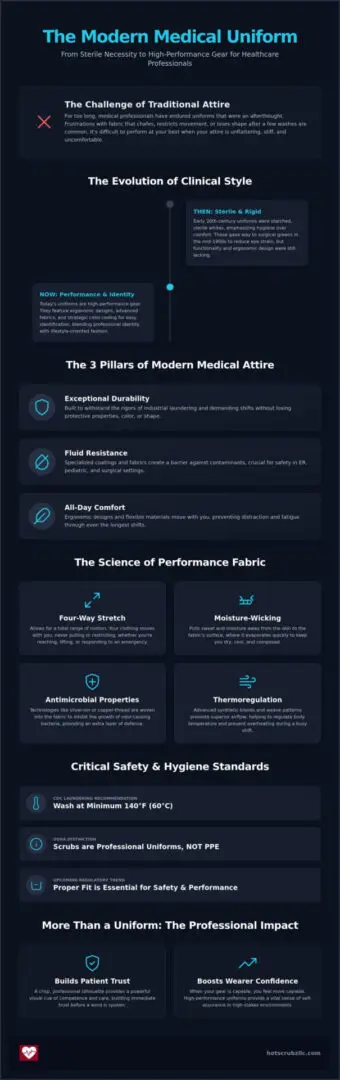
Why do we often settle for clothing that works against us during a twelve-hour shift? For too long, medical uniforms have been treated as a sterile afterthought rather than the high-performance gear you actually need. You know the frustration of fabric that chafes by midday or scrubs that lose their shape after only a few washes. It is difficult to feel your best when your clinical attire feels unflattering, stiff, or restrictive.
You deserve a professional wardrobe that honors your dedication. This guide will help you discover how modern medical uniforms balance essential safety with the comfort and style required for your most demanding shifts. We will explore how to identify durable, high-performance fabrics that breathe and withstand the heat of industrial sterilization. You will also learn how to select pieces that offer the smart storage you need for your tools while boosting your professional confidence. From advanced antimicrobial technology to sustainable materials, it’s time to choose apparel that supports you as much as you support your patients.
Key Takeaways
- Learn how the evolution of clinical attire has transformed basic scrubs into high-performance gear that prioritizes your comfort and professional identity.
- Understand the science behind advanced fabric blends to choose medical uniforms that offer breathability, durability, and a professional fit that lasts.
- Discover how to curate a versatile professional wardrobe by pairing ergonomic scrub sets with functional lab coats and essential diagnostic accessories.
- Identify the specific features your role demands, from high-mobility designs for nursing staff to specialized storage solutions for medical tools.
- See how prioritizing the intersection of aesthetic appeal and functional endurance can elevate your daily experience and boost your confidence on the floor.
Defining the Modern Medical Uniform: More Than Just Fabric
Your clinical attire is your second skin. It’s a specialized tool designed for safety, hygiene, and instant identification. While we often think of medical uniforms as a simple dress code requirement, they serve a much deeper purpose. They act as a barrier against contaminants and a symbol of professional readiness. When you step into a well-fitted set of scrubs, you aren’t just getting dressed. You’re preparing for the mental and physical demands of a high-stakes environment.
The psychological impact of your appearance is profound. Patients look for visual cues of competence and care. A crisp, professional silhouette builds immediate trust before you even speak. For mobile providers such as YA Medical, who offer house-call doctor services, this visual cue of competence is essential when entering a patient’s home. For you, the wearer, it provides a vital sense of self-assurance. You feel capable because your gear is capable. Modern uniforms must meet three non-negotiable standards: exceptional durability, fluid resistance, and the kind of all-day comfort that carries you through the final hour of a double shift.
The Evolution of Clinical Style
The history of medical scrubs is a journey from rigid tradition to adaptive technology. We’ve moved far beyond the starched, sterile whites of the early 20th century. Those traditional nursing habits eventually gave way to surgical greens in the mid-1900s, designed to reduce eye strain under bright operating room lights. Today, color coding is a global standard that helps patients navigate complex hospital environments. For instance, as of August 2026, Kuwaiti regulations mandate dark navy blue for doctors and blue or white for nursing staff. This evolution reflects a shift toward lifestyle-oriented fashion where we demand ergonomic designs that move as fast as we do.
Regulatory and Hygiene Standards
Uniforms play a critical role in infection control. They are your first line of defense against cross-contamination between patients and your personal life. High-performance gear must withstand the rigors of industrial laundering without losing its protective properties. The CDC recommends laundering clinical uniforms at temperatures of at least 140°F (60°C) with EPA-registered detergents to ensure total sanitation. Per OSHA standards for medical attire, clinical scrubs are considered professional uniforms rather than Personal Protective Equipment, which necessitates the use of specialized gowns or aprons when encountering bloodborne pathogens. However, a 2026 regulatory trend emphasizes that all professional gear must properly fit the individual to ensure both safety and maximum performance.
The Science of Performance: Fabric Technology in Medical Uniforms
Fabric choice isn’t just about how a shirt feels against your skin. It’s the engine that drives your performance during a grueling shift. In the past, medical professionals relied on heavy cotton that trapped moisture and wrinkled within hours. Today, the standard for medical uniforms has shifted toward sophisticated synthetic blends. These high-performance materials offer the durability of industrial gear with the soft touch of luxury activewear. When you choose a performance blend, you’re choosing a garment that works as hard as you do.
Modern clinical environments demand movement. This is why four-way stretch technology has become essential. Unlike traditional fabrics that pull or restrict, four-way stretch allows for a total range of motion. Whether you’re reaching for high-shelf supplies or responding to a code, your clothing should never be an obstacle. Pairing this flexibility with moisture-wicking properties ensures you stay dry and composed even in the most high-stakes situations. It’s about maintaining your focus by removing the distraction of physical discomfort.
Antimicrobial and Fluid-Resistant Coatings
Safety is the silent partner of style. In 2026, antimicrobial properties are a baseline expectation for premium apparel. Technologies like silver-ion or copper-thread weaving are integrated directly into the fabric to inhibit bacterial growth. While standard scrubs are distinct from the high-level barriers defined in the FDA guidelines on medical gowns, these specialized coatings provide a vital layer of defense. Fluid-barrier fabrics are particularly crucial in pediatric and ER settings, where unexpected spills are part of the daily routine. These materials don’t just resist water; they create a protective shield that keeps contaminants away from your skin.
Breathability and Thermoregulation
Fatigue often starts with your body temperature. Modern synthetic blends use advanced airflow mechanics to promote thermoregulation, keeping you cool during a busy twelve-hour shift and warm during quiet charting periods. These fabrics are engineered to withstand repeated sterilization at temperatures of 140°F (60°C) without losing their structural integrity. You can expect your gear to maintain its color vibrancy and fit even after 50 or more wash cycles. Finding the right balance of stretch and safety is easier when you explore the performance-driven scrub tops designed for the modern professional. The antimicrobial apparel segment is projected to reach $8.97 billion this year, reflecting a global shift toward uniforms that prioritize the wearer’s long-term health and comfort. For professionals with sensitive skin or those who prioritize natural fiber breathability, cotton scrubs remain a premier choice for dermatological health and thermal regulation in high-heat clinical environments.
Building a Complete Clinical Wardrobe
A professional clinical wardrobe is far more than a single set of scrubs. It’s a carefully curated system of high-performance tools designed to support your body through every twist, turn, and long stretch of standing. While a brief history of medical uniforms shows us how far we’ve come from simple aprons, the modern ensemble now integrates diagnostic accessories and ergonomic layers to create a cohesive professional image. Building this kit requires looking beyond the basic fabric and considering how each piece contributes to your efficiency and long-term physical health.
Your wardrobe should reflect a balance of visibility and utility. It isn’t just about looking the part; it’s about having the right gear to perform the part. This means selecting items that offer both aesthetic appeal and functional endurance. From the foundation of your footwear to the specialized storage in your outer layers, every component of your medical uniforms should feel like a supportive ally during your most demanding shifts. If you’re ready to make a meaningful upgrade, exploring premium quality scrubs designed for 2026’s clinical demands is an excellent place to start.
The Anatomy of Premium Scrub Tops and Pants
Your base layer should be a masterpiece of utility. Look for scrub tops that feature reinforced pockets to prevent sagging when you’re carrying heavy stethoscopes or mobile devices. Badge loops and dedicated pen slots keep your essentials within reach, while yoga-style waistbands on pants provide a secure fit that doesn’t dig into your skin. Jogger-style scrub pants have surged in popularity because they offer modern mobility and a tapered fit that stays clear of your footwear, preventing trips during fast-paced rounds. These features ensure you stay focused on patient care rather than adjusting your clothing.
Professional Layering: Lab Coats and Jackets
Layering is about more than staying warm in a chilled hospital wing. It’s a strategic choice for authority and storage. A full-length lab coat offers maximum pocket depth for tablets and reference guides, while a shorter consultation jacket provides a streamlined look for outpatient settings. Modern tailoring has transformed the traditional “white coat” into a flattering silhouette that resists stains and maintains a crisp appearance. Your outer layer should reflect the same commitment to performance as your base scrubs, utilizing fabrics that don’t fade or shrink after repeated industrial washes.
We can’t overlook the foundation of your daily routine. Supportive medical footwear is non-negotiable for maintaining spinal health and reducing the lower back fatigue common after twelve hours on your feet. Complete your professional kit with compression socks to improve circulation and medical caps that provide a secure, breathable cover. Every accessory, from your mini tote bag to your high-quality stockings, plays a vital role in how you feel when the shift finally ends.
Selecting Uniforms Based on Your Specialty
The belief that “one size fits all” is a myth that often leads to frustration in the workplace. Your physical movements in a pediatric ward are vastly different from the stationary precision required in a dental suite. Medical uniforms should be an extension of your specific role, adapted to the unique pressures you face every hour. While a surgeon prioritizes fluid barriers and sterile integrity, an outpatient clinician might focus on a silhouette that feels approachable and warm. Choosing the right gear means acknowledging that your clothing is a specialized tool.
For those in the operating room, the focus remains on safety and compliance. You need garments that act as a reliable shield while allowing for the focus required during long procedures. In contrast, those in high-traffic clinics often require a blend of professional authority and lifestyle comfort. Your attire should empower you to move with ease while projecting the confidence your patients rely on. It’s about finding that perfect intersection where aesthetic appeal meets the functional endurance your specialty demands.
Utility-Driven Design for Nurses
Organizing your essentials is a constant battle on a busy ward. The “pocket problem” is real. You need dedicated space for stethoscopes, medical shears, and mobile devices without the fabric sagging or pulling. Premium designs now incorporate reinforced seams and strategic pocket placement to distribute weight evenly across your frame. Many nursing professionals are also adopting mini tote bags as a staple for ward organization, allowing them to keep diagnostic tools within reach during rapid rounds. This level of utility ensures that your focus stays on patient care rather than managing your gear.
Aesthetic Standards for Private Practice
In private practice or outpatient settings, your appearance is the first thing a patient notices. Using color and fit to create a welcoming environment can significantly reduce patient anxiety. We’ve seen a rise in “cute scrub uniforms” that allow for personal expression while maintaining clear professional boundaries. These modern designs offer flattering cuts that empower female clinicians to feel their best without sacrificing utility. A polished, well-fitted look signals competence and care, helping you build trust from the moment you enter the room. If you’re ready to upgrade your professional image, you can browse high-performance medical apparel that supports your style and your shift.
The HotScrubz Standard: Elevating Your Professional Experience
The demands of a high-stakes clinical environment are unique. You face physical strain, emotional weight, and the constant need for precision. HotScrubz was founded as a stylish, supportive ally that understands these rigors intimately. We believe that your medical uniforms should be more than a requirement; they should be a source of confidence. Our commitment is simple: aesthetic appeal meets functional endurance. By moving away from a clinical, sterile atmosphere, we help you embrace a lifestyle-oriented approach that prioritizes how you feel during every minute of your shift.
Choosing high-quality gear is a transition from merely showing up to feeling truly empowered. When your clothing fits perfectly and performs reliably, you can focus entirely on the person in front of you. It’s about moving toward professional empowerment and leaving behind the discomfort of poorly made attire. You deserve gear that reflects the prestige of your role while providing the utility you need to succeed.
Why Quality is a Form of Self-Care
Investing in premium apparel is an act of kindness toward yourself. Think of the daily friction caused by fabric that doesn’t breathe or waistbands that pinch. These small stressors accumulate over a twelve-hour shift, leading to unnecessary physical fatigue. While many professionals explore Direct-to-Consumer Product Sales for recovery aids to manage this strain, high-quality uniforms also reduce immediate friction, allowing your body to move with ease. There is a direct relationship between feeling good in your gear and the quality of care you provide. When you aren’t distracted by your clothing, you are more present for your patients.
The HotScrubz curated selection is designed to support every aspect of your workday. From ergonomic scrub sets that flatter your silhouette to supportive medical footwear that protects your spinal health, every piece is chosen for its ability to enhance your well-being. We offer everything from stethoscopes and mini tote bags to essential caps and stockings, ensuring you have a complete kit that feels as good as it looks. Each item in our collection is a testament to the belief that the person behind the profession deserves the very best.
Ready for Your Next Shift?
Visibility and readiness are the hallmarks of a modern professional. With the convenience of our national e-commerce platform, building your professional wardrobe has never been easier. We provide national US shipping to bring high-performance apparel directly to your door, respecting your time so you can stay focused on what matters most. You don’t have to settle for fading fabrics or restrictive cuts when innovative solutions are just a click away.
Take a moment to check our current free shipping threshold to make your next upgrade even more seamless. It’s time to step into a new standard of clinical wear that honors your hard work and elevates your daily experience. You’ve dedicated your life to the care of others; let us provide the gear that cares for you.
Shop Premium Medical Uniforms and discover the difference that purposeful design makes for your next shift.
Step Into Your Best Shift Yet
Your workday demands everything from you. It’s time your clothing gave something back. We’ve explored how the right medical uniforms serve as high-performance tools that protect your safety while honoring your unique style. By prioritizing advanced fabric technology and specialty-driven design, you ensure that physical discomfort never distracts from patient care. You’ve learned that a complete wardrobe is an investment in your endurance and your professional identity. High-quality gear isn’t just a requirement; it’s a form of self-care that sustains you through the most challenging hours.
Ready to transform your daily routine? Our curated selection of premium fabrics and modern fits is specifically designed for 12-hour shift endurance. With fast national shipping across the United States, your next level of professional empowerment is closer than you think. Elevate your professional style with HotScrubz premium medical uniforms and experience the intersection of aesthetic appeal and functional strength. You dedicate your life to the care of others. It’s time to choose the gear that cares for you. Stay ready, stay visible, and keep making an impact.
Frequently Asked Questions
What are the best fabrics for medical uniforms?
The most effective fabrics for medical uniforms are synthetic performance blends that incorporate polyester, rayon, and spandex. These materials offer four-way stretch for maximum mobility and moisture-wicking properties to keep you dry during intense shifts. While 100% cotton feels soft, it tends to wrinkle and shrink. Modern blends provide a polished look that withstands high-temperature industrial laundering without losing its shape or vibrant color.
How many sets of scrubs should a new nurse own?
Most new nurses find that owning between three and five sets of scrubs is the ideal starting point for a balanced routine. This rotation allows you to navigate a standard work week without the stress of daily laundry. If you’re scheduled for three twelve-hour shifts in a row, having at least four sets ensures you always have a fresh uniform ready for an unexpected overtime call or a messy shift.
Can I wear regular sneakers with my medical uniform?
While regular sneakers are tempting, they often lack the specialized support and fluid resistance required for high-stakes clinical environments. Professional medical footwear is engineered with non-slip outsoles and reinforced arches to protect your spinal health during long periods of standing. Choosing footwear designed specifically for healthcare ensures your shoes can be easily sanitized and provide the 12-hour endurance your body needs to stay focused.
How do I prevent my medical scrubs from shrinking?
To prevent shrinking, wash your scrubs in cool or lukewarm water and use a low-heat setting on your dryer. While the CDC recommends 140°F (60°C) for effective sterilization, many modern performance fabrics are pre-shrunk and better maintained with gentle heat. Removing them from the dryer while they’re still slightly damp and hanging them immediately will also help maintain their professional silhouette and reduce the need for ironing.
What is the difference between surgical scrubs and regular medical uniforms?
Surgical scrubs are typically basic, loose-fitting garments provided by the facility to ensure a sterile environment in the operating room. Regular medical uniforms are personal attire designed for general ward use, offering a better fit, more storage, and specialized performance features. While surgical sets are communal and utilitarian, your personal uniforms allow for lifestyle comfort and a more tailored professional appearance that builds patient trust.
Do doctors still need to wear white lab coats?
Whether a doctor wears a lab coat often depends on individual facility policy and the specific clinical setting. Many physicians still utilize lab coats for their professional authority and the significant storage they provide for tablets and diagnostic tools. However, in pediatric or psychiatric units, many clinicians choose to wear only scrub sets to appear more approachable and reduce patient anxiety during sensitive consultations.
What features should I look for in a professional scrub top?
A professional scrub top should feature reinforced pockets to prevent sagging and dedicated loops for your ID badge or stethoscope. Look for side vents at the hem to ensure the top moves with your hips rather than riding up when you reach for supplies. These small details, combined with a flattering cut, ensure your top provides both the utility you need and the professional visibility you deserve.
How do I choose the right size for medical uniforms online?
Choosing the right size online starts with checking the brand-specific size guide rather than relying on your standard retail size. Measure your chest, waist, and hips while wearing the base layers you plan to use during a shift to get an accurate reading. If you’re between sizes, consider the fit you prefer; a slightly looser fit allows for more movement, while a tapered cut provides a more modern silhouette. If skin comfort is a priority, exploring the breathability and skin health benefits of cotton scrubs can help you determine which fabric best suits your body and your clinical environment.