Sub-Total: $0.00

Scrubs for Veterinary Techs: Choosing Fabric, Fit and Features
Veterinary scrubs aren’t automatically better just because they’re made for a clinic. The best scrubs for veterinary techs suit your duties, let you move comfortably through a busy shift, and offer useful pockets and easy-care fabric. Nursing scrubs can work, too, if their fit and features match your day.
It’s natural to wonder whether animal-care work calls for a different uniform. The practical difference is less about the label and more about what you need to do in it: bend, reach, move between tasks, and keep everyday essentials close.
This guide covers how to choose fabric, pockets, fit, and care features for those demands. You’ll also learn how to compare scrubs for different clinic duties, so you can feel prepared without sacrificing comfort or personal style.
Key Takeaways
- Choose scrubs around the tasks you handle, so your uniform supports how you move through a clinic shift.
- Compare fabric options by how they feel and perform around hair, fluids, and frequent laundering.
- Look for pocket layouts and carrying gear that keep everyday essentials accessible without getting in your way.
- Balance stretch, breathability, fit, and care needs to find scrubs that feel comfortable and practical.
Choosing scrubs for different clinic duties
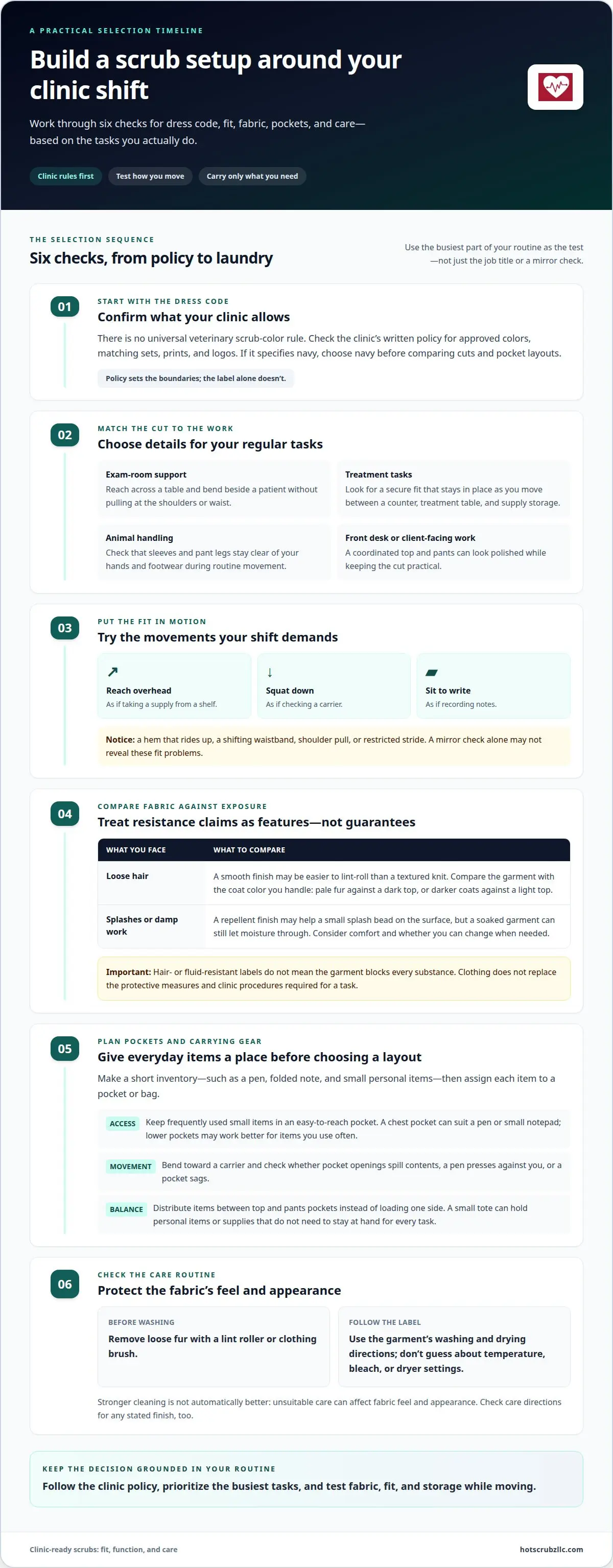
Veterinary clinics don’t follow one universal scrub-color rule. Each clinic sets its own dress code, which may specify approved colors, matching sets, prints, or logos. Follow the clinic’s written policy; if it names navy, choose navy rather than assuming another color will be accepted.
Match the cut and details to your regular tasks, not just your job title. A technician moving between exam rooms, treatment areas, and animal handling may value a flexible fit and pockets that stay comfortable while bending. Someone focused on appointments may prefer a streamlined look that still allows easy movement.
- Exam-room support: Choose a top that lets you reach across a table and bend beside a patient without pulling at the shoulders or waist.
- Treatment tasks: Look for a secure fit that stays in place as you move between a counter, a treatment table, and supply storage.
- Animal handling: Test whether sleeves and pant legs stay clear of your hands and footwear during routine movement.
- Front-desk or client-facing duties: A coordinated top and pants can create a polished appearance while keeping the cut practical.
Before buying, picture a specific clinic routine. Reach overhead as if taking a supply from a shelf, squat as if checking a carrier, and sit as if recording notes. These movements can reveal whether a hem rides up, a waistband shifts, or fabric restricts your stride. A mirror check alone won’t show these fit problems.
Build your choice around the busiest part of your shift. If you alternate between rooming patients and assisting with procedures, prioritize freedom of movement and a fit that stays comfortable through both tasks. If your clinic requires matching colors, choose the right shade first, then compare cuts and pocket layouts. This approach helps you meet workplace expectations and choose scrubs that support the way you work.
Scrub colors vary by clinic rather than following a universal standard. Follow the clinic’s written rules for approved shades and any requirements for matching sets, prints, or logos. If the policy specifies navy, choose navy.
Hair- and fluid-resistant fabric
Clinic work can mean loose fur, damp surfaces, and unexpected splashes. Fabric described as hair-resistant or fluid-resistant may help with specific cleanup concerns, but those labels don’t mean the garment blocks every substance. Treat them as features to compare, not substitutes for appropriate clinic procedures.
For loose hair, consider the fabric’s surface and how easily fur brushes away. A smooth finish may be easier to lint-roll than a textured knit, where strands can cling. Compare a dark top against pale fur, or a light top against darker coats, to see which makes visible hair easier to spot and remove.
Read claims of fluid resistance practically, too. A repellent finish may help a small splash bead on the surface, but a soaked garment can still let moisture through. If your shift includes handling wet animals or cleaning damp areas, consider how quickly the fabric feels uncomfortable and whether you can change garments when needed.
- Read the fabric description: Separate claims about shedding hair from claims about repelling moisture.
- Check the care label: Follow its washing and drying directions to care for any stated finish.
- Think through a task: Picture wiping a splash from a sleeve or removing fur after handling a shedding dog.
- Look for practical colors: Choose a shade that makes visible hair easy to notice between tasks.
Care matters after purchase, too. Before washing a hair-covered top, remove loose fur with a lint roller or clothing brush. Then follow the garment’s label rather than guessing about water temperature, bleach, or dryer settings. Stronger cleaning isn’t automatically better; unsuitable care can affect fabric feel and appearance.
For fluid exposure, don’t rely on clothing alone. Choose scrubs that feel comfortable for your routine, and use the protective measures your clinic requires for each task. Balance surface, comfort, and care needs: a sleek-feeling fabric that’s easy to remove hair from may suit one routine better than a textured option. Judge each feature against the work you actually do.
Scrub pockets and carrying gear
Pocket design matters when your shift moves from an exam room to treatment. A chest pocket can keep a pen or small notepad close, while lower pockets may hold items you use often. Decide what you carry before choosing a top or pants, rather than treating every pocket as useful storage.
Make a short inventory based on a typical clinic task. For example, list a pen, a folded note, and small personal items you keep with you. Then match each item to a pocket that holds it securely without crowding your hands. If you don’t use a chest pocket, roomy lower pockets may matter more.
- For quick access: Place frequently used small items in an easy-to-reach pocket.
- For movement: Check that pocket openings don’t spill contents when you bend toward a carrier.
- For balanced storage: Distribute items between top and pants pockets instead of loading one side.
- For a cleaner setup: Keep loose items together in a small tote when they don’t need to stay on your body.
Test the layout before a full shift. Put your usual items in their intended pockets, then sit, reach, and squat as you would beside an exam table. Notice whether a pen presses against you, a pocket sags, or items shift when you bend. These small fit details can affect comfort throughout the day.
Carrying gear should support your routine, not add clutter. A Mini Tote Bag can hold personal items or supplies you don’t need at hand for every task. Keep its contents organized, and avoid carrying anything that interferes with movement. Scrub pockets work best for essentials you reach for often; a separate bag suits items that can stay nearby.
Use a simple selection process: name your everyday items, assign each to a pocket or bag, then test the arrangement while moving. If your top or pants feel crowded, adjust the layout before adding more gear. A practical setup keeps your hands free and makes essentials easier to find between clinic duties.
Stretch, breathability, and easy-care features
Clinic duties can involve reaching, bending, and moving between rooms. Before choosing a scrub set, compare how it handles movement, warmth, and routine washing.
Fabric Stretch
Stretch describes how fabric gives as you move, then returns to its usual shape. Check the garment’s fabric description, then test a top by reaching forward and lifting your arms. For pants, try sitting and squatting: the waistband should stay comfortable, and the knees shouldn’t feel restrictive. Flexible fabric can make repeated movements easier, but fit still matters. Extra stretch won’t help if the shoulders pull or the inseam feels too short. Compare the size guide with your fit preferences, and look for room to move through both the torso and legs.
Breathable Scrub Materials
Breathability affects how warm a garment feels during a clinic shift. Fabric weight, weave, and fit can all influence comfort. Compare material details in product descriptions, then consider your work setting. A warm treatment area and frequent activity may call for a lighter-feeling option than a cool office. If you layer a shirt underneath, allow room without choosing a loose fit that catches or shifts as you move. Try on the full set together: a comfortable top can still feel warm with heavier pants.
Easy-Care Features
Easy care starts with garment instructions, not assumptions about fabric. Before buying, read the care label for washing and drying directions. If you wash scrubs after clinic duties, simple instructions can make the routine easier to follow. Check whether the garment needs special handling, and consider how its color and finish may look after repeated laundering. For example, a top that needs careful drying may not suit a routine built around quick laundry. Choose pieces with care steps you can consistently follow, then use those instructions to help preserve their feel and appearance.
HotScrubz
HotScrubz offers Scrub Tops, Scrub Pants, Lab Coats, and Mini Tote Bags for a practical clinic wardrobe. Once you’ve weighed fit, fabric, pockets, and care needs, use those priorities to narrow your choices. A coordinated top and pants can form your everyday uniform, while a lab coat or mini tote can complement your routine when useful.
For example, if you move frequently between tasks, focus on the fit and pocket arrangement that suit your day. If laundry routines matter most, compare garment care instructions before deciding. The right combination depends on your clinic’s dress code and your daily tasks, so choose pieces with those needs in mind.
Contact HotScrubz to discuss your scrub and workwear needs.
Make Your Next Shift Feel More Like Yours
Choosing the best scrubs for veterinary techs is also a chance to shape how you feel at work. Let your uniform suit the way you move through the day while still reflecting your style. You don’t need to solve every wardrobe detail at once. Start with the piece that would make your routine easier, then build from there.
Your needs may change as your clinic duties do. Keep those changes in mind when refreshing your workwear, and choose pieces that support the professional you are now. Comfort and confidence can belong in the same uniform.
For a thoughtful next step, contact HotScrubz about veterinary scrubs. Choose workwear that helps you show up ready for the care you give.
Frequently Asked Questions
Are vet scrubs different from nursing scrubs?
Not necessarily. Either can suit veterinary work if it meets the clinic’s dress code and feels comfortable during animal-care tasks. A nursing set may work well in a veterinary practice if you can reach beside a carrier and kneel without the garment shifting uncomfortably. The job label alone doesn’t determine whether a set suits your day.
What are the best scrubs for vet techs?
The best scrubs for veterinary techs suit the clinic’s requirements and the wearer’s routine, not a job-specific label. Consider whether you prefer coordinated pieces, then review the sizing and garment-care guidance. If you’re between sizes, compare the size chart with how you like workwear to fit. This can help you choose confidently before wearing a new set on shift.
What features make scrubs best for veterinary technicians?
Look for details that suit your work, including a neckline that feels comfortable when you lean forward, sleeves that stay out of your way, and a waistband that feels secure. Seam placement can also affect comfort under a layer worn beneath your top. Think through a routine task, such as leaning over an exam table, and consider whether each detail will feel practical.
What are the best scrub brands for veterinary techs in 2026?
There isn’t one objectively best scrub brand for every veterinary tech in 2026. The right choice depends on the specific garment’s fit, fabric details, care guidance, and compatibility with your clinic’s dress code. Compare individual tops and pants rather than relying on a brand name alone. A label can’t tell you exactly how a garment will feel through your workday.
What fabrics are best for handling animal hair, fluids, and odors?
No single fabric can be assumed to handle hair, fluid, and odor equally well. Compare the garment’s material description and any specific performance claims, then consider how the fabric feels against your skin. Routine care matters for odors, too: follow the care label and avoid leaving worn scrubs in a closed bag. A fabric’s feel or scent alone doesn’t establish how it performs.