Sub-Total: $0.00

Scrubs for Hot Environments: Compare Wicking, Drying, and Fit
Cotton isn’t automatically cooler than polyester. For scrubs for hot environments, fabric weight, weave, fit, and moisture management matter as much as fiber: cotton can feel soft and airy, while moisture-wicking polyester can move sweat away from the skin and dry quickly. Dense, heavy fabric can feel warm in either material.
If a scrub set feels comfortable at the start of a shift but uncomfortable once the pace picks up, your fabric choice may be part of the reason. Comfort depends on more than a fiber name.
Here, you’ll learn how cotton and polyester compare in warm conditions, what moisture-wicking and quick-drying features can do, and how jogger pants affect airflow and movement. You’ll also find practical ways to assess fit and fabric for long shifts, so you can choose scrubs suited to your work.
Key Takeaways
- Choose fabric by how it handles heat and sweat, not by fiber name alone.
- Consider how jogger cuffs and overall fit affect airflow and ease of movement.
- Look for lightweight materials and moisture-management features to stay more comfortable through active work.
- Match your scrub fabric and fit to your shift demands, room temperature, and preferred feel.
Do jogger scrub pants run hotter than regular scrub pants?
Jogger scrub pants aren’t automatically warmer than straight-leg pants. An ankle cuff can limit air exchange near the lower leg, while a roomier cut leaves more space around the thighs. Fabric construction matters too: a lightweight, breathable knit may feel cooler than dense polyester, whatever the silhouette.
Hospitals and clinics may set dress-code rules for fabric, color, and fit, and requirements vary by workplace. Before choosing joggers, compare the cut with your facility’s policy, including any rules about cuffed hems or uniform colors.
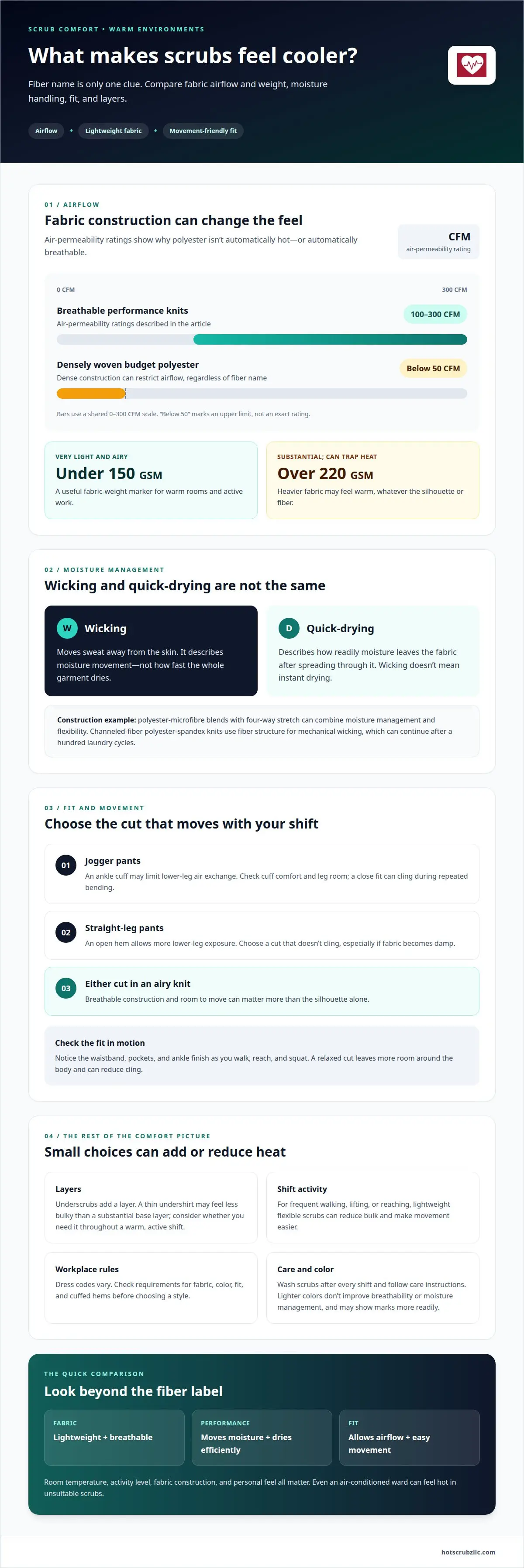
Airflow through the fabric is a useful comparison point. Breathable performance knits are described with air-permeability ratings of 100-300 CFM, while densely woven budget polyester can fall below 50 CFM. These figures help show why fiber name alone doesn’t predict how warm pants feel. A polyester fabric can feel airy or restrictive depending on its construction.
| Option | Airflow | Fit consideration | Useful when |
|---|---|---|---|
| Jogger pants | Cuff may limit ankle-level exchange | Check cuff comfort and leg room | You prefer a tapered outline |
| Straight-leg pants | Open hem allows more lower-leg exposure | Choose a cut that doesn’t cling | You want less ankle coverage |
| Either style in airy knit | Fabric construction supports airflow | Allow room for movement | Warm rooms or active shifts |
Choose a style that meets workplace rules and allows comfortable movement, then compare the fabric’s breathability.
Design details also affect comfort. Close-fitting joggers can feel warm if the legs cling during repeated bending, while a relaxed cut leaves room to move. Check how the waistband, pockets, and ankle finish feel as you walk, reach, and squat. A cuff that feels comfortable while standing still may feel restrictive during a fast-paced clinical round.
Moisture management matters as much as airflow. Wicking fabrics move sweat away from the skin so it can evaporate, while absorbent fabrics hold moisture. If your shift involves frequent walking, for example, prioritize breathable fabric that dries quickly and a cut that doesn’t restrict your stride.
What is the most breathable scrub fabric for long shifts?
For warm rooms and active work, prioritize lightweight, breathable fabrics that allow airflow without restricting movement. Fabric under 150 GSM is categorized as very light and airy, while fabric over 220 GSM is substantial and can trap heat. The right weight still depends on your room temperature and how much you move during a shift.
Match the fabric to your pace. If your role involves constant walking, lifting, or reaching, lightweight, flexible scrubs can reduce bulk and make movement easier. In a warm room, a looser fit can leave space for airflow. Even a 22°C air-conditioned ward can feel hot in unsuitable scrubs, so temperature alone doesn’t guarantee comfort.
Blends can balance softness, stretch, and ease of care, but construction matters as much as fiber content. Look for breathable fabric with enough stretch for repeated bending and reaching. For an active shift, avoid heavy-feeling layers that add bulk or restrict movement.
Underscrubs add a layer, so choose a lightweight option if staying cool is a priority. A thin undershirt beneath a scrub top may feel less bulky than a substantial base layer. If the room is warm and your work is active, consider whether you need that extra layer throughout the shift.
Cooling, lightweight scrubs don’t have one fixed cost. Construction, fabric blends, and stretch features affect pricing, so compare those details rather than relying on a “lightweight” label alone.
Light-colored scrubs may look fresh, but color doesn’t make fabric more breathable or improve moisture management. Lighter shades may show marks more readily than darker ones, so weigh that tradeoff against your workplace’s color rules.
To compare fabric and fit for your routine, browse lightweight scrub pants and consider which details suit your activity level and room temperature.
Moisture-wicking and quick-drying performance
Wicking moves moisture away from your skin; quick-drying fabric helps it evaporate. Wash performance scrubs after every shift and follow the garment’s care instructions.
Moisture-Wicking Materials
Moisture-wicking describes how fabric moves sweat, not how quickly the whole garment dries. Polyester-microfibre blends with four-way stretch can combine moisture management with flexibility for repeated reaching. Channeled-fiber polyester-spandex knits use their fiber structure for mechanical wicking, which can continue after a hundred laundry cycles. By comparison, absorbent fabric takes in moisture rather than moving it away from your skin. For a long clinical shift, consider both fabric construction and how the fit feels in motion.
Quick-Drying Materials
Quick-drying describes how readily moisture leaves fabric after spreading through it. A wicking polyester blend can move sweat outward, where it may evaporate more readily than moisture held close to the body. Wicking and drying are related but not identical: fabric may move sweat without drying instantly. For example, a breathable scrub top can feel less clammy during a busy round if its fabric moves moisture and dries efficiently between tasks.
Scrubs can trap heat when thick fabric, a close fit, or extra layers limit airflow. If sweat stays against the skin, damp material can feel warmer and cling during movement. A looser fit leaves more space around the body, while breathable fabric allows more airflow than dense, heavy material. If your uniform feels hot despite an air-conditioned room, assess fabric weight, fit, and undershirt together rather than blaming polyester alone.
Care affects performance too. Wash scrubs after each shift, follow the garment’s care instructions, and don’t rely on a quick-dry label alone. If a scrub top feels less breathable after repeated wear, consider whether it’s clean and whether you’ve followed its care directions. A straight, relaxed cut can also reduce cling when fabric is damp, making movement easier during a demanding shift.
Scrubs for long shifts in heat
A ten-hour healthcare shift puts fabric, fit, and rotation to the test. For warm clinical settings, lightweight scrub fabric in the 150-180 GSM range offers a practical starting point. That range keeps bulk down while leaving room for movement. A relaxed fit can also allow better airflow than a close cut, especially during repeated walking, reaching, and lifting.
Fiber choice affects how moisture feels over time. Cotton can absorb sweat, leaving fabric damp against the skin. Moisture-wicking polyester blends are designed to pull sweat away from the body so it can evaporate. Neither fiber guarantees comfort on its own: fabric weight, construction, and fit all contribute. For example, a lightweight, relaxed polyester blend may feel more comfortable during an active round than a heavy, close-fitting cotton set.
Build a practical rotation around your workload and laundry routine. For nurses in warm climates or high-activity roles, a rotation of 4-5 scrub sets can help keep clean, dry options available between shifts. Wash performance scrubs after every shift, then let each set dry fully before wearing it again.
- Active shifts: Choose lightweight fabric with enough stretch for frequent movement.
- Warm rooms: Favor a relaxed fit that leaves space for airflow.
- Long wear: Look for moisture-wicking fabric that can pull sweat away from your skin.
- Regular rotation: Keep several sets available so laundry timing doesn’t dictate what you wear.
Before your next shift, notice where heat builds up. If it’s beneath a close-fitting top, lighter fabric or a roomier cut may help. If sweat stays against your skin, prioritize wicking. Choosing scrubs for hot environments means matching these details to your work’s pace and setting, not simply choosing cotton or polyester by name.
HotScrubz
HotScrubz offers scrub apparel to help you build a work wardrobe around your clinical routine. Use the guidance above to narrow your priorities: fabric weight, moisture management, fit, and the pace of your shifts. Then consider how scrub tops and scrub pants work together to support comfort and movement throughout the day.
For a complete professional wardrobe, HotScrubz also offers lab coats and mini tote bags. Choose pieces that suit your workplace needs and personal style, while keeping breathable fabrics and comfortable movement in mind for long shifts.
Contact HotScrubz to discuss your scrub apparel needs.
Choose what supports your next shift
Let your workday guide your next choice. Notice where your uniform feels uncomfortable, which movements feel restricted, and whether you prefer a closer or more relaxed fit. These observations can help you focus on what matters to you instead of choosing a style based only on its label.
Choosing scrubs for hot environments is personal: your routine, workplace expectations, and comfort preferences all shape the right fit. Think about how you want to feel from the start of your shift through its busiest moments. A thoughtful choice can support professional confidence and ease of movement.
If you’d like help considering your options, contact HotScrubz. Take the next step with a clear sense of what feels right for your workday, and head into your next shift feeling prepared.
Frequently Asked Questions
Are cotton scrubs cooler than polyester scrubs?
Not always. Cotton and polyester feel different, but fabric construction makes a major difference. Cotton absorbs moisture, which may feel comfortable at first but can leave damp fabric against your skin. Polyester may feel cooler if its construction moves moisture outward, though dense polyester can feel warm. Compare the fabric’s feel and weight, then consider how it performs at your usual pace of work.
How can I stay cooler in scrubs during hot, humid US summers?
Choose lightweight pieces, limit unnecessary layers, and select a fit that doesn’t cling during movement. Your work setting matters too: an air-conditioned ward and a warm, humid treatment room can feel very different. Follow your workplace’s uniform and infection-control policies, and choose scrubs that feel comfortable in the spaces where you spend your shift.
What Makes Scrubs Good for Hot Environments?
Good warm-weather scrubs balance low bulk, comfortable movement, and moisture management. Consider how the garment feels at the shoulders, waist, and knees, where tight areas can become uncomfortable during repeated reaching or bending. A fabric label can offer clues, but construction and fit matter too. For example, a relaxed top may feel easier to wear beneath a protective layer than a close-fitting one.
What scrubs work well for nursing in warm, humid climates?
In warm or humid US work settings, prioritize lightweight pieces that feel comfortable during sustained movement and don’t cling as moisture builds. Consider your work area, not just the outdoor forecast: a cooled ward and a warm, busy room can feel very different. If changing during a shift fits workplace policies, a clean spare top can be useful when your uniform becomes damp.
Why do my scrubs make me feel so hot at work?
Heat can build when fabric, fit, and activity combine to affect comfort. A close-fitting uniform may cling as you bend or walk, while an undershirt or extra work layer adds insulation. Notice when discomfort starts: after moving between rooms, during a busy task, or beneath a particular garment. The pattern can help you identify whether fit, layering, or fabric weight is the main issue.
What are the best lightweight, breathable scrubs for hot environments?
The best option is a lightweight set that suits your movement, workplace dress expectations, and personal comfort. Look for fabric that doesn’t feel dense, a fit that lets you reach and bend easily, and construction that feels comfortable against your skin. Judge the complete design rather than a single label claim: light fabric can still feel restrictive if the cut is too close.