Sub-Total: $0.00

How to Fix Scrubs That Are Too Big and Get a Better Fit
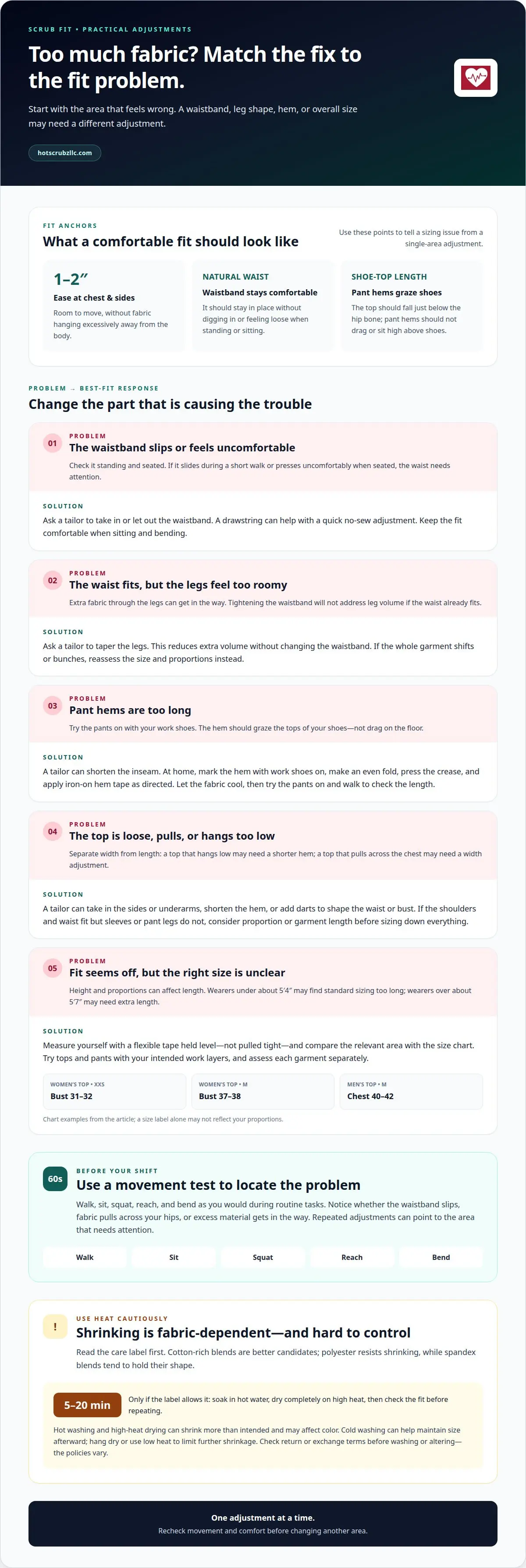
Scrubs should feel easy to move in, not pinch or hang so loosely that they get in your way. Knowing what to do if your scrubs are too big starts with checking the fit: look for 1 to 2 inches of ease around your chest and sides, a waistband that sits comfortably at your natural waist, and pant hems that graze the tops of your shoes. Your top should fall just below your hip bone.
A relaxed fit can make a demanding shift more comfortable, but excess fabric can get in the way of a polished, practical look. Learn how to tell whether your scrubs are too loose, how height and proportions affect fit, and when a tailor can help. You’ll also find simple ways to improve the fit at home and avoid trying to shrink fabric with heat when it may not respond well.
Key Takeaways
- Match tailoring changes to the problem area, from a loose waistband to extra fabric through the top.
- Use your height and proportions to identify whether the issue is overall sizing or garment length.
- Test scrub pants through everyday movements and adjust the fit if fabric shifts or gets in your way.
- Check your measurements and intended work layers before choosing a better-fitting pair of scrubs.
Getting scrubs altered by a tailor
- Bring clean, dry scrubs to a tailor and wear the layers you’d use on shift. Point out each problem area, such as extra fabric at the sides or a top that hangs too low. A tailor can take in the sides or underarms, shorten the hem, or add darts to shape the waist or bust.
- Describe the specific adjustment your scrub pants need. A tailor can take in or let out the waistband, taper the legs, or shorten the inseam. For example, if the waist fits but the legs feel wide, tapering can reduce extra volume without changing the waistband.
- For a quick no-sew adjustment, use a drawstring waistband or fold a long pant hem and secure it with iron-on hem tape. Follow the tape instructions and keep the fold even around the leg. These fixes can help temporarily, but they won’t reshape loose side seams.
- Use heat to shrink scrubs only after reading the care label and checking the fabric. Cotton-rich blends are better candidates; polyester resists shrinking, while spandex blends tend to hold their shape. If the label allows it, soak the scrubs in hot water for 5-20 minutes, then dry completely on high heat and check the fit before repeating.
- Hot washing and high-heat drying can cause more shrinkage than intended and may affect color. Cold washing can help maintain the size after shrinking; hang the scrubs to dry or use low heat to limit further shrinkage. If you’re considering a return or exchange, review the retailer’s policy before washing or altering the garment, since terms vary. A waistband can be taken in, but avoid adjustments that make sitting or bending uncomfortable.
How height and body proportions affect scrub fit
- Start by identifying where the mismatch appears: length, width, or both. Wearers under about 5’4″ may find standard sizing too long, while wearers over about 5’7″ may need extra length. If the shoulders and waist fit but the sleeves or pant legs don’t, the issue may be proportion rather than overall size.
- Measure yourself before choosing a size. Hold a flexible measuring tape level and parallel to the floor, without letting it slope across your body. To measure your waist, locate your natural waist, roughly three fingers above your navel. Record the measurement without pulling the tape tight, then compare it with the relevant size chart.
- Compare the chart measurement for the area that matters most. For example, the women’s scrub top chart lists a bust measurement of 31-32 for XXS and 37-38 for M. The men’s scrub top chart lists a chest measurement of 40-42 for M. These examples show why a size label alone may not tell you how a garment will fit your proportions.
- Assess top and pant fit separately. If a top fits across your chest but hangs too low, length is the issue; if it pulls across your chest, check the width. For pants, assess whether the waistband, rise, and leg length each feel comfortable. A mismatch in one area doesn’t mean every piece needs a smaller size.
- Try the garments with the layers you plan to wear on shift, then move, sit, and reach. If the measurements match the chart but the hem falls too low, consider shortening it. If several areas feel loose, compare your measurements with another size. Re-measure every few months, since body measurements can change.
How scrub pants should fit
- Set the waistband at your natural waist, then stand and sit to test the fit. It should stay in place without digging into your skin or feeling loose. If it slides during a short walk or presses uncomfortably when seated, the waist needs attention. Check both positions before deciding the pants are ready for a work shift.
- Check the leg length with the shoes you plan to wear. Scrub pant hems should graze the tops of your shoes, not drag on the floor or stop high above them. Walk a few steps and bend your knees. Notice whether the hems stay clear of your feet and move comfortably with you.
- If you’re deciding what to do if your scrubs are too big, try a 60-second movement test before your shift. Walk, sit, squat, reach, and bend as you would during routine tasks. Notice whether the waistband slips or fabric pulls across your hips. Repeated adjustments during movement can help pinpoint whether the waist, legs, or overall size is the main issue.
- Look for excess fabric that interferes with movement. Very baggy pants can catch on objects or equipment and create a safety hazard. If the waist fits but the legs feel too roomy, focus on the leg shape rather than tightening the waistband. If the whole garment shifts or bunches, reassess the size and proportions.
- To hem scrub pants at home, wear them with your work shoes and mark where each hem should fall. Use a hem gauge to create an even fold, then press the crease before applying iron-on hem tape according to its package directions. Let the fabric cool, try the pants on again, and walk to check the finished length. When deciding what to do if your scrubs are too big, make one adjustment at a time and assess the fit before changing another area.
How should scrubs fit properly?
- Start with the chest and sides of your top. Scrubs should have 1 to 2 inches of ease, leaving room to move without excess fabric hanging away from your body. Raise your arms and reach forward; the fabric should allow movement without pulling tightly across your chest or shoulders.
- Check the shoulder seams in a mirror. If a seam drops down your arm, the top may be too large. If it sits beyond your shoulder but the chest feels comfortable, focus on the shoulder fit and overall size instead of choosing a smaller size based only on the hem.
- Assess the top’s length while standing and sitting. The hem should fall just below your hip bone, providing coverage without excessive bunching when you sit. If it reaches much farther down your thighs, compare the garment’s length with your proportions before deciding the entire top is oversized.
- Try on scrubs with the layers you plan to wear on shift. A top that fits over a light shirt may feel restrictive over another layer. Repeat the arm raise, forward reach, and seated test with those layers on. Check that your chest and shoulders remain comfortable through each movement.
- Use a flexible measuring tape to compare your body measurements with the relevant size chart. Keep the tape level and parallel to the floor, without pulling it tight. For tops, check the chest or bust measurement first, then compare the other listed measurements to see whether one area explains the loose fit.
- Recheck your measurements every few months, since they can change. If a top feels loose in several areas, compare your measurements with the size chart again before choosing another size. If only the shoulders or length feel off, use those specific fit points to guide your decision rather than assuming every part needs adjustment.
HotScrubz LLC
HotScrubz LLC offers Scrub Tops and Scrub Pants for healthcare professionals seeking comfortable workwear that suits their proportions. If your current scrubs feel loose in several areas, use your measurements and fit preferences to guide your next choice. If only one part feels oversized, alterations may be a better solution than replacing the entire outfit.
Explore options that suit your preferred balance of ease and shape, and consider how each piece fits with your work layers and daily movements. Lab Coats can complete your professional wardrobe, while Mini Tote Bags provide another practical accessory for work essentials.
For help deciding on your next step, contact HotScrubz LLC.
Choose a fit that supports your next shift
Your workwear should support you, not demand attention throughout the day. Knowing what to do if your scrubs are too big starts with identifying which part affects your comfort or movement. Use that detail to choose a practical next step: adjust the garment or look for a fit that better suits your proportions.
Give yourself room to move without letting extra fabric become a distraction. A thoughtful fit can help you feel composed and ready to focus on the people in your care. If you’re considering a different option, choose pieces with your measurements, preferred ease, and work layers in mind.
Discuss your scrub fit with HotScrubz LLC, then step into your next shift with greater confidence.
Frequently Asked Questions
Are scrubs supposed to be tight or baggy?
Scrubs should feel relaxed, not tight or excessively baggy. A practical fit lets you bend, reach, and sit without fabric pulling or sliding around. If a top shifts when you lift your arms or pants need constant readjustment, the cut or size may not suit you. Aim for a neat silhouette that stays comfortable through a full range of movement.
Do Scrubs Run Big or Small?
Scrub sizing can vary by brand, garment cut, and size chart, so the label alone won’t predict the fit. A relaxed cut may feel roomier than a more shaped design in the same labeled size. Compare your measurements with the specific chart, and consider the intended fit and the layers you wear. Don’t assume one brand’s size matches another’s exactly.
How do you avoid looking frumpy in scrubs?
Choose pieces that suit your proportions without restricting movement, and avoid excess fabric that gathers or hangs unevenly. Choose tops and pants based on how each fits rather than automatically selecting the same size in both. Keep hems and sleeves neat, and coordinate the outfit, for example by matching tones, for a polished look without sacrificing workday comfort.
Can scrubs be tailored or altered?
Yes, a tailor can adjust many areas of scrub tops and pants. Tailoring can help when a garment fits well in most places but needs a focused change, such as a shorter hem or a closer fit at the waist. Try the scrubs on before the appointment and point out how they feel during movement. If the size is substantially wrong, replacing the garment may make more sense.
How much does it cost to tailor scrubs?
Tailoring costs depend on the work needed, the garment’s construction, and local labor rates. A simple hem requires different work from reshaping several seams or adjusting a waistband. Identify the specific fit problems before requesting an estimate. If several changes are needed, consider whether altering the garment makes sense compared with choosing a size that fits better overall.
What size scrubs should I buy for a comfortable fit?
Choose a size using your current measurements and the garment’s own size chart, not just your usual clothing size. If your chest measurement points to one size but your waist suggests another, compare the chart’s guidance with the garment’s cut. Try it with your usual work layers, then check your comfort while reaching and sitting before deciding.