Sub-Total: $0.00

How to Clean a Stethoscope and Choose the Right Supplies
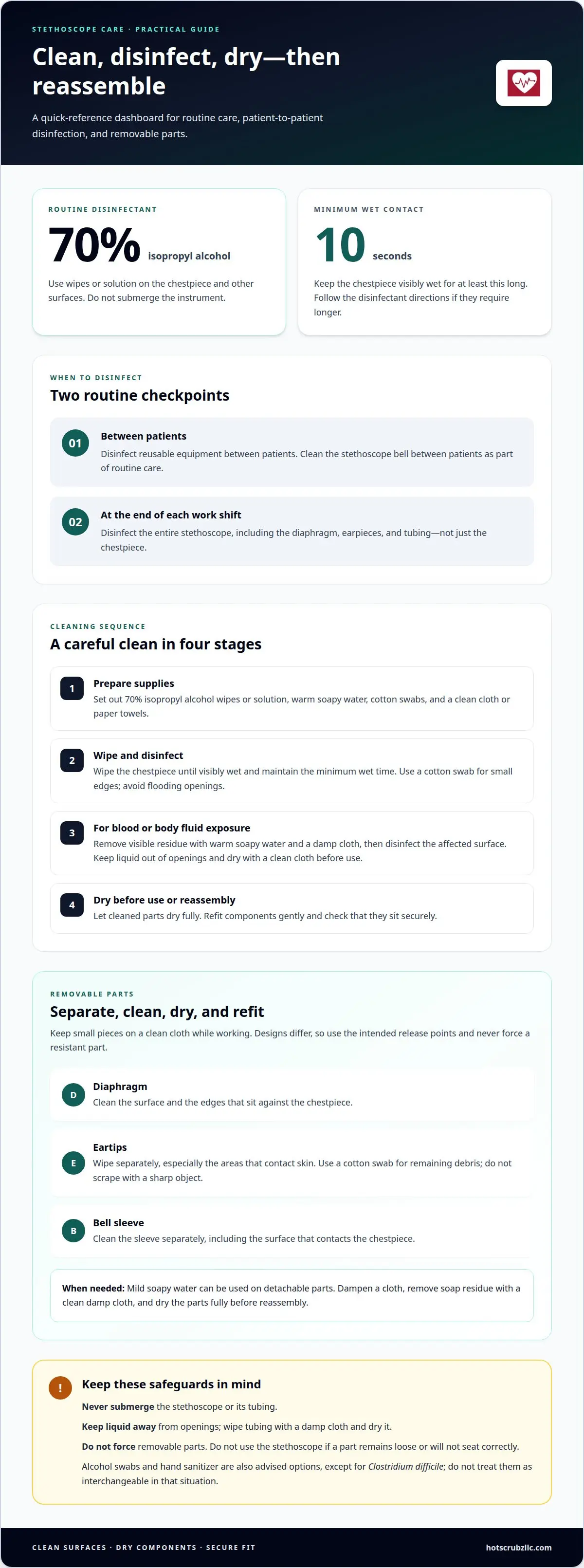
The removable pieces deserve more than a quick pass with a wipe. To learn how to properly clean a stethoscope, use 70% isopropyl alcohol wipes on its chestpiece, earpieces, and tubing, and never submerge the instrument. According to the Centers for Disease Control and Prevention, reusable medical equipment such as stethoscopes must be disinfected between patients.
Knowing how to properly clean a stethoscope includes caring for removable parts such as diaphragms, eartips, and bell sleeves. This guide covers practical cleaning steps, suitable supplies, and how to remove and reassemble parts carefully. It also explains when mild soapy water may be used and why each part should dry before reassembly.
Key Takeaways
- Gather simple cleaning supplies before you start so each part can be handled without rushing.
- Learn how removable diaphragms, eartips, and bell sleeves come apart and fit back together.
- Keep the chestpiece visibly wet with disinfectant for the required contact time, then let cleaned parts dry before reassembly.
- Explore stethoscopes and workwear from HotScrubz when you’re ready to refresh your everyday clinical essentials.
What should you use to clean a stethoscope?
Gather 70% isopropyl alcohol wipes, warm soapy water, cotton swabs, and a clean cloth. Disinfect between patients and after daily use, without submerging the instrument.
-
Follow Disinfection Guidance and Wet Time
Disinfect reusable equipment between patients; according to the Centers for Disease Control and Prevention, stethoscopes are included. Wipe the chestpiece with 70% isopropyl alcohol until visibly wet for at least ten seconds. Check that the surface stays wet for that minimum time, and follow the disinfectant’s directions if they require longer. Don’t submerge the stethoscope.
-
Clean After Blood or Body Fluid Exposure
After exposure to blood or body fluids, clean visible residue with warm soapy water and a damp cloth, then disinfect the affected surface. Use 70% isopropyl alcohol wipes or solution, keeping the chestpiece visibly wet for at least ten seconds. Avoid soaking the instrument or letting liquid enter openings; dry it with a clean cloth before use.
- Prepare supplies: Keep alcohol wipes or solution, warm soapy water, cotton balls or swabs, and paper towels or a clean cloth within reach. For clinical practices and workplaces managing their general sanitation inventory, specialist retailers such as Pro Clean Supply offer commercial cleaning supplies. Cotton swabs help reach small surfaces without soaking the instrument.
- Clean on schedule: Disinfect the entire stethoscope at the end of each work shift, and sanitize its bell between patients. Clean the diaphragm, earpieces, and tubing regularly, not just the chestpiece.
- Choose a suitable option: Use 70% isopropyl alcohol wipes for routine disinfection. Alcohol swabs and hand sanitizer are also advised options, except for Clostridium difficile; don’t treat them as interchangeable in that situation.
- Handle tubing gently: Wipe it with a damp cloth and warm soapy water, then dry it. Use a clean cloth or paper towel, and never immerse the tubing or other stethoscope parts.
Clean the stethoscope’s bell between patients as part of routine care, alongside the other surfaces used or handled during an examination.
Removing and reassembling diaphragms, eartips, and bell sleeves
Clean the diaphragm, bell, and eartips with isopropyl alcohol, removing detachable parts to reach the surfaces they cover. Gently clean each piece separately, let it dry, then reassemble without forcing the fit.
- Remove detachable components carefully. Hold the chestpiece steady as you remove the diaphragm or bell sleeve. Take off the eartips gently, keeping each piece together so nothing is misplaced. Designs differ, so use the intended release points rather than pulling hard or prying with a tool. If a part resists, stop instead of forcing it.
- Clean the chestpiece and diaphragm. Wipe the bell and diaphragm with an appropriate isopropyl alcohol wipe or solution. For removable pieces, clean the exposed surfaces separately, including the edges that sit against the chestpiece. Use a cotton swab for small areas, applying enough solution to clean without soaking the component.
- Wash removable parts only when needed. Mild soapy water can help clean detachable pieces when warranted. Rinse away soap carefully and dry each part with a clean cloth. Don’t submerge the assembled stethoscope, and keep liquid away from openings. For alcohol-cleaned components, 93% isopropyl alcohol pieces can air-dry for a few minutes before reassembly.
- Clean the eartips and bell sleeve separately. Wipe each surface with isopropyl alcohol, paying attention to the areas that contact skin or the chestpiece. If debris remains, use a cotton swab rather than scraping with a sharp object. Let the pieces dry fully before fitting them back into place.
- Reassemble and check the fit. Align each dry component with its original position, then press or secure it gently. Confirm the diaphragm sits evenly and the eartips and sleeve feel firmly attached. Don’t use the stethoscope if a part remains loose or won’t seat correctly.
Cleaning removable stethoscope parts
Separate removable pieces before cleaning to reach surfaces hidden by their fittings. Keep the parts organized, use a suitable cleaning method, and let every component dry before reassembling the stethoscope.
- Set parts on a clean surface. Place the diaphragm, eartips, and bell sleeve separately on a clean cloth. Keeping them apart helps you avoid missing contact edges or mixing up pieces. Don’t place small components directly on a shared counter, where they can pick up dust or residue.
- Wipe each part with isopropyl alcohol. Use a 70% isopropyl alcohol wipe or solution on the diaphragm, eartips, and bell sleeve. Work over each surface, including rims and creases, with controlled strokes. A cotton swab can reach narrow edges, but avoid flooding openings with liquid.
- Use soapy water only when appropriate. Mild soapy water can clean removable parts when needed. Dampen a cloth rather than soaking components, then remove soap residue with a clean damp cloth. This approach keeps water directed onto the part instead of into joints or openings.
- Dry fully before rebuilding. Set cleaned pieces aside until dry. Removable pieces cleaned with 93% isopropyl alcohol can air-dry for a few minutes before reassembly. Don’t stack wet parts or wipe them with a cloth that has already touched an unclean surface.
- Inspect the fit and store thoughtfully. Reattach each dry piece in its original position, then check that it sits securely. Store the stethoscope in a protective case and away from direct sunlight, which can affect its tubing, retaining rings, and diaphragm. Keep cleaning supplies ready for the next healthcare shift.
How long should disinfectant stay wet on a stethoscope?
- Apply the right amount. Use a 70% isopropyl alcohol wipe on the stethoscope chestpiece. Wipe the surface until it is visibly wet, rather than passing over it with a nearly dry wipe. Cover the diaphragm and bell, including their accessible edges. Avoid submerging the chestpiece or letting liquid run into openings.
- Keep the chestpiece wet for ten seconds. The chestpiece should remain visibly wet for at least ten seconds. Start counting once the whole surface is wet, not when you first touch it with the wipe. If part of the chestpiece dries before ten seconds, apply more alcohol so the surface stays wet for the full period.
- Watch the surface, not just the clock. A ten-second count only helps if the disinfectant remains visibly wet throughout. Check the diaphragm and bell separately, since a wipe may cover one area better than another. Use another 70% isopropyl alcohol wipe if a section dries early or was missed.
- Let cleaned parts dry before use. After the wet contact period, allow the chestpiece to dry before placing it against a patient. Don’t wipe disinfectant off early with a dry cloth, since that ends the visibly wet period. If you removed parts, keep them separate until dry, then reassemble them.
- Use the timing for the stated method. The ten-second minimum applies to wiping the chestpiece with 70% isopropyl alcohol until visibly wet. Don’t assume another product or concentration has the same contact time. For a different disinfectant, follow its product directions, and keep the stethoscope out of service while its surface remains wet.
Regular cleaning matters because stethoscopes may harbor microorganisms, including MRSA, Escherichia coli, and Pseudomonas aeruginosa. The diaphragm and earpieces should be cleaned regularly with isopropyl alcohol as part of that routine. Keep the components in view when planning regular care: cleaning the chestpiece does not remove the need to address the earpieces, and cleaning the earpieces does not replace attention to the diaphragm. The same regular-care principle applies to each named part, while the wet-contact instructions above remain specific to the chestpiece.
HotScrubz: Stethoscopes
HotScrubz LLC offers stethoscopes for healthcare professionals assembling a daily work kit. Once you’ve established a cleaning routine, choose a stethoscope that suits your work and care for it consistently. You can also browse scrub tops, scrub pants, and lab coats designed with comfort and style in mind for demanding shifts.
A well-maintained instrument is one part of feeling prepared; workwear that supports your workday is another. Browse HotScrubz LLC’s stethoscopes and medical apparel to refresh your clinical essentials, and contact the team by phone or email if you need help with an order.
Make Your Care Routine Part of the Workday
Knowing how to properly clean a stethoscope gives you a routine to follow from shift to shift. Keep the process manageable by building it into your regular workflow and checking the instrument’s condition as you handle it. Gummy tubing or wipes that come away dark may indicate that the stethoscope needs replacing.
Your equipment supports the care you provide, while everyday essentials shape how you feel during a demanding shift. Choose tools and workwear suited to your routine, and care for each item as needed.
For questions about stethoscopes and your professional essentials, contact HotScrubz LLC. Keep building a workday routine that helps you feel prepared, comfortable, and confident.
Frequently Asked Questions
What cleaning products are safe for stethoscopes?
Use 70% isopropyl alcohol wipes for disinfection, and mild soapy water for cleaning when needed. A damp cloth, cotton swab, and clean towel can help with tubing and small removable pieces. Avoid submerging the assembled instrument. Because stethoscope materials can differ, keep liquid controlled and dry components before putting them back together.
How do you clean a stethoscope between patients?
Disinfect a reusable stethoscope between patients, as the Centers for Disease Control and Prevention recommends for reusable medical equipment. Wipe the bell and other accessible surfaces with a suitable disinfectant, including areas handled or used during the examination. Clean removable pieces and fit them properly before the next use.
Can you use alcohol wipes on a stethoscope?
Yes. A 70% isopropyl alcohol wipe is a recommended option for stethoscope disinfection. Use it on the chestpiece and other accessible surfaces, and make sure the chestpiece remains visibly wet for at least ten seconds. Alcohol wipes are not the only possible cleaning method, but don’t use them as a substitute for a different product’s directions.
How do you clean and disinfect stethoscope tubing?
Wipe the tubing with a cloth dampened with warm soapy water, then dry it with a clean cloth or paper towel. Do not soak or submerge the tubing. If disinfection is needed, use an appropriate wipe carefully and keep liquid out of openings. After cleaning, check the surface: gummy tubing or wipes that come away dark may indicate deterioration.
How often should a stethoscope be cleaned?
Disinfect the stethoscope at the end of each work shift, and clean the bell between patients. The Centers for Disease Control and Prevention also recommends disinfecting reusable equipment between patients. Clean removable parts and tubing regularly, or sooner if they become visibly soiled. A consistent routine makes equipment care easier to fit into a busy clinical day.
What products can damage stethoscope materials?
Do not submerge a stethoscope, and store it away from direct sunlight, which can damage tubing, retaining rings, and the diaphragm. The cleaning recommendations here do not name specific chemicals to avoid, so do not assume every cleaner is suitable. Watch for gummy tubing or wipes that turn dark during cleaning, as these may indicate material deterioration.