Sub-Total: $0.00

How Should a Lab Coat Fit? The Modern Clinician’s Guide to Sizing
Your lab coat is more than a piece of personal protective equipment; it’s a professional silhouette that must perform under the physical rigors of a twelve-hour shift. If you’ve ever felt a restrictive tug across your back while reaching for supplies or watched your sleeves drag dangerously close to a clinical sample, you know that standard sizing often fails the modern clinician. Understanding how should a lab coat fit is the first step toward reclaiming your comfort and your confidence. A well-fitted coat shouldn’t just be a uniform you wear. It should be a tool that supports your movement and reflects the high standard of care you provide.
We understand that you need apparel that keeps pace with your expertise. You deserve a look that feels like a tailored blazer but functions with the endurance of high-performance gear. This guide will walk you through the specifics of medical apparel sizing, from mastering your own measurements to identifying the “sweet spot” where professional style meets functional ease. We’ll explore how to ensure your coat provides full coverage for safety while maintaining a polished, modern aesthetic that projects readiness. By the end, you’ll know exactly how to choose a coat that fits your body as perfectly as it fits your professional life.
Key Takeaways
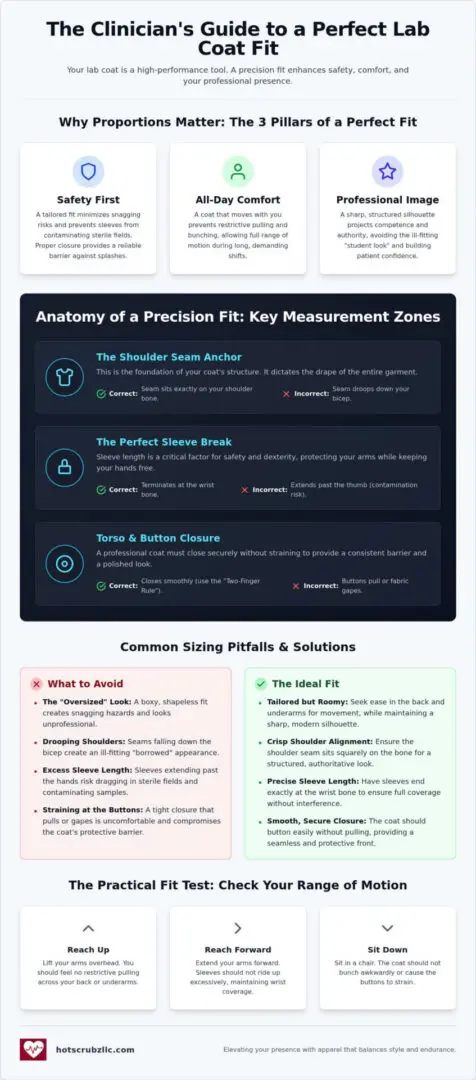
- Understand why the shoulder seam acts as the anchor for your entire look, providing the structure needed for a professional silhouette.
- Master the specific measurement zones that determine how should a lab coat fit, ensuring your sleeves and torso offer both protection and dexterity.
- Use practical range of motion tests to confirm your apparel allows for reaching and sitting without restrictive pulling or bunching.
- Identify and avoid the common sizing pitfalls that lead to a boxy, unprofessional appearance or potential safety hazards in the clinic.
- Learn how to balance aesthetic appeal with functional endurance to project confidence throughout your most demanding workdays.
The Anatomy of a Perfect Fit: Why Proportions Matter
Finding the right balance in your professional attire isn’t just about aesthetics; it’s about clinical ergonomics. When you ask how should a lab coat fit, you’re really looking for a garment that moves with you, not against you. A perfect fit harmonizes three critical pillars: safety, physical comfort, and a commanding professional presence. It’s the difference between a coat that feels like an afterthought and one that serves as a high-performance tool for your most demanding shifts.
Many clinicians mistake “roomy” for “oversized.” A roomy coat provides enough ease in the back and underarms to reach for a monitor or adjust a patient without the fabric digging into your skin. An oversized coat, however, hides your form in a boxy, shapeless mass of fabric that looks outdated. Precision tailoring ensures you have the freedom to move through your tasks while maintaining a sharp, modern silhouette that reflects your expertise. This appreciation for specialized, high-quality garments is shared across many sectors; for example, Mary Collings Church Furnishings has spent decades providing expertly crafted items for those in ecclesiastical roles.
The Silhouette of Authority
Your appearance serves as a silent introduction before you even speak. A structured fit communicates a sense of competence and meticulousness to your patients. Historically, the lab coat has served as a symbol of the scientist and the physician; it’s a garment steeped in authority. To avoid the “student look,” focus on shoulder alignment. The shoulder seam should sit exactly where your arm meets your torso. If the seam droops down your bicep, the coat will look borrowed or ill-fitting, undermining the confidence you’ve worked hard to build.
Safety Through Precision
- Sleeve Integrity: Sleeves that are too long can drag in sterile fields or clinical samples, leading to contamination.
- Torso Clearance: A streamlined design prevents the front of your coat from sweeping across surfaces when you lean forward.
- Closure Security: Proper sizing ensures the coat closes completely without gaping, providing a consistent barrier against splashes.
By choosing a coat designed with functional endurance in mind, you protect yourself and your patients while looking your absolute best. It’s about finding that intersection of aesthetic appeal and the sensory experience of a garment that fits exactly as it should.
Key Measurement Zones: Shoulders, Sleeves, and Torso
Precision is the hallmark of a modern clinician. When determining how should a lab coat fit, relying on generic labels like “Medium” or “Large” often leads to frustration. Instead, you must look at specific anatomical markers that ensure your coat performs as well as it looks. By focusing on these key zones, you can secure a garment that feels customized to your daily demands.
The Shoulder Seam Anchor
The shoulder is the foundation of your coat’s structure. For a perfect fit, the shoulder seam should sit squarely on your acromion bone, the bony point at the top of your shoulder. If the seam drops toward your bicep, the coat is too wide, leading to a slouchy appearance that lacks authority. Conversely, if the seam sits closer to your neck, you’ll experience a restrictive “tug” every time you reach for a patient. A well-aligned shoulder dictates the drape of the entire garment, ensuring the fabric falls smoothly without bunching.
The Perfect Sleeve Break
Sleeve length is a critical safety factor. Your sleeves should terminate at the ulnar styloid process, the prominent bone on the outside of your wrist. This “sweet spot” provides full arm protection while keeping your hands clear for precise tasks. Sleeves should never extend past the base of your thumb; excess length creates a dragging hazard in sterile environments. When trying on a new coat, remember to test the sleeve width over your favorite scrub tops to ensure you have enough room for layering without sacrificing mobility.
Torso and Button Closure
A professional coat must close securely without straining. Use the “two-finger rule” at the chest: you should be able to slide two fingers comfortably between your body and the buttoned coat. This ensures a gap-free closure that projects confidence. Pay close attention to how the fabric behaves when you sit. If the buttons pull or the fabric bunches awkwardly, you may need a different cut or size. While traditional coats were often boxy, modern designs offer distinct silhouettes for feminine and masculine frames, allowing for a more tailored feel that honors your natural shape.
Finding this balance of form and function is easier when you start with a garment designed for shift ergonomics. You can explore a range of premium lab coats that prioritize this intersection of comfort and prestige. Whether you prefer a mobile hip-length cut or a traditional knee-length style, these measurement zones remain your most reliable guide.
Function vs. Fashion: Testing Your Range of Motion
You don’t practice medicine in a vacuum; you practice it in motion. A coat that looks sharp on a hanger might fail you the moment you reach for a top-shelf supply or lean over a patient bed. To truly understand how should a lab coat fit, you must move beyond the mirror and test the garment against the physical realities of your shift. This is where functional endurance meets professional style, ensuring you never have to choose between looking capable and being capable.
The Reach and Mobility Test
Extend your arms fully in front of you as if you’re reaching for a monitor or a chart. If the fabric across your shoulder blades feels like it’s about to pop a seam, the coat is too restrictive. Modern designs often include pleated backs, sometimes called action backs, which provide that extra inch of fabric exactly where you need it during movement. High-cut armholes are equally vital; they allow you to lift your arms without the entire coat hiking up toward your chin. This precision in design ensures your silhouette remains intact even during your most active moments.
The Pocket Load Dynamics
Consider your tools before you commit to a size. A stethoscope, a tablet, and a handful of pens add significant weight that can change how should a lab coat fit over the course of a day. A poorly fitted coat will sag forward, pulling the collar into the back of your neck and causing unnecessary fatigue. When testing a fit, place your daily essentials in the pockets to see how the garment handles the load. Proper pocket placement ensures that the weight is distributed across your hips and shoulders, maintaining a balanced hang that feels light and effortless.
The sitting test is your final check for true comfort. When you sit at your workstation to chart, the coat shouldn’t bunch up around your waist or pull uncomfortably at the buttons. If you transition between scrubs and business casual, always try the coat on over your bulkiest layers. You need a fit that accommodates a sweater or a thick scrub top without losing its tailored look. By prioritizing these movement-based checks, you ensure your apparel acts as a supportive ally throughout your high-stakes workday.
Common Sizing Pitfalls and How to Avoid Them
Many clinicians fall into the trap of sizing up “just in case.” They assume extra fabric equals extra comfort. In reality, it leads to a sloppy appearance and compromised safety. When you’re trying to figure out how should a lab coat fit, remember that excess material creates bulk that gets in your way. It’s better to find a garment designed with the right proportions than to try and “fix” a poor fit by going up a size.
Unisex vs. Tailored Cuts
Unisex sizing is a common pitfall, especially for women. These designs typically feature wide, boxy shoulders that don’t align with a feminine frame. It makes the wearer look like they’re drowning in fabric. Modern professional styles utilize darts and tapering to follow the body’s natural lines without being tight. Choosing a gender-specific cut allows the garment to reflect your personal brand as a precise, detail-oriented professional.
Fabric Weight and Drape
Fabric composition plays a massive role in how a coat hangs over time. Heavy 100% cotton might feel substantial; however, it’s prone to significant shrinkage if not laundered with extreme care. Performance blends often maintain their shape and drape much better through hundreds of wash cycles. You should also account for a brief “break-in” period where premium materials soften and begin to move more naturally with your body. For a deeper dive into selecting the right materials for your professional look, consult our fabric choice guides.
Don’t overlook the small functional details like side-access slits. These are often mistaken for holes in the pockets. They’re actually intentional design features that allow you to reach your scrub pant pockets without unbuttoning your coat. This keeps your professional silhouette intact while maintaining full utility. Avoiding these common mistakes ensures your coat remains a source of pride rather than a daily nuisance.
Ready to upgrade your clinical wardrobe with a piece that truly fits? Browse our collection of modern lab coats to find your perfect match.
Elevate Your Presence: The HotScrubz LLC Approach to Lab Style
At HotScrubz LLC, we believe that your professional attire should be a champion for your well-being. We intentionally move away from the sterile, clinical atmosphere of the past to offer a lifestyle-oriented approach that prioritizes your emotional state. When you understand how should a lab coat fit, you stop fighting your clothes and start focusing on your expertise. Our philosophy is simple: we provide medical apparel where functional endurance meets prestige, ensuring you feel as confident as you look.
A Supportive Ally in Every Stitch
Your day is a series of high-stakes moments that require both physical ease and professional responsibility. HotScrubz LLC designs our lab coats to act as a supportive ally in every stitch. The sensory experience of high-quality fabric against your skin can transform your mindset, shifting you from a state of stress to one of readiness. Whether you’re moving through a demanding shift or transitioning to a professional meeting, a well-fitted coat ensures you remain visible and respected. It’s about more than just measurements; it’s about how you feel when you step into the room.
Next Steps for Your Wardrobe
Refining your professional presence starts with the right foundation. HotScrubz LLC has developed precise sizing guides to help you achieve a perfect first-time fit, removing the guesswork from your purchase. You can further elevate your clinical look by building a cohesive wardrobe with our matching scrub sets. Combining a tailored lab coat with premium scrubs creates a harmonious silhouette that projects authority and care. As you prepare for the year ahead, consider your apparel an investment in your performance and your professional pride.
To ensure you’ve mastered the art of sizing, use this final checklist before you head into your next shift. A coat that fits correctly will meet all these criteria:
- Shoulder Alignment: The seam sits squarely on the acromion bone without drooping.
- Sleeve Precision: The cuff ends at your wrist bone, keeping your hands free and your sleeves clear of samples.
- Closure Comfort: You can comfortably fit two fingers between your chest and the buttoned fabric.
- Active Mobility: You can reach, sit, and move without the back panel pulling or the hem bunching awkwardly.
- Pocket Balance: The coat maintains its shape even when loaded with your stethoscope and daily tools.
By prioritizing these details, you ensure that your lab coat works as hard as you do. You’ve mastered the technical side of how should a lab coat fit; now, it’s time to experience the difference that premium tailoring and thoughtful design from HotScrubz LLC bring to your daily routine. Step into your next shift with the confidence that comes from apparel designed specifically for the modern clinician.
Step Into Your Professional Best
Master the nuances of anatomical precision to ensure your clinical wardrobe works as hard as you do. By focusing on the shoulder anchor and verifying your sleeve break at the wrist bone, you move beyond the boxy silhouettes of the past. Testing your range of motion ensures that your attire supports every reach and rotation during a high-stakes day. Mastering how should a lab coat fit is about more than just measurements; it’s about claiming the confidence that comes with a polished, modern look.
Our collection is designed for 12-hour shift endurance, blending a non-clinical lifestyle aesthetic with the functional durability you require. With free shipping on qualifying orders, there has never been a better time to elevate your presence. Discover your perfect fit in our premium lab coat collection and experience the harmony of style and purpose. You dedicate your life to the care of others; you deserve apparel that cares for you.
Frequently Asked Questions
How do I know if my lab coat is too big?
Look for drooping shoulder seams and excess fabric bunching under the arms. If the shoulder seam sits on your bicep rather than the acromion bone, the coat is definitely too large. You might also notice the sleeves dragging across surfaces or the torso feeling boxy and shapeless. A coat that is too big compromises your professional silhouette and can create safety hazards by snagging on equipment during your most demanding shifts.
Should I size up for my lab coat to wear over clothes?
You typically don’t need to size up because professional lab coats are already designed with enough ease to be worn over scrubs or business casual attire. When considering how should a lab coat fit, it’s best to stick to your true measurements. Sizing up often leads to a boxy look that feels unprofessional. Instead, check the manufacturer’s sizing guide to see if the garment is intended for a tailored or relaxed fit over your standard clinical layers.
Where should the sleeves of a lab coat end?
Your sleeves should end exactly at the ulnar styloid process, which is the prominent bone on the outside of your wrist. This specific length ensures your arms are fully protected while your hands remain free for precise clinical tasks. If the sleeves extend to your palm or thumb, they are too long and may drag in sterile fields or clinical samples. Proper sleeve length is essential for maintaining both safety and a polished, modern appearance.
How tight should a lab coat be around the chest?
A lab coat should feel secure but never restrictive across the chest. You should be able to slide two fingers comfortably between the buttoned coat and your body. This two-finger rule ensures you have enough room for deep breaths and movement without the buttons pulling or the fabric gaping. If you feel a tug when reaching forward, the chest is likely too tight, which can lead to significant discomfort during your twelve-hour shifts.
Is there a difference between men’s and women’s lab coat sizing?
Yes, modern medical apparel often features gender-specific cuts to provide a more tailored and professional fit. Men’s coats usually offer broader shoulders and a straighter torso, while women’s designs incorporate darts and tapering to accommodate a feminine silhouette without being tight. Choosing a gender-specific design helps you avoid the boxy, oversized look common with unisex styles. This ensures your apparel reflects your expertise while providing the functional endurance and personal style you deserve.
Do lab coats shrink after the first wash?
Shrinkage depends heavily on the fabric composition of your garment. While 100% cotton coats are prone to shrinking if washed in hot water, many modern performance blends are designed to maintain their shape and size through repeated cycles. To protect your investment, always follow the care label instructions carefully. We prioritize high-quality materials that resist significant shrinkage, ensuring your coat feels as good on the hundredth shift as it did on the very first day.
How long should a standard doctor’s lab coat be?
A standard consultation or doctor’s coat typically falls to the mid-thigh or just above the knee. This length provides the traditional professional look while offering protection for your legs. Shorter hip-length versions, often called consultation coats, are also popular for clinicians who prefer more mobility and a less formal aesthetic. The ideal length depends on your specific role and institutional requirements, but it should always allow you to walk and sit without any restriction.
Can a lab coat be too long for clinical safety?
Yes, a coat that is too long can become a trip hazard or catch on rolling equipment like stools and carts. If the hem falls below the knee, it may interfere with your stride during fast-paced situations. Clinical safety guidelines often suggest a length that reaches the mid-thigh or knee to balance protection with mobility. Ensuring your coat is the correct length prevents accidents and keeps you focused on providing excellent patient care throughout your day.