Sub-Total: $0.00

Compare cotton, bamboo and blended scrub fabrics
Bamboo’s natural origin doesn’t automatically make it the simplest choice for sensitive skin. Bamboo clothing is usually semi-synthetic, while cotton is often chosen for its soft, breathable, absorbent feel. A hypoallergenic scrub fabric should still feel comfortable against your skin and suit the demands of your workplace.
Look beyond the label. Fabric content, texture, and breathability all affect how scrubs feel through a long shift. A blend may balance comfort and performance differently from a single fiber, and no one option suits every wearer or healthcare setting.
This comparison explains how cotton, bamboo and blended scrubs differ, what to consider when choosing for sensitive skin, and how comfort can hold up over an 8-12-hour workday. You’ll also see why the setting matters: the fabric that feels good in one role may not be the right fit for another. Use the decision guide to weigh skin comfort, care needs and workplace demands before choosing your next scrubs.
Key Takeaways
- Compare fiber content and fabric feel rather than assuming bamboo is fully natural or automatically best for sensitive skin.
- Balance breathability, softness and durability when choosing scrubs for long shifts.
- Consider how seams, finishes and fabric texture may affect skin comfort, especially if you’re prone to irritation.
- Match your fabric choice to your healthcare setting, since workplace demands can matter as much as personal comfort.
Natural fabric options, including cotton and bamboo
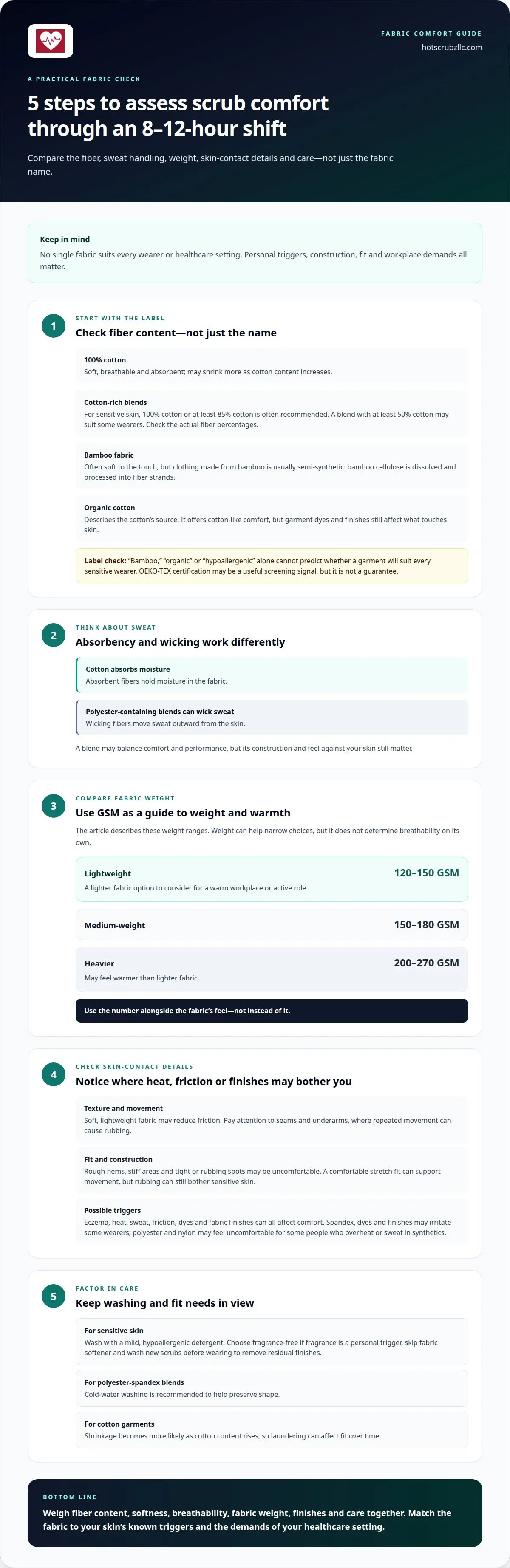
Cotton is a familiar choice for sensitive skin because it feels soft, breathes, and absorbs moisture. People with eczema often prefer cotton because it can feel cool against skin and is straightforward to wash. A 100% cotton garment offers a natural-fiber option, though cotton is more likely to shrink as its content increases.
Bamboo fabric has a more complex story. Although bamboo starts as a plant, clothing made from it is usually semi-synthetic: bamboo cellulose is dissolved and processed into fiber strands. Its soft feel may appeal to sensitive wearers, but “bamboo” on a label doesn’t mean the fabric is unprocessed or automatically hypoallergenic.
Organic cotton scrubs appeal to professionals seeking cotton from pesticide-free sources. Organic cotton is described as offering the same comfort and skin-friendly qualities as regular cotton. “Organic” describes the cotton’s source, but the finished garment’s dyes and finishes also affect what touches your skin.
Cotton-rich blends can balance comfort with durability. For sensitive skin, 100% cotton or fabric with at least 85% cotton is often recommended; a blend containing at least 50% cotton may also suit some wearers. Polyester-cotton blends vary in their cotton content, so check the label when choosing a cotton-rich option.
OEKO-TEX-certified medical scrubs may provide a useful screening signal, but certification alone can’t establish that a garment will suit every sensitive wearer. Fiber content, finishes, fit, and personal triggers still matter.
For breathability and less rubbing, consider cotton-rich fabric with a light, airy weave. Cotton and poly-cotton blends can both allow air to circulate, while soft, lightweight fabric may reduce friction. Wash scrubs with a mild, hypoallergenic detergent. Choose a fragrance-free version if fragrance is a personal trigger, skip fabric softener, and wash new scrubs before wearing to remove residual finishes.
| Option | Skin comfort | What to weigh |
|---|---|---|
| 100% cotton | Soft, breathable, absorbent | May shrink more |
| Organic cotton | Cotton-like comfort | Organic source; garment finishes still matter |
| Cotton-polyester blend | Breathable; varies by cotton share | Check fiber percentages |
| Bamboo fabric | Often soft to the touch | Usually semi-synthetic processing |
Check the fiber label first, then weigh softness, finishes, and care needs against your skin’s known triggers.
Breathability and comfort during long shifts
During an 8-12-hour workday, trapped heat and damp fabric can wear on your comfort. Fiber content, fabric weight, and how scrubs handle sweat all shape that experience.
Moisture Management
Moisture management describes how fabric handles sweat while allowing air to move. Cotton absorbs moisture, while polyester-containing blends can wick sweat away from the skin. During a busy shift, that difference matters: absorbent fibers hold moisture in the fabric, while wicking fibers move it outward. A blend may offer a practical balance, but comfort still depends on its construction and feel against your skin.
Fabric Weight
Fabric weight can influence airflow and warmth. Lightweight medical scrub fabrics are described as 120-150 GSM, while medium-weight fabrics are 150-180 GSM. Heavier options are 200-270 GSM, which may feel warmer than lighter fabric. Weight alone doesn’t determine breathability, but it helps narrow choices for a warm workplace or a physically active role. Consider the fabric’s feel alongside the number, not instead of it.
Softness and Comfort
Softness matters because fabric moves with you as you bend, reach, and repeat tasks. Lightweight, soft fabric may reduce friction, while stiff or heavy material can feel more noticeable against skin. Organic cotton offers cotton’s familiar feel, while blends may add other performance qualities. Pay attention to how fibers feel at seams and underarms, where movement can cause rubbing during a long shift.
Comfort also depends on care. Cold-water washing is recommended for polyester-spandex blends to help preserve their shape. Cotton garments are more likely to shrink as their cotton content rises, so laundering can affect fit over time. Durability and wrinkle behavior depend on construction and care, not fiber names alone. Choose a fabric weight and blend that feel comfortable through movement, then follow the garment’s care instructions to help maintain its fit.
Why is my skin sensitive to certain fabrics?
Eczema, heat, sweat, and repeated rubbing can make a scrub’s texture especially noticeable. Sensitive skin may react to the fabric itself or to its dyes and finishes.
Scrubs marketed for sensitive skin are available from U.S. brands, but costs vary by garment and fabric. Compare fiber content and construction instead of relying on a “sensitive skin” label alone.
Hypoallergenic Fabrics
A hypoallergenic fabric is intended to reduce common sources of irritation, but its label can’t predict everyone’s response. Cotton is often chosen for its soft, breathable feel, and some wearers may prefer a cotton-rich blend. Organic cotton describes how the cotton is produced, not whether every dye or finish in the finished garment will suit your skin.
Fabric-Related Irritation
Fabric-related irritation can come from friction, heat, sweat, or contact with a finish. Rough hems and stiff areas may rub during repeated movement, while heavy synthetic fabrics may contribute to overheating and sweating for some people with eczema. A comfortable stretch fit can support movement, but tight or rubbing areas may still bother sensitive skin.
Spandex, dyes, and fabric finishes can irritate some wearers, especially when a garment feels tight, rough, or heavily treated. Polyester and nylon may also feel uncomfortable if you overheat or sweat in synthetic fabrics. An antimicrobial treatment doesn’t establish that a garment is hypoallergenic.
To reduce possible laundry irritants, wash new scrubs before wearing them. Use a mild, hypoallergenic detergent and warm water around 110°F; avoid harsh chemicals and fabric softener, which can leave residue. Follow the garment’s care directions, since fabric blends may need different handling.
Try a practical comparison: note whether discomfort appears at seams, after sweating, or across areas covered by the fabric. That pattern may help distinguish rubbing from heat or a possible reaction to a finish. Soft, breathable fabric may help reduce friction and overheating, but no fiber label guarantees comfort for everyone with sensitive skin.
Scrub fabric selection by healthcare setting
The right fabric depends on both skin comfort and the demands of your healthcare setting. Start with workplace requirements, then weigh breathability, movement, and care needs.
In surgery and emergency departments, fabrics often include fluid-repellent finishes. These can change how fabric feels against skin, so consider them alongside softness and fit. Cotton-rich fabric may feel breathable, while a treated option may better suit the demands of the setting. Follow the requirements for your role before choosing based on fiber preference alone.
For active roles with frequent bending or reaching, a little spandex can support movement. Pair stretch with a comfortable fit that doesn’t pull or rub at the shoulders, waist, or knees. Moisture-wicking fibers may help move sweat away from skin, while breathable construction allows air to circulate. Bamboo fabric may feel soft, but its plant source doesn’t tell you how the finished fabric will perform at work.
In a warm or physically demanding environment, prioritize airflow and a fabric weight that feels comfortable as you move. For a role with more stationary tasks, you may prefer a different balance of softness, structure, and durability. These practical comparisons don’t replace workplace rules. Choose fabric to suit your tasks and any required garment features.
Use this order: identify setting requirements, consider movement and moisture, then compare fabric feel and care instructions. Wash new scrubs before wearing, use mild detergent, and skip fabric softener if residue irritates your skin. This keeps care choices aligned with both comfort and the garment’s needs.
Explore scrub options for your setting and choose a balance of comfort and readiness for your workday.
HotScrubz
HotScrubz helps healthcare professionals bring comfort and confidence together with medical apparel, including Scrub Tops, Scrub Pants, and Lab Coats. After weighing cotton, bamboo, and blended fabrics, use your priorities to guide your choice: consider how the garment feels against your skin, supports movement, and suits your workplace. Comparing these practical factors can help narrow your options without assuming one fabric suits everyone.
Explore the apparel range with your daily routine in mind, from active shifts to tasks that call for a polished layer. For help choosing medical apparel to suit your preferences, contact HotScrubz.
Choose scrubs that support your next shift
Let what you’ve learned about your skin and the demands of your role guide your next choice. Rather than seeking a fabric label that promises a perfect fit, focus on what matters most to you: comfortable feel, freedom to move, and suitability for your workplace. Hypoallergenic scrub fabric is a useful goal, but personal comfort depends on the complete garment and how it works in your routine.
HotScrubz offers Scrub Tops, Scrub Pants, and Lab Coats to help you find apparel suited to your professional day. Choose with your comfort and confidence in mind.
Contact HotScrubz for help choosing apparel for your workday. You deserve to feel ready for the care you provide.
Frequently Asked Questions
What about bamboo fabric?
Bamboo fabric can feel smooth, but the word “bamboo” doesn’t tell you how a finished scrub will feel against your skin. Check the garment’s fiber content and consider its surface, seams, and finishes. If you’ve reacted to a particular fabric before, compare those details with a garment you already find comfortable instead of choosing by plant source alone.
What fabrics should I avoid if I have a sensory sensitivity?
Start by avoiding textures and features you already find uncomfortable, such as stiff fabric, rough hems, or scratchy tags. Heavy synthetic garments may also feel hot or clingy to some wearers. Flat seams and tag-free designs can reduce contact points. Notice whether discomfort appears during movement or as you warm up, then use that pattern to guide your next fabric choice.
What scrub fabric is best for sensitive or allergy-prone skin?
Soft, breathable cotton is a common starting point for sensitive skin, but no fiber suits everyone. Judge hypoallergenic scrub fabric as a complete garment, including its surface, seams, dyes, and finishes. If you know a particular material or treatment bothers you, prioritize avoiding that trigger. Comfort during movement and after laundering can help you compare options.
Are cotton scrubs hypoallergenic compared with polyester or rayon?
Cotton is often described as hypoallergenic and may feel cooler and softer than some synthetic fabrics. Polyester can feel uncomfortable if you overheat or sweat in it. Rayon’s fiber name alone doesn’t establish how a finished scrub will affect your skin. Construction, dyes, and finishes matter too, so a cotton label doesn’t guarantee freedom from irritation.
Are bamboo or TENCEL scrubs suitable for people with eczema or allergies?
Bamboo garments may feel comfortable to some wearers, but the name alone can’t predict an individual response. Bamboo clothing is commonly made from processed cellulose; TENCEL is Lenzing’s trademarked name for lyocell or modal yarn. Compare the garment’s fiber information, texture, and finishes. If eczema makes clothing uncomfortable, avoid materials or details you’ve identified as personal triggers.
Can antimicrobial or wrinkle-resistant treatments trigger skin reactions?
Finishes can affect how fabric feels, and heavily treated garments may be uncomfortable for sensitive wearers. Some clothing uses formaldehyde to help prevent wrinkles, but that doesn’t mean every wrinkle-resistant scrub contains it. An antimicrobial label also doesn’t establish that a garment will suit your skin. Washing new scrubs before wearing can remove residual finishes that may irritate.