Sub-Total: $0.00

Comfortable Nursing Shoes for Long Shifts: 2026 Guide
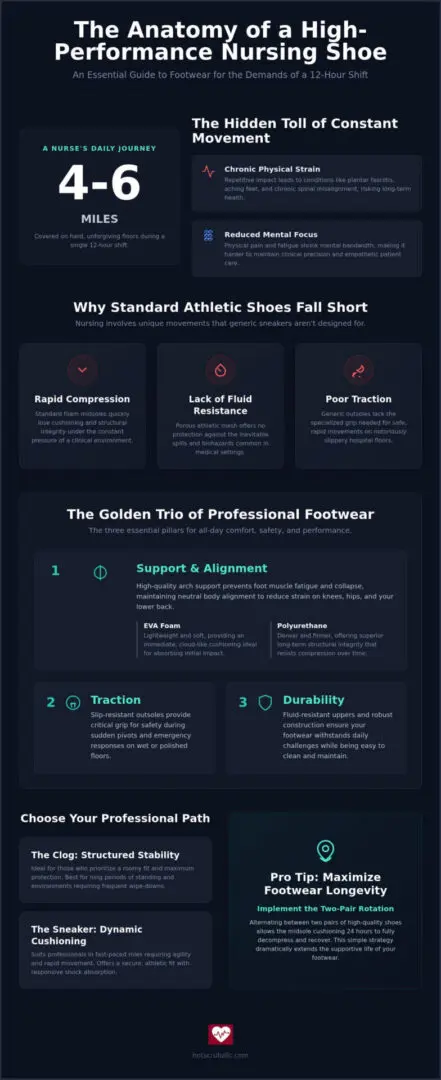
Did you know that during a single 12-hour shift, you likely cover four to six miles on hard clinical floors? That’s nearly a quarter-marathon every time you clock in. It’s no wonder your feet feel heavy and your lower back aches by the time you’re charting your final notes. You give everything to your patients, but the physical toll of constant movement on unforgiving surfaces can be exhausting. Finding the right comfortable nursing shoes for long shifts isn’t just about luxury; it’s a fundamental requirement for your long-term health and professional performance.
We believe you deserve a foundation that works as hard as you do. This guide will show you how to protect your body and elevate your daily experience with footwear engineered specifically for the intensity of the medical environment. We’ll explore the latest 2026 standards in stability, the benefits of maximalist cushioning, and how to select durable styles that maintain their support through every challenging hour. Your career demands endurance, and your footwear should provide the same. It’s time to step into a workday that feels as good as it looks.
Key Takeaways
- Understand the physical connection between your footwear and long-term health, ensuring you stay protected against the strain of a 12-hour shift.
- Identify the “Golden Trio” of support, traction, and durability that characterizes the most comfortable nursing shoes for long shifts available today.
- Evaluate whether the structured stability of a clog or the dynamic cushioning of a sneaker best serves your specific clinical role and environment.
- Learn professional maintenance strategies, such as the two-pair rotation, to preserve cushioning and extend the life of your medical footwear.
- Discover how to select footwear that offers a seamless blend of aesthetic appeal and functional performance to complement your professional appearance.
The High Stakes of Footwear in the Medical Environment
Think of your next shift as a medical marathon. You aren’t just an employee; you’re a high-stakes athlete navigating a high-pressure arena. Every decision you make, from patient advocacy to medication administration, relies on your ability to stay focused and mobile. When your feet throb or your lower back aches, your mental bandwidth shrinks. It’s hard to maintain clinical precision when you’re distracted by physical strain. Investing in comfortable nursing shoes for long shifts is the first step toward reclaiming your energy and ensuring that physical fatigue doesn’t compromise the quality of care you provide. Your gear should empower you, not hold you back.
The Reality of the 12-Hour Shift
The numbers are staggering. On average, a nurse covers between four and six miles during a single 12-hour shift. This constant movement happens on unforgiving, hard hospital flooring that offers zero natural shock absorption. Over time, this repetitive impact can lead to serious conditions like plantar fasciitis or chronic spinal misalignment. Within the field of podiatric medicine, experts emphasize that your foundation dictates your overall health. Working through pain isn’t just a badge of honor; it’s a risk to your longevity in the profession. The emotional toll is just as real. It’s difficult to remain empathetic and present when every step feels like a struggle. When your body is supported, your mind is free to focus on what matters most: your patients.
Why ‘Regular’ Sneakers Often Fail
It’s tempting to grab a pair of standard running shoes and head to the unit. However, athletic gear is designed for forward momentum and heel-to-toe strikes. Nursing involves a different set of mechanics: side-to-side movements, sudden pivots, and hours of static standing. Generic sneakers often fall short for several reasons:
- Rapid Compression: Standard foam midsoles are built for occasional use. In a clinical setting, they can lose their structural integrity and cushioning within months.
- Lack of Fluid Resistance: Athletic mesh is breathable but porous. It offers no protection against the spills and biohazards common in medical environments.
- Poor Traction: Hospital floors are notorious for being slippery. Without specialized outsoles, regular shoes don’t provide the grip needed for emergency responses.
Choosing comfortable nursing shoes for long shifts means looking beyond the aesthetic of a gym shoe. You need footwear that respects the unique rigors of your workplace while providing the polished, professional appearance you deserve.
Anatomy of Comfort: Essential Features for Long Shifts
To find the most comfortable nursing shoes for long shifts, you must look beneath the surface. True performance relies on the “Golden Trio” of professional footwear: support, traction, and durability. These aren’t just features; they’re the pillars of your physical well-being. When these elements work in harmony, your shoes become an extension of your body. This synergy allows you to move with confidence and grace, even during the most demanding clinical emergencies. Your footwear should be a silent partner that supports your every move and reflects your professional pride.
Supportive Midsoles and Arch Alignment
Your arch is the primary shock absorber for your entire frame. Over the course of a 12-hour shift, your feet naturally begin to splay as muscles fatigue. High-quality arch support prevents this collapse, maintaining your body’s neutral alignment from the ground up. This structural integrity is critical because it reduces the cumulative strain on your knees, hips, and lower back. When your feet are aligned, your entire body functions more efficiently and your energy reserves last longer.
The material of the midsole also dictates your daily comfort level. You’ll often choose between two primary materials:
- EVA Foam: Known for its lightweight feel and immediate, cloud-like softness. It’s excellent for absorbing initial impact and providing a springy step.
- Polyurethane: Offers a denser, firmer feel. While it may feel more substantial, it provides superior long-term structural integrity and doesn’t compress as quickly as EVA.
Choosing a midsole that balances these properties ensures your shoes don’t “bottom out” halfway through your rotation. When your foundation remains stable, your posture stays upright and your focus remains exactly where it needs to be: on your patients.
Safety and Hygiene Requirements
In a high-stakes clinical environment, safety is non-negotiable. The current ASTM F2413-24 standards for protective footwear provide a benchmark for slip resistance that every professional should seek. Hospital floors are often treated with high-gloss waxes or may be compromised by various fluids. A high-traction, rubberized outsole is your best defense against accidental falls during a fast-paced shift. It provides the grip you need to move quickly and safely when time is of the essence.
Hygiene and longevity go hand-in-hand. Your footwear must withstand rigorous infection control protocols without degrading. Fluid-resistant materials allow for deep cleaning and prevent the absorption of biohazards, ensuring your shoes remain a professional asset. Finally, never overlook the importance of a wide toe box. Your feet will naturally swell as the hours pass. A spacious design accommodates this physiological change, preventing the blisters and pinched nerves that often end a shift in pain.
Selecting the right Medical Footwear is an investment in your career longevity. By prioritizing these essential features, you ensure that your gear is as resilient and professional as the work you perform every day.
Clogs vs. Sneakers: Choosing Your Professional Path
Deciding between a structured clog and a flexible sneaker is a strategic decision for your physical endurance. Every professional has a unique rhythm. Finding the most comfortable nursing shoes for long shifts requires you to audit your daily movements and match them to the right footwear architecture. It’s about choosing the tool that best supports your specific mission. Whether you’re navigating a quiet night shift or a chaotic day on the floor, your shoes should be the most reliable part of your uniform. Both styles offer distinct advantages that cater to different clinical demands.
The Case for Traditional Medical Clogs
Traditional clogs remain a staple for a reason. Their rocker bottom geometry, a key trend for 2026, is engineered to propel you forward. This design reduces strain on the plantar fascia and Achilles tendon, making it ideal for roles involving long periods of standing. High-quality leather clogs offer unmatched longevity. While they require a brief break-in period to mold to your unique foot shape, the result is a custom-fit feel that lasts. Their easy-on, easy-off nature is a subtle but vital convenience for busy professionals who value efficiency. Clogs provide a classic, authoritative silhouette that pairs perfectly with traditional lab coats and professional attire.
The Rise of High-Performance Medical Sneakers
For the floor nurse who covers those four to six miles a shift, high-performance sneakers offer a dynamic alternative. These designs prioritize lightweight construction and maximalist cushioning. Modern synthetic knits provide exceptional breathability, keeping you cool when the pace accelerates. Unlike traditional leather, these materials often provide immediate comfort without a break-in phase. Sneakers also excel in lateral stability; this is crucial for the sudden pivots and quick movements required in emergency responses. High-performance sneakers are increasingly recognized as some of the most comfortable nursing shoes for long shifts because they provide a sense of readiness that is essential in high-stakes environments.
When selecting your style, consider your primary environment:
- Operating Room: Clogs are often preferred for their superior standing support and easy-to-clean leather surfaces.
- Emergency Room: Sneakers offer the agility and lateral stability needed for high-intensity, unpredictable shifts.
- General Floor Nursing: A balance of both can work, though many professionals lean toward sneakers for the lightweight, cushioned feel during high-mileage rounds.
Your choice is a testament to your commitment to both your patients and your own well-being. By selecting the style that matches your specific clinical role, you ensure that your footwear is a performance-enhancing asset rather than a distraction. Both options now come in sophisticated silhouettes that complement technical fabrics and elevate your professional appearance.
Maximizing Foot Health and Shoe Longevity
Your relationship with your footwear shouldn’t end at the checkout. To sustain your performance through a demanding 2026 schedule, you must treat your gear with the same care you provide your patients. Even the most comfortable nursing shoes for long shifts require a strategic approach to fit and maintenance to remain effective. Proper care extends the life of your investment and ensures your foundation remains supportive through every mile. Think of your shoes as essential clinical equipment that requires regular calibration.
The Fitting Process for Medical Professionals
Fitting your shoes is a science that respects your body’s rhythm. Always measure your feet in the late afternoon or after a shift when they are naturally at their most swollen. This ensures your footwear accommodates your working size rather than your resting size. A shoe that feels perfect at 7:00 AM may become a source of pain by mid-afternoon if it doesn’t account for this physiological change.
Apply the rule of thumb: ensure there is about a half-inch of space between your longest toe and the front of the shoe. This prevents bruising and nail trauma during sudden stops or fast movements. Test for heel security by walking on an incline; your heel should stay seated without slipping, while the midfoot should feel snug but never restrictive. This balance provides the stability needed for long hours on your feet.
Maintenance and Rotation Strategies
Your shoes need a recovery period just as much as you do. The foam midsoles in high-performance footwear compress significantly under the weight of an active 12-hour shift. Following the 24-hour rest rule is essential. By rotating two pairs of shoes, you allow the specialized foam to fully decompress and regain its original shock-absorbing properties. This simple habit can nearly double the lifespan of each pair and maintains the consistent comfort you need.
Pairing your footwear with high-quality compression socks also enhances your comfort. These accessories work in tandem with your shoes to promote circulation and reduce the heavy-leg feeling that often follows a long rotation. They provide an internal layer of support that complements the external structure of your footwear. Beyond footwear, many clinicians incorporate wellness solutions like Longevity Oils USA into their routine to help soothe tired muscles after a long day.
Maintain a disciplined cleaning routine to uphold professional standards and hygiene. Wipe down your shoes after every shift with a clinical-grade disinfectant wipe to remove stains and prevent the buildup of pathogens. This habit preserves the material’s integrity and ensures you always present a polished, professional image. If the exterior looks pristine but you feel a loss of support, consider replacing the insoles first. However, if the outsole shows uneven wear or the midsole feels flat, it’s time for a fresh pair.
Ready to elevate your professional wardrobe? Investing in comfortable nursing shoes for long shifts is a commitment to your long-term health. Explore our collection of premium Medical Footwear designed for the modern clinician.
You dedicate your life to the care of others. At HotScrubz, we believe your uniform should be a source of strength, not a cause of fatigue. Finding comfortable nursing shoes for long shifts is a vital investment in your ability to perform at your peak without sacrificing your personal style or well-being. We have curated a selection that reflects this philosophy, blending functional endurance with a modern, polished aesthetic that honors your dedication. It’s about more than just a shoe; it’s about the person wearing it.
A Supportive Ally in Your Workday
We recognize that the rigors of a high-stakes clinical environment require more than just standard gear. You need an ally that understands the weight of your responsibility and the physical demands of your day. Our brand functions as that supportive partner, offering footwear that respects the reality of your fast-paced schedule. We’ve intentionally moved away from the sterile atmosphere of traditional medical supply to provide a warm, lifestyle-oriented experience that prioritizes your emotional and physical state.
We’ve streamlined our online shopping experience to respect your limited time, offering a seamless path to finding your next pair of Medical Footwear. If you’re navigating the nuances of arch support or midsole materials, our team provides empathetic guidance to help you find the right fit. We want you to feel confident in your choice before you ever step onto the ward. You provide the care; we provide the support.
The Foundation of Professional Pride
True professional pride begins from the ground up. High-quality footwear does more than protect your joints; it increases your self-assurance as you move between patient rooms and nursing stations. A cohesive and professional medical appearance signals to your patients and colleagues that you value excellence in every detail of your work. Choosing the most comfortable nursing shoes for long shifts from our curated collection ensures you remain visible and ready for whatever the shift brings.
By choosing HotScrubz, you are investing in durability that withstands the 2026 clinical environment while maintaining a sophisticated silhouette. Our footwear is designed to complement our premium scrubs, creating a unified look that reflects your expertise. It’s time to elevate your workday and experience the difference that intentional, curated design makes for your performance. We invite you to explore our collection and find the foundation your hard work deserves. Step into your next shift with the confidence that only the right gear can provide.
Step Into Your Future with Confidence
Your career is defined by the tireless steps you take in the service of others. Selecting comfortable nursing shoes for long shifts is the most impactful way to ensure those steps remain steady and pain-free through every clinical challenge. We’ve explored how intentional arch alignment protects your long-term health and how strategic maintenance, like the 24-hour rotation rule, preserves the vital cushioning you rely on. Whether you choose the structured stability of a classic clog or the agile, maximalist cushioning of a high-performance sneaker, your footwear should be a source of professional pride rather than a physical distraction.
You are a medical athlete, and you deserve a foundation that matches your extraordinary endurance. For professionals who prioritize high-performance training to meet these physical demands, REP Store offers specialized insights into the gear needed to build lasting resilience. At HotScrubz, we bridge the gap between sophisticated style and clinical endurance, offering curated selections designed for the rigors of the modern healthcare environment. It’s time to invest in gear that respects your body and elevates your professional presence.
Elevate your shift with HotScrubz Medical Footwear and enjoy the benefit of free shipping on qualifying orders. Your dedication is the heartbeat of healthcare; let us support you through every purposeful hour of your journey.
Frequently Asked Questions
How often should I replace my nursing shoes if I work full-time?
You should generally replace your footwear every four to six months if you work a standard full-time rotation. Most high-performance midsoles are designed to provide peak support for approximately 500 miles of walking. Since a typical clinician covers up to six miles per shift, the structural integrity of the foam begins to decline after 500 to 700 hours of use. If you notice persistent foot fatigue or visible compression in the sole, it is time for a new pair.
Are expensive nursing shoes really worth the investment for long shifts?
Investing in premium footwear is a strategic decision for your long-term health. Higher-end models utilize advanced materials like high-density polyurethane and specialized slip-resistant outsoles that outperform generic options. While the initial cost is higher, the durability and refined support systems help prevent costly physical issues like chronic back pain or plantar fasciitis. Choosing the most comfortable nursing shoes for long shifts ensures you remain focused on patient care rather than physical distraction.
What is the best way to clean and disinfect medical footwear?
The most effective way to maintain hygiene is to use clinical-grade disinfectant wipes after every shift. For deeper cleans, use a soft cloth with mild soap and lukewarm water to remove surface stains without degrading the material. Avoid placing your shoes in a washing machine or dryer, as high heat can warp the structural components and ruin the adhesive. Regular cleaning preserves the professional appearance of your gear and prevents the cross-contamination of clinical pathogens.
Can I wear regular running shoes for a 12-hour nursing shift?
While regular running shoes offer initial comfort, they are rarely the best choice for the medical environment. Running shoes are engineered for forward momentum, whereas nursing involves significant static standing and lateral movements. The foam in standard athletic gear also tends to compress faster under the constant pressure of a 12-hour shift. Specialized medical footwear provides the specific stability and fluid resistance required to navigate slippery hospital floors and high-stakes clinical scenarios safely.
How do I know if I need more arch support in my work shoes?
If you experience aching in your arches, persistent heel pain, or unusual fatigue in your lower back, you likely need additional support. You can perform a simple “wet foot test” by stepping on a piece of cardboard with damp feet. If your footprint shows the entire sole, you have low arches and require structured support to prevent overpronation. Proper arch alignment is essential for maintaining your body’s neutral posture throughout a demanding workday.
Should nursing shoes be tight or loose to prevent foot pain?
Your footwear should feel snug in the midfoot and heel but offer plenty of room in the toe box. Your feet will naturally swell as your shift progresses, so a tight fit can lead to blisters or pinched nerves. Follow the “rule of thumb” by ensuring there is a half-inch of space between your longest toe and the front of the shoe. This balance provides necessary security without restricting the natural expansion of your feet.
Do I need to break in my new medical shoes before a long shift?
Yes, you should always break in new shoes before wearing them for a full 12-hour rotation. Leather clogs specifically require time to mold to the unique contours of your feet. Start by wearing them for two to three hours at home for a few days to identify any potential pressure points. Even modern synthetic sneakers benefit from a short adjustment period to ensure the materials move comfortably with your stride before you commit to high-mileage rounds.
What features are most important for nurses with plantar fasciitis?
If you manage plantar fasciitis, prioritize shoes with firm arch support and superior heel cushioning. Look for designs that feature rocker sole geometry, which is a major 2026 trend for reducing pressure on the heel and midfoot. These features work together to minimize the strain on the plantar fascia ligament during constant movement. Selecting comfortable nursing shoes for long shifts with these specific attributes can significantly reduce morning stiffness and the sharp pain often associated with long periods of standing.