Sub-Total: $0.00

How to Prevent Sweat Stains on Scrubs With Better Washing and Drying Habits
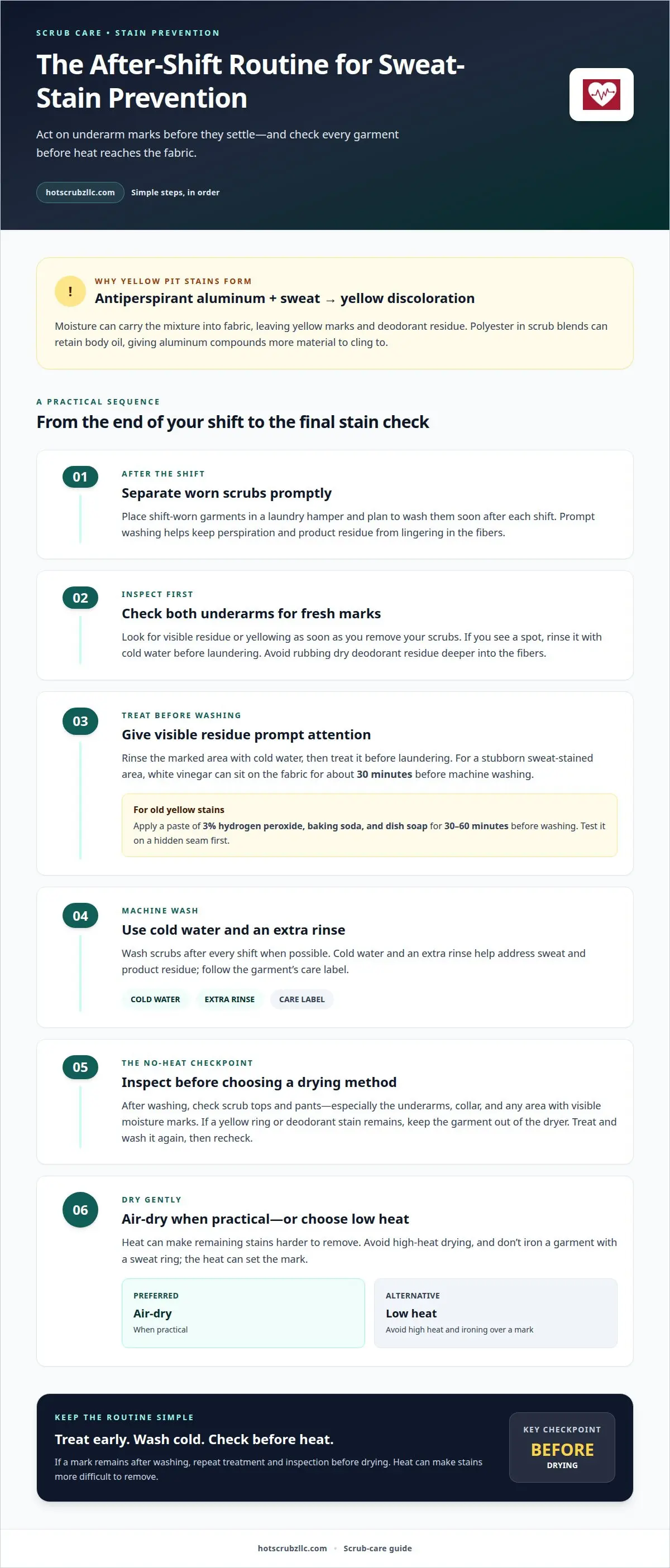
Preventing sweat stains on scrubs starts with washing them soon after each shift and treating underarm marks before they set. Yellow pit stains can form when aluminum in antiperspirant mixes with sweat and transfers to fabric. Wash with cold water and an extra rinse, then check for stains before drying, since heat can make them harder to remove.
It’s frustrating to finish a demanding shift and find your scrubs stained or holding onto odor. A few practical changes can help protect the clothes you rely on without adding a complicated routine to your day.
Learn why yellow stains develop and how washing, drying, and choosing scrubs can help keep visible sweat marks at bay. You’ll also see why a slightly roomier fit can make a difference, especially in warm or humid working conditions.
Key Takeaways
- Use an undershirt as a barrier to help keep sweat and deodorant residue away from your scrubs.
- Choose a less restrictive fit that allows more room to move and helps reduce heat and friction.
- Build a simple after-shift laundry routine to address underarm marks before they settle into the fabric.
- Check for lingering stains before drying, and choose a gentler drying approach to help protect your scrubs.
How Do Yellow Pit Stains Happen?
Yellow underarm stains often form when aluminum in antiperspirant mixes with sweat. Moisture carries the mixture into fabric, where it can leave yellow discoloration and deodorant residue. Polyester in scrub blends can retain body oil, giving aluminum compounds more material to cling to.
Antiperspirants reduce sweat, while deodorants help control body odor. No single formula works best for everyone, but aluminum-free deodorant can reduce stains linked to aluminum compounds. If sweat control is your priority, let antiperspirant dry fully before dressing to reduce transfer onto fabric.
- Wear an undershirt as a barrier. A lightweight undershirt sits between your skin and scrub top, helping limit direct contact with sweat, body oil, and deodorant. Choose a moisture-wicking layer that feels comfortable under your uniform. For example, a close-fitting undershirt can absorb moisture before it reaches the outer garment.
- Choose a moisture-wicking layer. A shirt that moves moisture away from your skin can help keep the scrub fabric drier. Wear it beneath your scrub top, and change it if it becomes damp during a shift. This barrier can also reduce deodorant buildup directly on the outer fabric.
- Try underarm pads for extra coverage. These absorb sweat before it reaches a scrub top, creating another clothing barrier. Position each pad inside the underarm area, following its package directions. Pads may suit uniforms worn through warm, active shifts, especially when an undershirt feels too warm.
- Treat residue early. After removing your scrubs, inspect both underarms for fresh marks or yellowing. Rinse a visible spot with cold water, then treat it before laundering. Avoid rubbing dry deodorant residue deeper into the fibers; a prompt rinse gives you a better chance of removing surface buildup.
Workplace rules about undershirts and changing scrubs depend on your facility’s dress and infection-control policies. Follow those instructions, including any guidance about approved layers or changing garments during a shift.
Avoiding heat drying and checking stains before drying
Inspect garments for stains before choosing a drying method. The right fabric and a little patience can help protect scrubs from visible marks.
Check for Stains Before Drying
After washing, inspect each scrub top and pair of pants, focusing on the underarms, collar, and any area with visible moisture marks. If deodorant stains or a yellow ring remain, don’t put the garment in the dryer. Treat the spot again, then wash it before checking the fabric once more.
Avoid Heat Drying
Air-dry scrubs when practical, or use a low-heat setting instead of high heat. Heat can set remaining stains into fabric, making them harder to remove. Don’t iron a garment with a sweat ring either; the iron’s heat can set the mark before you’ve had a chance to treat it.
- Choose fabric that moves moisture. Moisture-wicking and quick-drying fabrics help move moisture away from the skin, rather than letting it sit against the garment. Less lingering dampness can also help limit conditions where odor-causing bacteria develop. Check the fabric description when choosing scrubs, and consider how it feels during an active shift.
- Let your skin cool and dry after showering. Give your body time to cool before wearing scrubs, especially after a hot shower. Dressing while underarms are still damp can transfer moisture to the fabric immediately. Dry your skin thoroughly, then allow any antiperspirant to dry before putting on your top.
- Give a stubborn mark another treatment. White vinegar can sit on a sweat-stained area for about 30 minutes before machine washing. Follow with a fresh stain check after washing, and repeat treatment if a mark remains. Keep the garment out of high heat until the stain has lifted.
For a fresh start with garments you can wear through demanding shifts, explore scrub tops that suit your routine.
Choosing a less restrictive fit
Choose scrubs that let you move without clinging tightly under the arms. For old yellow stains, apply a paste of 3% hydrogen peroxide, baking soda, and dish soap for 30 to 60 minutes before washing; test it on a hidden seam first.
- Allow room through the underarms. Tight fabric can increase friction and heat buildup, making damp patches more visible. Try lifting your arms, reaching forward, and bending while wearing the top. If the fabric pulls across your underarms or sticks to your skin, choose a less restrictive cut.
- Choose a shape that allows airflow. Loose-fitting clothes can help regulate body temperature, while wide sleeves give underarm areas more space. Look for a fit that feels easy without getting in the way of work. A top that drapes rather than clings can reduce fabric contact with damp skin.
- Look for structured, comfortable fabric. Very thin or clingy material can make moisture marks easier to see. A more structured fabric can sit away from the body, while comfort-stretch material moves with you instead of sticking. Consider how the garment feels during ordinary tasks, not only while standing still.
- Pair fit with practical fabric care. A better cut won’t remove residue already trapped in clothes. Use an enzymatic detergent designed to break down protein-based stains, and treat visible marks before washing. Follow the garment’s care label, then inspect it before drying so lingering stains don’t receive unnecessary heat.
- Adjust for warm or humid shifts. A slightly roomier fit can feel more comfortable when the work environment is warm. Compare how different scrub tops sit at the underarms as you move, and choose one that doesn’t rub or cling. That balance supports movement while helping reduce visible sweat marks.
Washing scrubs after every shift
A consistent after-shift routine is central to preventing sweat stains on scrubs. Prompt washing helps keep perspiration and product residue from lingering in the fibers.
- Separate worn garments promptly. Put shift-worn scrubs in a laundry hamper apart from clean clothes. Avoid leaving damp garments bunched together, where moisture and odor can linger. If laundry must wait, keep the scrubs in a breathable hamper rather than a sealed bag.
- Treat marks before washing. Apply liquid detergent or stain remover to visible underarm marks, then let it sit for 10-15 minutes. Gently work stubborn deodorant residue with a soft-bristle brush. Early treatment helps keep a fresh spot from becoming harder to lift.
- Choose detergent and water carefully. Use an enzymatic detergent designed for protein-based stains, along with cold water and an extra rinse. Follow the garment’s care label. Avoid chlorine bleach on colored or polyester scrubs because it may darken aluminum-and-sweat stains and weaken spandex.
- Use a targeted soak when needed. For stronger odors, soak scrubs in one part vinegar to three parts cold water for 30 minutes before washing. White vinegar can also sit on a sweat-stained area for about 30 minutes before machine washing. Never combine vinegar with bleach.
- Repeat treatment if marks remain. Inspect underarms after washing. If you still see a stain, treat and wash the garment again before drying. A baking soda paste can sit on a sweat-affected area for 15-20 minutes to absorb oils and help neutralize odor.
- Keep garments in rotation. Rotating scrubs between wears helps limit oil and stain buildup on individual pieces. These small laundry habits support preventing sweat stains on scrubs over time. Refresh your workwear rotation with HotScrubz scrub tops and pants.
HotScrubz
HotScrubz offers medical apparel to help you build a practical rotation for demanding shifts. Scrub Tops and Scrub Pants give you uniform options to wear, wash, and rotate, supporting laundry habits that help limit sweat and residue buildup. Lab Coats and Mini Tote Bags round out the selection for other workday needs.
As you choose scrubs, consider how the fit feels when you reach, bend, and move. A less restrictive fit can help reduce cling and friction, while regular washing and careful drying protect garments from lingering marks. When you’re ready to refresh your workwear rotation, explore HotScrubz’s medical apparel.
For help with your workwear needs, contact HotScrubz.
Make Your Workwear Routine Easier
A steady approach to preventing sweat stains on scrubs can begin with one small change: make garment care part of your workday rhythm, not a separate project. Keep your routine manageable and choose workwear that feels comfortable through the demands of your role. Over time, those choices can make it easier to feel prepared for each shift.
When you’re ready to refresh your rotation, shop HotScrubz for Scrub Tops, Scrub Pants, and Lab Coats for healthcare professionals. Choose pieces that support your personal style and everyday readiness, then pair them with care habits that suit your schedule.
Contact HotScrubz for help with your workwear needs. You deserve to feel comfortable, confident, and ready for the care you give.
Frequently Asked Questions
Why do my scrubs get yellow under the arms when my other clothes don’t?
Different fabrics can hold sweat, body oil, and antiperspirant residue differently. A polyester-rich scrub blend may retain body oils, while another shirt’s fabric or finish may show less discoloration. Your routine matters too: repeated wear before washing can leave residue behind. Check whether marks follow the underarm seams, where fabric stays in close contact with skin.
Are underarm pads visible under clothing?
They can be, depending on the pad’s thickness, placement, and the outer garment’s fabric. A thin scrub top may reveal an edge more readily than a structured one. Position pads smoothly inside the underarm area, then move your arms naturally to see whether they shift or show. An undershirt is another barrier if pads feel uncomfortable or noticeable.
How can you prevent sweat stains and rings?
Limit residue and moisture transfer with an undershirt or underarm pads, and wash worn scrubs promptly. Before laundering, treat visible marks with detergent or a suitable stain treatment. After washing, inspect the garment while it’s still damp; if a ring remains, treat and wash it again before drying. Avoid ironing a stained area, since heat can set the mark.
Which clothing should you choose to reduce sweat marks?
Choose garments with a slightly roomier fit and fabric that doesn’t cling tightly under the arms. Breathable materials such as cotton, linen, and wool can help limit visible sweat marks in clothing, though they may not suit every uniform requirement. Dark colors and dense patterns can also make damp patches less noticeable than pale, smooth fabric.
Why do certain fabrics start to smell bad as soon as I begin to sweat?
Some synthetic fabrics can hold moisture and bacteria, allowing odor to become noticeable as sweating begins. The effect may be stronger in a garment that hasn’t been fully cleaned or dried between wears. Wash scrubs after use, avoid leaving damp clothing in a closed hamper, and let garments dry completely before storing them.
What causes sweat stains on medical scrubs?
Sweat alone can leave moisture marks, while yellow underarm stains often involve sweat mixing with aluminum compounds from antiperspirant. Body oils and leftover product residue can also build up in fabric with repeated wear. Scrub material, color, and finish affect how visible a mark looks, so the same routine can produce different results on different garments.