Sub-Total: $0.00

Comfortable Scrubs for Dental Assistants: Choosing Fabric and Fit
The softest scrub fabric isn’t automatically the best choice for chairside work. Comfortable scrubs for dental assistants balance breathability, flexibility, durability, and shape retention, so tops and pants move easily through repeated reaching, leaning, sitting, and standing. The fabric should also suit the practical demands of the treatment room.
Comfort is more than how scrubs feel when you first put them on. A top that pulls at the shoulders or pants that pinch when you sit can make a busy shift harder. The right fabric and fit support your movement while helping you feel polished and ready for patient care.
Learn what to look for in scrub fabric, how to assess fit for dental tasks, and which features matter especially in a dental setting. You’ll also find practical ways to compare tops and pants, so your choice feels comfortable in motion, not just in front of a mirror.
Key Takeaways
- Test your scrubs through chairside movements like reaching, bending, and sitting to spot pulling, riding, or restrictive waistbands.
- Compare fabric weight, stretch, breathability, and care needs together, then choose pockets for items your clinic allows you to carry.
- Assess tops and pants separately, and try them with your usual work shoes and protective layers to find a comfortable fit in motion.
- Consider how dental work can involve spray, and choose garments that suit your clinic’s protective clothing requirements and uniform policy.
1. What Makes Scrubs Comfortable for Dental Professionals?
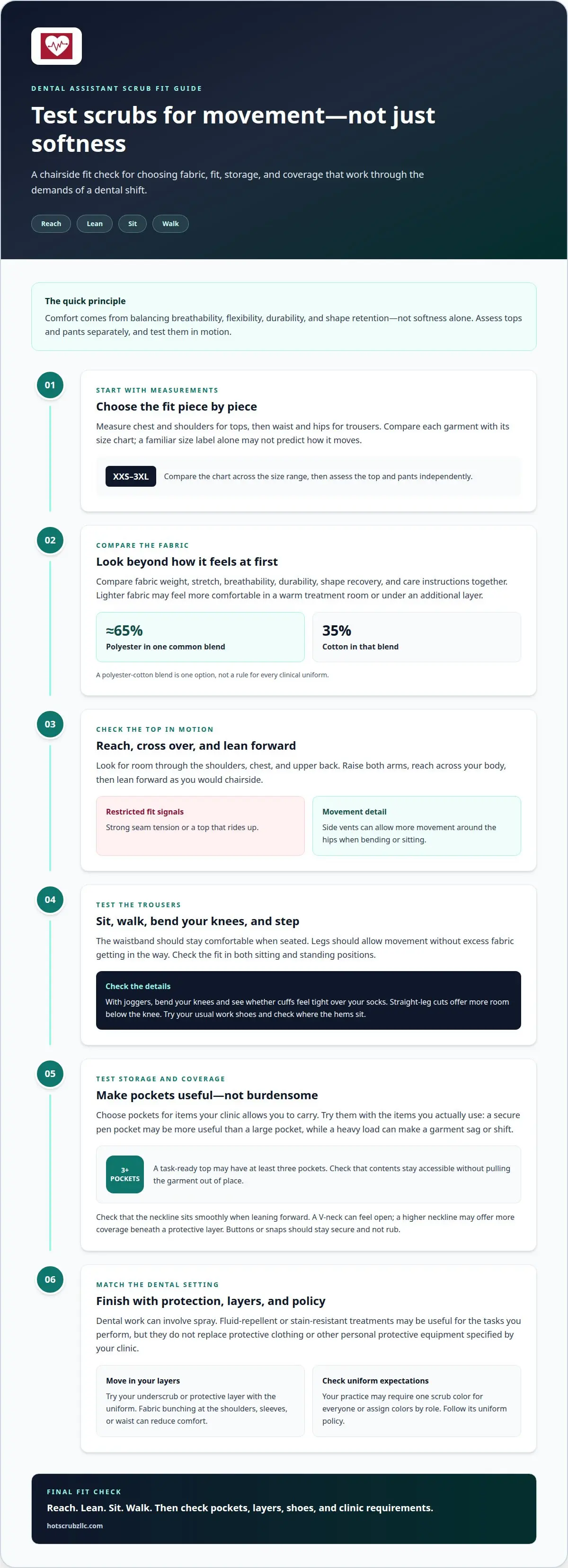
A long shift can involve repeated reaching, leaning, sitting, standing, and walking. Comfortable scrubs for dental assistants should move with that routine without tugging or riding up during chairside work. Look for breathable, flexible fabric and durable construction suited to repeated wear and washing.
Shoulder mobility matters when you reach for instruments or work across a patient. Choose a tailored top with room through the shoulders, chest, and upper back. Raise both arms, reach across your body, and lean forward. Strong seam tension or a top that rides up signals a restricted fit. Side vents can allow more movement around the hips when bending or sitting.
For pants, sit, walk, bend your knees, and step as you would during a shift. The waistband should stay comfortable when seated, and the legs should allow movement without excess fabric getting in the way. If you prefer joggers, bend your knees and check whether the cuffs feel tight over your socks. Try straight-leg cuts for more room below the knee.
Best scrub styles and fits depend on your measurements and movement, not a label alone. Compare size charts across brands, and assess tops and pants separately; a petite or plus-size wearer should prioritize shoulder, waist, hip, and length fit.
Dental offices may require one scrub color for everyone or assign colors by role. Follow your practice’s uniform policy before choosing a shade. Because scrub costs vary with factors such as fabric, construction, and care needs, compare those details rather than relying on a single price expectation.
For shoes, prioritize a comfortable fit for standing and walking, and check how your pant hems sit over your work shoes. If you wear an underscrub or protective layer, move in it with your uniform. Fabric bunching at the shoulders, sleeves, or waist can reduce comfort.
2. What Fabric Is Best for Scrubs in a Dental Clinic?
A useful dental-clinic fabric balances breathability, flexibility, durability, and shape recovery. Polyester-cotton blends commonly use approximately 65% polyester and 35% cotton. That blend is one option, not a rule for every clinical uniform. Compare fabric weight with stretch and care instructions, rather than judging softness alone. A lighter fabric may feel more comfortable in a warm treatment room or under an additional layer.
Pocket layout matters as much as fabric during chairside work. Choose pockets for the items your clinic allows you to carry, then consider how easily you can reach them. A small pocket that securely holds a pen may be more useful than a large one you rarely use. Keep storage practical: a heavy load can make a garment sag or shift as you move between the patient and supply area.
If you need several pockets, look for a style that separates permitted items and keeps frequently used tools within easy reach. A pen pocket, for example, can secure a pen without filling a larger compartment. Try each pocket with the items you actually carry. A pocket that swings, pulls, or catches during movement may disrupt your routine.
Necklines and closures also affect comfort. A V-neck or rounded neckline should sit smoothly without pressing when you lean forward. Check that buttons, snaps, or other closures stay secure and don’t rub beneath a protective layer. Straight cuts can make layering simple, but the right choice depends on your clinic’s uniform expectations and preferred coverage.
Before choosing scrub tops, consider how the fabric, neckline, and pockets work together. The right balance keeps approved essentials close while preserving ease of movement throughout clinical tasks.
3. Choosing scrubs for dental assistants’ varied tasks
Dental assistants move between chairside support, room setup, supply restocking, and patient handoffs. Choose scrubs for that mix of tasks, not just one position. Fabric weight, stretch, and care instructions all matter: lighter fabric may suit a warm operatory, while durable construction helps with repeated laundering. If you alternate between sitting and standing, assess comfort in both positions.
Start with measurements rather than a familiar size label. Measure your chest and shoulders for tops, then your waist and hips for trousers; the two pieces may call for different sizes. Compare the garment’s size chart across XXS to 3XL, then bend, reach, sit, and walk in the fit. Stretch alone doesn’t guarantee comfort if the cut pulls while seated.
Neckline choice affects movement and coverage. A V-neck can feel open during repeated leaning, while a higher neckline may offer more coverage beneath a protective layer. Check that the neckline lies flat when you bend toward a patient and doesn’t shift during arm movements. Dental hygienists performing a 50-minute scale and clean need a cut that remains comfortable through sustained seated work.
There isn’t one best scrub brand for every dental assistant. Compare individual garments by fit, fabric, care instructions, and how they hold their shape after washing. For task-ready storage, look for tops with at least three pockets, and make sure the contents won’t pull the garment out of place.
Before choosing, view the fabric in bright light and bend to see how it sits. Try scrub trousers with your usual work shoes to assess jogger cuffs or straight-leg hems. Then compare the outfit with your clinic’s color policy: a practice may choose one uniform shade or assign colors by role. This final check connects appearance with the practical demands of healthcare work.
4. How dental scrubs differ from general medical scrubs
Dental work can involve spray from dental equipment, so assess garments for the tasks you perform. Fluid-repellent and stain-resistant treatments can be useful in dental settings, where dentists and assistants work close to patients during procedures that may create spray. These finishes don’t replace protective clothing or other personal protective equipment specified by the clinic.
Prioritize your clinic’s requirements, then assess how your uniform works with them. If a protective gown or jacket is needed, try it over your scrubs and notice whether the layers bunch at the shoulders, sleeves, or waistband. A top with stretch through the upper body can support mobility while reaching chairside. Pants should remain comfortable when seated and bending, especially beneath an additional layer.
Dental scrubs need a care routine suited to repeated clinical use. Wash worn scrubs after every shift, and don’t treat an antimicrobial finish as sterilization or as a substitute for washing. Follow the garment’s care instructions, since fabric and treatments can affect laundering. This helps preserve the garment’s shape and appearance through repeated washes.
The practical takeaway: dental scrubs aren’t defined by a different uniform rule, but by the demands of the setting. Choose breathable, flexible clothing that layers comfortably, and use the protective wear your clinic specifies for tasks where blood or saliva contact is anticipated. Scrubs support the work, but don’t replace task-specific protective equipment.
For clothing that fits your daily clinical routine, explore scrub tops and pants with layering and movement in mind.
HotScrubz
HotScrubz helps you put this fit and fabric guidance into practice with medical apparel for your workday. Explore scrub tops and pants while considering shoulder movement, waistband comfort, useful pockets, and how garments layer for clinical tasks. Lab coats provide another clothing option, and mini tote bags offer a separate way to carry personal essentials.
Narrow your choices by considering your clinic’s uniform expectations, the tasks you perform, and the fit that stays comfortable as you move. HotScrubz brings these apparel options together so you can make a considered choice for your routine and professional style.
Contact HotScrubz to discuss your medical apparel needs.
Choose a uniform that works with you
Choose your next set with the way you move through a dental workday in mind. Let comfort guide your priorities, then consider the clinical demands and uniform expectations of your practice. That’s how comfortable scrubs for dental assistants become more than a soft first impression: they become part of feeling prepared for the work ahead.
As you decide what to wear, consider which pieces suit your routine. HotScrubz offers scrub tops, scrub pants, and lab coats, giving you options for a professional wardrobe that feels like yours.
Ready to take the next step? Contact HotScrubz for help choosing medical apparel for your workday. Choose with care, and step into your next shift feeling ready.
Frequently Asked Questions
What Fabric Is Best for Scrubs in a Dental Clinic?
A polyester-cotton blend is one practical choice, with common blends using approximately 65% polyester and 35% cotton. The best fabric balances breathability, flexibility, durability, and shape recovery for your clinic routine. If the treatment room feels warm or you wear an additional layer, a lighter fabric may feel more comfortable. Compare fabric weight, stretch, and care instructions together.
What Makes Scrubs Comfortable for Dental Professionals?
Comfort comes from a cut that supports repeated changes in position, not simply a soft feel. Notice how a garment sits as you move from the patient’s side to a supply shelf or seated charting. Fabric recovery matters too: material that loses its shape may become loose around the knees, shoulders, or upper back after repeated movement.
How Do Scrubs Fit Into Dental Protective Attire?
Scrubs are workwear, not a replacement for protective clothing or other personal protective equipment specified by your clinic. For tasks where contact with blood or saliva is anticipated, wear the protective attire your clinic requires. To test the fit, put on your usual gown or jacket over your uniform and notice whether the layers bunch or restrict movement during the task.
Jogger or Straight-Leg Scrub Trousers?
Choose joggers if you prefer a tapered leg and cuffed hem; choose straight-leg trousers for more room below the knee. The cuff should feel comfortable when you bend and sit appropriately over your socks. Straight-leg hems should work with your usual shoes without dragging or catching. The better cut is the one that stays comfortable through your normal movements.
Which Scrub Features Matter Most for Different Dental Roles?
Dental assistants may value shoulder mobility and pockets suited to clinic-approved items for instrument handling and room preparation. Dental hygienists may benefit from breathable fabric, a comfortable seated waistband, and a flexible top for prolonged seated or leaning work. Role matters, as does the clinic’s uniform policy. Choose features that suit your most frequent tasks.
What Features Make Scrubs Comfortable for Dental Assistants During Long Shifts?
Look for breathable fabric, enough room across the upper body, and pants that remain comfortable when seated or bending. Useful pockets should hold permitted items without pulling the garment out of place. A top that stays in position as you lean can reduce repeated adjustments. Test the complete outfit through your work movements, including standing, reaching, and sitting.