Sub-Total: $0.00

How to Choose a Scrub Size Online When You’re Between Sizes
What if the size on the label isn’t the best fit for your shift? If you’re between sizes, sizing up is often more practical, especially when the smaller option restricts movement. Knowing how to choose the right size scrubs online means looking beyond the number: the cut, fabric, and shape of each style can change how it feels on your body.
It’s understandable to want a polished fit that doesn’t pull, ride up, or feel loose where you need support. A size chart is a useful starting point, but your measurements and the garment’s style matter too.
This guide explains how to measure your chest or bust, waist, hips, and inseam, then compare those measurements with the chart for each garment. You’ll also learn how scrub styles can fit differently, what to consider when choosing between sizes, and how to assess comfort through the movements your workday requires.
Key Takeaways
- If you’re between sizes, let comfort and freedom of movement guide your choice.
- Measure your chest or bust, waist, hips, and inseam to find the fit factors that matter for each garment.
- Use the size chart for the specific scrub garment, since fit can vary by cut and style.
- Consider how different fits and fabrics feel during the movements your workday requires.
Why Is Choosing the Right Scrub Size So Important?
Fit affects how freely you move, how comfortably you work, and how your scrubs look through long shifts. Use these steps to compare size, cut, and fabric before choosing.
-
Compare Unisex and Gender-Specific Fits
Choose the cut that supports your proportions and the movement your work requires. Women’s scrubs are generally contoured around the waist and hips; men’s cuts usually have broader shoulders, straighter shapes, and slightly longer lengths. Unisex scrubs often have a straighter shape and can suit a relaxed fit. Women considering unisex sizing can try one or two sizes down, then compare their measurements with that garment’s chart. Check shoulder and hip ease, not appearance alone.
-
Account for Brand Size Variations
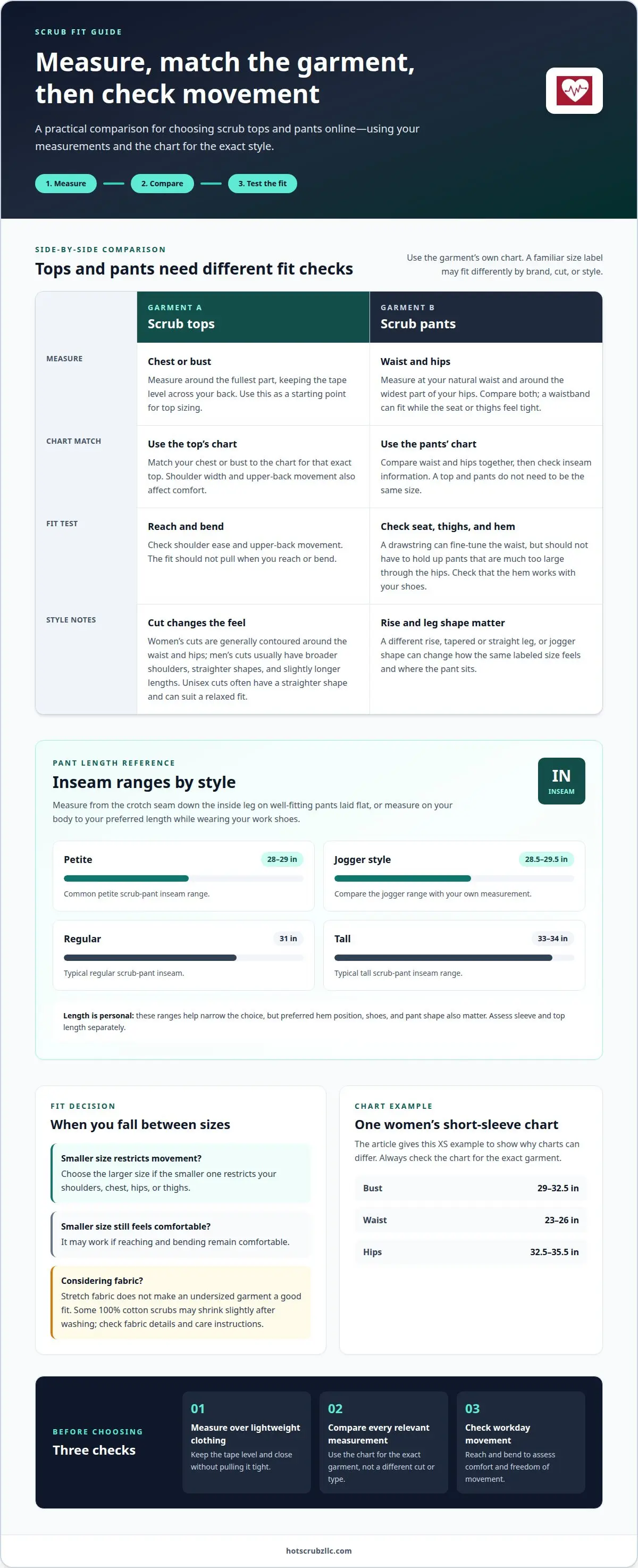
Compare your measurements with the chart for the exact scrub garment instead of assuming your usual label will fit. Sizing varies between brands, and a top’s cut can differ from scrub pants’ rise or leg shape. Charts generally use body measurements, not finished garment measurements. A size you know from one brand, for example, may feel tighter across the shoulders or hips in another. Use the chart’s measurement ranges and garment details to judge fit, then check whether you can reach and bend without pulling.
-
Choose Between Adjacent Sizes
If your measurements fall between sizes, choose the larger size when the smaller one restricts your shoulders, chest, hips, or thighs. A more relaxed fit can support movement; choose the smaller option only if it still feels comfortable through reaching and bending. Stretch fabric doesn’t make an undersized garment a good fit. Some 100% cotton scrubs may shrink slightly after washing, so consider fabric details and care instructions before choosing.
Return and exchange terms depend on the seller’s policy for each purchase. Before ordering, read the policy’s eligibility requirements, garment-condition rules, and instructions for requesting a return or exchange.
Measuring chest, waist, hips, and inseam
Take each measurement over lightweight clothing, keeping the tape level and close to your body without pulling it tight. Use the results to assess tops and pants separately.
-
Measure Chest, Waist, and Hips
Stand naturally and measure your chest or bust around the fullest part, keeping the tape level across your back. This measurement is a starting point for scrub tops, while shoulder width and upper-back movement also affect comfort. Measure your waist at its natural line, then your hips around their widest part. Record all three measurements. Scrub pants need both waist and hip measurements, since relying on just one can lead to a poor fit.
For example, a waistband can fit while the seat or thighs still feel tight. A drawstring can fine-tune the waist, but shouldn’t need to hold up pants that are much too large through the hips.
-
Measure Scrub-Pant Inseam and Length
Measure the inseam on well-fitting pants laid flat, from the crotch seam down the inside leg. Alternatively, measure on your body from the crotch to your desired pant length, wearing the shoes intended for healthcare work. Compare the result with the garment’s inseam information, and assess sleeve and top length separately when choosing a complete outfit.
As a guide, regular scrub pants typically have a 31-inch inseam. Petite options commonly measure 28-29 inches, while tall options are typically 33-34 inches. Those differences help narrow the length choice, but your preferred hem position and shoes matter too.
-
Choose an Inseam for the Pant Style
Match inseam to both your leg length and the pant’s shape. Jogger-style scrub pants typically have a 28.5-29.5-inch inseam, so compare that range with your own measurement rather than assuming every style will fall alike. Tapered, straight, and jogger legs can sit differently at the ankle, changing the finished appearance even at a similar length.
For a relaxed fit, check that the hem doesn’t interfere with your shoes or limit movement. If flexibility matters during long shifts, compare the cut and inseam together in the scrub pants selection.
Taking body measurements and using the garment-specific size chart
Use your body measurements with the chart for the exact garment and style. A practical part of how to choose the right size scrubs online is matching each garment to its own fit information.
-
Select the Garment-Specific Size Chart
Find the chart for the exact scrub style before choosing a size. Charts generally give body-measurement references, not finished garment measurements, so match your measurements to the listed ranges. Don’t use a chart for a different cut or garment type. A different rise, leg shape, or amount of stretch can change how the same labeled size feels.
For example, a top chart uses chest or bust measurements, while a pant chart considers waist and hips. Keep the garment name beside each chart as you compare, especially when selecting a top and pants separately.
-
Compare Measurements With Brand Charts
Match each measurement to the size range listed for that brand instead of relying on a size you wear elsewhere. Clothing sizes vary between brands, so the same label can represent different measurement ranges. If a chart lists several measurements, compare all of them rather than choosing based on just one.
For example, one women’s short-sleeve chart lists an XS bust range of 29-32.5 inches, waist of 23-26 inches, and hips of 32.5-35.5 inches. Another chart may define XS differently. Measure over lightweight clothing, keep the tape level, and snug it without pulling tight. For anyone considering how to choose the right size scrubs online, accurate measurements make brand-to-brand comparisons more useful.
-
Choose Top and Pant Sizes Separately
Choose scrub tops using your chest or bust measurement as a starting point, then consider shoulder comfort and upper-back movement. For scrub pants, compare waist and hip measurements together, then use the inseam to assess length. The top and pants don’t need to be the same size: each garment has different fit points and its own chart.
If your measurements fall into different size ranges, follow the range that matters for that garment. For example, use your bust range for a top and your waist and hip ranges for pants. Fabric stretch can affect how a garment feels, but shouldn’t replace a size that allows comfortable movement.
Fit differences across scrub styles
Compare cut, fabric, and length together, because each can change how a labeled size feels. A comfortable fit should support your work movements without relying on stretch to make a tight garment feel wearable.
- Check how the cut shapes the fit. Women’s scrubs are generally contoured around the waist and hips, while unisex cuts tend to be straighter. Some healthcare professionals prefer unisex styles for a more relaxed feel, especially when their work involves frequent reaching or bending. Compare shoulder room, torso length, and hip ease with your preferred fit. A cut that looks polished while standing can still restrict movement during a shift.
- Consider fabric stretch alongside the garment’s shape. Four-way stretch fabric can support flexibility, but shouldn’t be used to force a size that pulls across the seams, pockets, or waistband. If a style feels tight through the shoulders or thighs, consider a more relaxed cut or a style with more room. Review the product details for information about the fabric, then judge the fit by whether you can reach, bend, and move comfortably.
- Match pant length and leg shape to your proportions. Petite scrub pants are commonly recommended for people under 5 feet 4 inches tall, while tall options are commonly recommended for people over 5 feet 7 inches. These are starting points, not substitutes for checking the garment’s inseam. A jogger cuff, tapered leg, or straight leg can change where the hem sits, even at a similar length. Measure around your usual pant length preference and compare the style’s details.
Before choosing, read reviews for comments that a specific style runs large, runs small, or fits true to size. Compare those comments with the garment’s size chart. Together, they can help explain why two styles from the same brand fit differently.
HotScrubz
HotScrubz offers scrub tops, scrub pants, and lab coats for healthcare professionals shopping for workwear online. Use the measurement and fit guidance above to decide what matters most in your next set, whether that’s shoulder room, ease through the hips, or pant length that suits your shoes. Mini Tote Bags are also available for workday essentials.
Assess each garment separately rather than assuming one size will work across every style. Choose pieces that support comfortable movement and the look you want for your shifts. For help with your scrubwear choices, contact HotScrubz.
Make Your Next Fit Choice With Confidence
Choosing workwear is also a chance to shape how you feel moving through your day. Knowing how to choose the right size scrubs online gives you a practical way to make that choice intentionally, rather than relying on a label alone. Let your comfort priorities guide your decision: the right fit should feel like yours, support your routine, and reflect the professional appearance you want.
Keep your measurements and preferred fit handy while shopping. Use them as a reference for future purchases, especially when considering a new style or cut. This small habit can make each choice more considered and less like guesswork.
If you’re ready to take the next step, contact HotScrubz for sizing help. Choose workwear that helps you feel prepared, comfortable, and fully yourself throughout your shift.
Frequently Asked Questions
What if I’m between sizes?
Choose the larger size if the smaller option feels restrictive during work movements. For example, lift your arms and bend as if reaching for a supply, then notice whether the top pulls or the pants tighten. If both sizes allow easy movement, let your preferred silhouette guide your decision. A relaxed or closer fit can work, provided it doesn’t limit comfort during your shift.
How do I find the right inseam for jogger-style scrubs?
Measure from the crotch seam down the inside leg to where you want the jogger cuff to sit. Jogger-style scrub pants typically have an inseam around 28.5 to 29.5 inches. Compare that measurement with the specific garment’s details, since the cuff changes how the hem looks and feels. Consider your work shoes, too, so the finished length suits your usual uniform.
How do I measure myself for scrubs?
Take body measurements over lightweight clothing with a flexible tape. Measure your chest or bust around its fullest part, your waist at its natural line, and your hips around their widest point. For pants, measure the inseam from the crotch to your desired length. Keep the tape level and close to your body without pulling tight, then record each result.
Are men’s and women’s scrubs sized differently?
Yes. Men’s scrubs are generally designed with broader shoulders, straighter cuts, and slightly longer lengths; women’s styles are usually shaped more around the waist and hips. These differences describe the cut, not a universal conversion between size labels. If you’re choosing a different fit category, use that garment’s chart and assess shoulder, torso, and hip comfort.
Can stretch justify choosing a smaller size?
No. Stretch can add flexibility, but it shouldn’t compensate for a garment that feels too small. If seams, pockets, or a waistband stay under tension as you move, the fit may be too tight for regular wear. Try reaching forward, bending, and sitting to assess comfort. A well-fitting stretch garment should move with you without constant pulling across the fabric.
How Do Women’s, Men’s, and Unisex Fits Differ?
Women’s cuts generally contour more around the waist and hips, while men’s cuts tend to allow broader shoulders and a straighter shape. Unisex styles are also commonly straighter, which can change how the torso and hips feel. Compare each style’s measurements and cut details, then consider the movements you need to make. Some healthcare professionals prefer unisex scrubs for a more relaxed fit.