Sub-Total: $0.00

Scrubs for Sensitive Skin: Gentle Fabrics and Features
The best scrubs for sensitive skin are chosen for more than a soft feel: breathable fabric, smooth seams, and fewer potential irritants all matter. Cotton or bamboo, tag-free designs, and laundry care that avoids fragrance and harsh residues may feel gentler against your skin.
It makes sense to prioritize comfort when you wear scrubs through a demanding shift. Irritation can also come from labels, fabric finishes, detergent residue, or dry skin, so choosing a garment is only one part of the picture.
You’ll learn which fabrics and garment details may help limit rubbing, what fragrance-free care can involve, and how ingredients such as glycerin or hyaluronic acid may help when skin feels dry after exfoliation. We’ll also cover practical ways to wash and dry scrubs with sensitive skin in mind, so you can make thoughtful choices for comfort on and off the clock.
Key Takeaways
- Look for breathable fabric and smooth construction to help make long shifts feel more comfortable.
- Choose fragrance-free skin and laundry care, and pay attention to ingredients that may leave skin feeling dry.
- Consider how seams, labels, and tags sit against your skin when choosing workwear.
- Wash new scrubs before wearing them and use gentle laundering habits to reduce potential irritants.
Moisturizing ingredients to help limit irritation
Moisturizers and scrub ingredients serve different purposes, so read the label of the product you’re using. If your skin feels dry after exfoliation, hyaluronic acid or glycerin may help add moisture to your routine.
Sensitive-Skin Ingredient Suitability
If dryness follows exfoliation, look for moisturizing ingredients such as hyaluronic acid or glycerin. Choose gentle products without synthetic fragrance, harsh chemicals, or abrasive physical exfoliants; innovative skincare brands like VENSIA design solutions aimed at keeping reactive skin hydrated and healthy. Salicylic acid is an exfoliating ingredient, not a moisturizer, so consider its purpose in the formula rather than treating it as a source of moisture. If a product repeatedly irritates your skin, a dermatologist can help assess your routine.
Natural and Organic Ingredients
“Natural” and “organic” describe ingredient sourcing or production, not how your skin will respond. Plant-derived ingredients can still irritate some people, so read the full ingredient list rather than relying on front-label claims. Compare fragrance-free formulas and note whether they contain glycerin or hyaluronic acid. Choose based on the ingredients and your skin’s response, not a natural label alone.
Keep product testing simple. Introduce one new leave-on product at a time, apply a small amount to a limited area, and observe your skin before adding it to your routine. This makes it easier to identify which formula suits you. Avoid testing several new ingredients together, since that makes a reaction harder to trace. Follow each product’s directions.
Avoid synthetic fragrances, harsh chemicals, and abrasive physical exfoliants if your skin is sensitive. A scrub that feels rough or leaves skin uncomfortable may not be a gentle fit. If redness or dryness appears after exfoliation, pause that step and reassess the product and routine. According to the U.S. Government Publishing Office, the 1994 tentative final monograph covered surgical hand scrubs; that regulatory phrase refers to hand-scrub products, not moisturizing body-care ingredients.
Fragrance-free scrub options
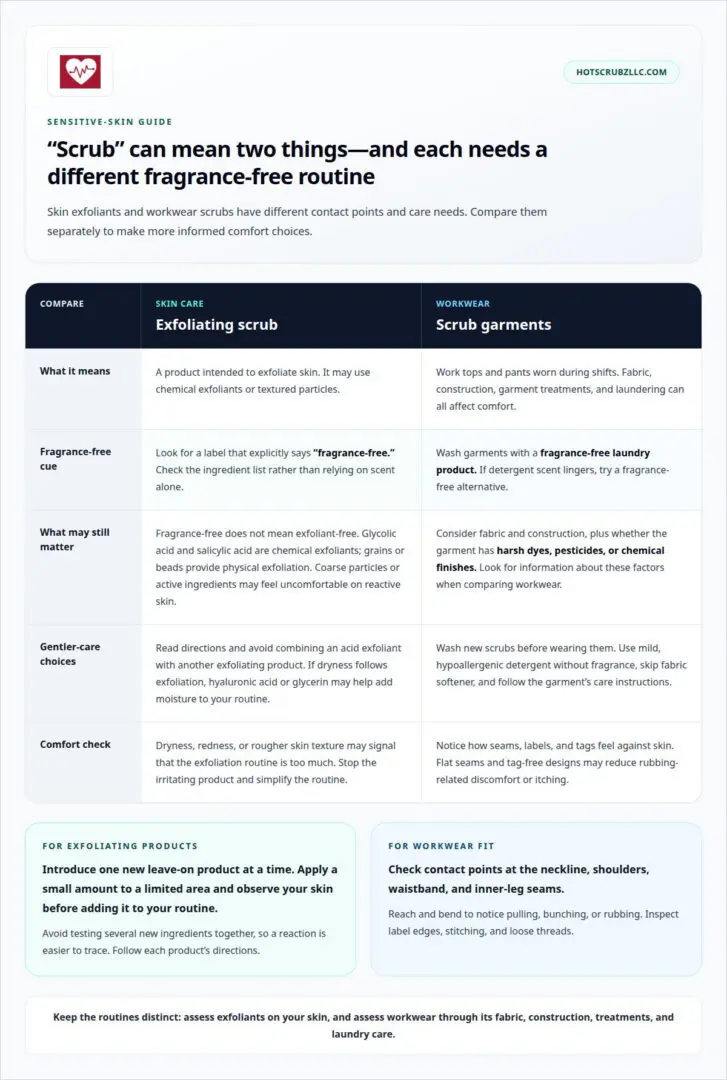
“Scrub” can mean an exfoliating skin product or the workwear you wash between shifts. Fragrance-free choices matter in both routines: look for a fragrance-free exfoliant, then use fragrance-free laundry products on your scrub garments. This helps separate scent from texture, fabric, and other ingredients that may affect comfort.
For skincare products, read the ingredient list rather than relying on scent alone. A fragrance-free formula avoids added fragrance, but may still contain exfoliating ingredients or textured particles. Glycolic acid and salicylic acid are chemical exfoliants; grains or beads provide physical exfoliation. These approaches can loosen dead skin cells, but a rough texture or active ingredient may feel uncomfortable on reactive skin.
Choose the formula with care:
- For a fragrance-free option, look for a label that explicitly says “fragrance-free.”
- For a physical scrub, consider whether its particles feel coarse against damp skin.
- For an acid exfoliant, read the directions and avoid combining it with another exfoliating product.
Workwear calls for a separate, scent-conscious routine. Wash scrub tops and pants before wearing them, using a mild, hypoallergenic detergent without fragrance. Skip fabric softener, which can leave residue on clothing. If a detergent’s scent lingers after washing, try a fragrance-free alternative and follow the garment’s care instructions. This focuses on the wash process rather than assuming the fabric itself contains fragrance.
Pay attention to how your skin responds after a product or laundry change. Dryness, redness, or a rougher skin texture can signal that your current exfoliation routine is too much. Stop the irritating product and simplify the routine rather than adding another active ingredient. For shifts that call for comfortable, easy-care workwear, consider scrub tops and pants as part of your fragrance-conscious laundry routine.
For sensitive skin, consider scrubs without harsh dyes, pesticides, or chemical finishes. These are additional factors to consider alongside fragrance-free laundry products: the garment’s treatments matter, too. When comparing workwear, look for information about dyes, pesticides, and chemical finishes, and favor options identified as free from them. Keep your wash routine fragrance-free as well, so garment selection and laundering both reflect a scent-conscious approach.
Seams, labels, and tags that may cause irritation
Fabric isn’t the only detail that touches your skin during a shift. A raised shoulder seam, a stiff neckline label, or a tag rubbing your waist can create repeated friction. Flat seams and tag-free designs may reduce rubbing-related discomfort or itching. Check these contact points when choosing workwear, especially where a garment sits close to your body.
Notice how construction feels as you move, not just when you stand still. Reach forward, bend, and lift your arms when trying on a new top. A seam that twists or pulls during movement may rub more throughout the day. For pants, pay attention to the waistband and inner-leg seams. These checks help you assess fit and friction without assuming a particular fabric will suit everyone.
Labels can matter, too. A printed label avoids a sewn-in tag, while a removable tag may still leave an edge or stitching behind. Look inside the neckline and waistband for rough borders, bulky stitching, or loose threads. If a label sits against a sensitive area, choose a tag-free option when available rather than cutting into a seam and risking damage.
- Check contact points: Inspect the neckline, shoulders, waistband, and inner-leg seams.
- Test movement: Reach and bend to notice pulling, bunching, or rubbing.
- Inspect label edges: Look for stiff corners, scratchy stitching, and loose threads.
Marketing language doesn’t answer questions about garment construction. Terms such as “radiant,” “hydration,” or “key ingredients” may describe skincare, not a garment’s seams. Likewise, a “certified” claim alone doesn’t tell you whether a label will rub. Exfoliants address dead skin, not clothing friction, so changing a skincare product won’t remove a rough seam. For greater comfort, focus specifically on the garment’s finish and fit. If irritation develops where fabric repeatedly touches, try a smoother construction and notice whether that contact point feels different.
How sensitive skin can be affected by scrub fabrics and chemicals
A fabric’s feel, airflow, and finish can all shape comfort during a shift. Cotton absorbs moisture and allows air to circulate, which may help skin stay cool and dry. Cotton or bamboo may suit people seeking natural fabric options. Your skin and comfort in the garment still matter; no fiber feels the same to everyone.
Dyes, pesticides, and chemical finishes can also be potential irritants. Look for fabric options without harsh dyes, pesticides, or chemical finishes, and read product information for fiber details and care instructions. A label may not describe every finish, but it can help you identify the material. Wash new garments before wearing them to remove residual chemicals or fabric finishes.
Care choices matter, too. Use a mild, hypoallergenic detergent, and avoid harsh chemicals and fabric softeners. Softener residue may irritate sensitive skin, so skip it rather than adding another layer to the fabric. Dry garments on low heat or hang them to dry. High heat can break down fabrics and contribute to irritation.
- Choose: Cotton or bamboo if you prefer natural fabric options.
- Before wearing: Wash new garments to remove residual finishes.
- For laundry: Use mild, hypoallergenic detergent; skip fabric softener.
- For drying: Choose low heat or hang garments to dry.
Keep clothing care separate from skincare. Hyaluronic acid is a moisturizing skincare ingredient for dryness, not a treatment for a fabric finish. Abrasive exfoliation can also leave skin feeling uncomfortable, so avoid adding it when irritation appears. If a garment feels rough after washing, consider whether its fabric, finish, or repeated friction is affecting comfort. Changing one laundry step at a time can help you notice what feels different.
For workwear made to support your daily routine, explore scrub tops and pants and consider how their fabric fits your comfort priorities.
Before wearing new scrubs, wash them to remove residual chemicals or fabric finishes that could irritate your skin. When laundering them, skip fabric softener, since its residue may irritate sensitive skin. These steps can help limit potential irritants in clothing, though they can’t guarantee that every fabric will feel comfortable.
Redness, dryness, or increased sensitivity can indicate over-exfoliation. If these signs appear, consider whether exfoliation, rather than the scrub fabric alone, may be contributing to discomfort.
HotScrubz
HotScrubz offers medical apparel to help you choose workwear for your professional routine. Its range includes Scrub Tops, Scrub Pants, Lab Coats, and Mini Tote Bags. For sensitive skin, use the fabric, seam, label, and care details discussed above as selection criteria. A garment’s category alone can’t tell you how its fabric or construction will feel against your skin, so consider fit and contact points alongside your laundry routine.
Explore HotScrubz apparel options that suit your role and daily needs, then use gentle washing practices to help limit potential irritants from finishes or detergent residue. HotScrubz offers a place to consider workwear as part of a comfort-focused routine, without confusing skincare choices with clothing features.
Contact HotScrubz to discuss your workwear needs.
Choose Comfort for Your Next Shift
Make comfort part of your everyday workwear choices. Rather than settling for a garment that distracts you during a shift, notice which details feel easiest to wear through movement and a full workday. A simple note about fit, fabric feel, or recurring discomfort can help you refine future choices without changing several things at once. Your preferences may evolve, so let your own comfort guide your next decision. A shift-ready wardrobe should support your focus, movement, and ease from start to finish.
Choosing the best scrubs for sensitive skin means making room for personal fit and comfort, not chasing one universal answer. If you’re ready to explore workwear options for your routine, contact HotScrubz about sensitive-skin scrubs. Take the next step at your pace and choose with confidence.
Frequently Asked Questions
Which scrub ingredients should sensitive skin avoid?
For skincare, the best scrubs for sensitive skin avoid synthetic fragrance, harsh chemicals, and abrasive particles that trigger discomfort. Check the ingredient list for fragrance and exfoliating components rather than relying on a “gentle” label alone. If a formula leaves your skin feeling irritated, stop using it and choose a simpler product for your next skincare step.
Are there dermatologist-recommended scrubs for sensitive skin?
The best scrubs for sensitive skin aren’t one universal dermatologist-recommended formula; a dermatologist can tailor advice to your skin and routine. Bring the product packaging and note whether discomfort appears during application or later. Those details can help focus the discussion on the specific formula and how it fits your skincare habits, rather than on a broad product label.
How much do recommended scrubs for sensitive skin cost in the United States?
The listed costs are 8-15 per 150 ml for high-end spa and clinic scrubs, and 2-5 per 200 ml for mass-retail scrubs.