Sub-Total: $0.00

Organizing Your Medical Tote for Day Trips and Hospital Stays
Organizing your medical tote starts with grouping medications and supplies by purpose, labeling them clearly, and keeping frequently used items within easy reach. For a day trip, pack only what you need. For hospital care, follow the care team’s guidance, pack light for outpatient visits, and prepare a separate small bag if you may stay overnight.
Before an appointment or hospital stay, sort your essentials so you can find them without rummaging. A practical setup doesn’t require packing everything: use labeled pouches for medicines and supplies, and keep personal items separate. Consider whether you’re packing for an outpatient visit or an overnight stay, then adapt the contents to the hospital’s instructions. A simple system can help you feel more prepared and keep your tote comfortable to carry.
Key Takeaways
- Group essentials by purpose and use clear labels so you can find what you need without unpacking everything.
- Keep your hospital care team informed about medicines, and learn the facility’s guidance on snacks and electronics.
- Pack light for outpatient care; for an overnight stay, set aside room for a change of clothes and toiletries.
- Keep medication and personal-care items easy to access, while following their storage needs and hospital instructions.
1. Organizing medications and supplies for a day out
Organizing your medical tote is easier when you group supplies by purpose: medications, wound care, diagnostic tools, and personal protective equipment. Label each pouch and put frequently used items where you can reach them quickly. For example, don’t bury a thermometer or diabetic testing kit beneath supplies you rarely use.
Choose a tote size based on what you carry and where you’re going. It should fit your daily essentials without crowding containers. Expandable mesh pockets can keep smaller supplies visible, while a separate pocket can hold a snack. Keeping food apart from medication and tools helps prevent crumbs or spills from getting mixed in.
For everyday use, pack personal medical items that support your needs. A portable first-aid kit can hold adhesive bandages, antiseptic wipes, pain relievers, and digestive remedies such as Enterosgel to manage sudden gut discomfort or flare-ups. Keep emergency supplies together in a clearly marked pouch instead of scattering them among routine items. A consistent system makes it easier to find the right group when plans change.
Keep prescription medicines in their labeled containers, with expiration dates visible. Store each medicine separately, and don’t transfer it to an unlabeled container. At home, keep supplies in a consistent location that family members can access but young children can’t reach.
In hot or cold weather, follow the temperature and humidity requirements on each item’s packaging or instructions. Don’t leave temperature-sensitive supplies in unsuitable conditions, such as a hot car. Place items with specific storage needs where you can protect them during travel.
At home, keep frequently used tools, such as a blood pressure monitor, in a visible organizer. A portable first-aid kit can stay in a travel bag, car, or workplace. Review supplies monthly or quarterly, recording item names, quantities, expiration dates, and storage locations. This helps you spot depleted or expired items and restock thoughtfully.
2. Checking hospital rules and care-team recommendations
Before bringing medication to a hospital, tell your care team what you take, including prescriptions and medicines you might use during the visit. Don’t take medication from your tote while hospitalized until the care team knows about it. Keep your medication list accessible, with each medicine’s name and current use, so staff have a clear starting point for discussing your usual routine.
Hospital policies vary, so ask about practical details before packing. Check whether you may bring snacks from home, especially for a long appointment, and ask about cell phones and other electronics. Knowing the rules helps you leave unnecessary items behind and keep permitted essentials easy to reach. Keep packing reminders with your appointment documents.
Review medication labels before your visit. Check that each bottle displays its expiration date, and separate expired medicines from the items you plan to bring. Dispose of expired medication through a pharmacy take-back program or a designated disposal bin. Don’t flush medicine unless its instructions explicitly say to do so. Keep disposal separate from restocking so outdated bottles don’t end up back in your tote.
Set a regular routine for reviewing home supplies, such as checking them monthly or quarterly. Record item names, quantities, expiration dates, and storage locations. If your list shows that a supply is expired or depleted, remove it from the ready-to-pack group and replace it. Store each item according to its temperature and humidity requirements, since unsuitable conditions can degrade supplies.
Before leaving, compare your packed items with the hospital’s instructions and your care team’s recommendations. Keep any permitted medication in its original labeled container, and make its expiration date easy to see. If a hospital visit follows a clinical shift, medical footwear for healthcare professionals can also be part of preparing for the day.
3. Packing for outpatient versus overnight stays
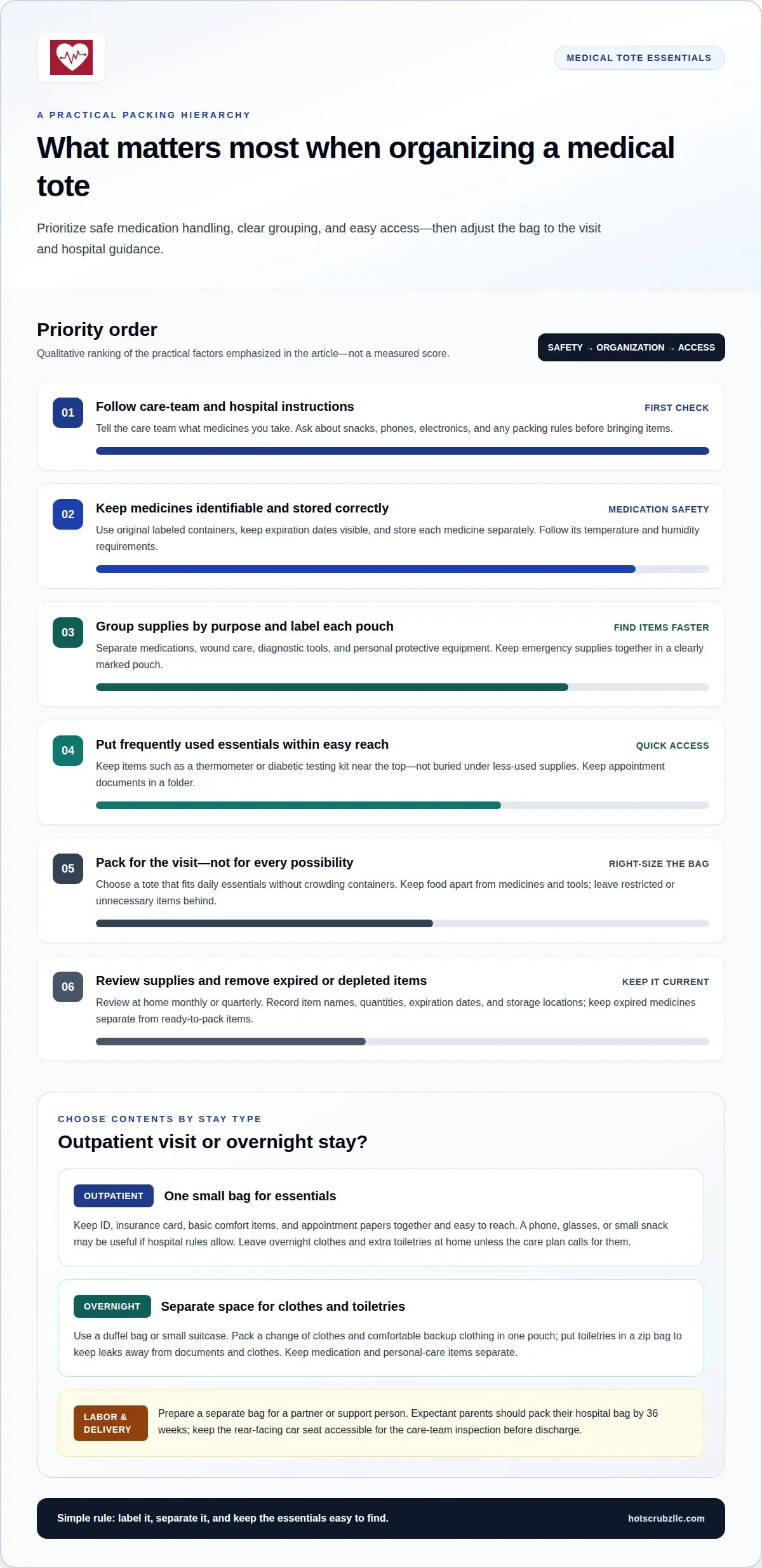
For an outpatient visit, pack light: put your ID, insurance card, and basic comfort items together. Keep them in a pocket you can reach without opening the whole tote. A phone, glasses, or small snack may be useful, but follow the hospital’s instructions about electronics and food. Store appointment papers in a folder, separate from loose personal items. Leave overnight clothes and extra toiletries at home unless your care plan calls for them.
An overnight visit calls for more room and a separate bag. For a planned hospital stay, pack ahead using a duffel bag or small suitcase. Put a change of clothes and comfortable backup clothing in one pouch. Pack toiletries in a zip bag to keep leaks away from documents and clothes. Even if you expect to stay one night, include essentials you may need if plans change.
Small labeled bags make a larger bag easier to organize. Keep medication and personal-care items separate, and put documents in a folder that won’t bend easily. Place snacks in an easy-to-reach pocket, rather than under clothing. This layout helps you find a phone charger, toothbrush, or paperwork without unpacking everything. Leave out any items restricted by hospital instructions.
Leave large amounts of cash, expensive jewelry, and nonessential electronics at home. Hospitals aren’t responsible for patients’ personal belongings, so packing simply means less to keep track of. For an outpatient appointment, use one small bag for essentials. For an overnight stay, a duffel or small suitcase gives clothing and toiletries their own space.
For labor and delivery, prepare a separate bag for your partner or support person, including personal items and a change of clothes. Expectant parents should pack their hospital bag by 36 weeks in case the baby arrives early. Before discharge, the hospital care team must inspect the rear-facing car seat. Keep it accessible for that check rather than buried under luggage.
4. Bringing medications and personal care items
For TSA screening, keep medications and medical supplies organized and easy to identify. Separate them into labeled pouches and follow screening instructions for the specific items you’re carrying. Keep essential medicine accessible instead of burying it beneath toiletries or clothing.
If you manage a chronic condition, make a pouch for its daily essentials. For example, someone managing diabetes might group prescribed medication with a diabetic testing kit and related supplies. Keeping these items together makes them easier to find, while each medicine stays in its labeled container. A separate pouch for wound care or personal protective equipment prevents unrelated supplies from getting mixed in.
Group personal-care items by use. Put a toothbrush, toothpaste, and other toiletries in a zip bag, away from medication containers and documents. Similarly, if your routine requires specialized hygiene supplies like piercing cleaning kits, options from BodyJ4You can easily be organized in their own small, leak-resistant pouch. For an overnight stay, bring backup comfortable clothes and toiletries, even if you expect to stay just one night. Keep clothing separate from items that could leak, so a spill doesn’t affect your essentials.
Choose items that suit your care plan and the conditions where they’ll be stored. Medical supplies can degrade in unsuitable temperature or humidity, so follow each item’s storage instructions. Keep supplies where family members can access them but young children can’t reach them. A clearly labeled pouch makes a specific need easier to identify without exposing every item in the tote.
Leave strong perfumes and scented lotions at home. Their fragrance can bother other patients, so choose unscented personal-care items for a hospital visit. Keep toiletries together and, if the hospital permits snacks, place them separately in an easy-to-reach pocket. These simple divisions make personal items easier to find without disturbing medication or care supplies.
For long days that include travel to or from care, explore medical footwear designed for healthcare professionals.
Arnica homeopathic remedy at a 30C potency is noted for bruising and trauma. Store medical supplies in appropriate temperature and humidity conditions to prevent degradation.
HotScrubz: Mini Tote Bags
HotScrubz offers Mini Tote Bags for healthcare professionals who want a dedicated place for selected everyday essentials. Once you’ve sorted medications and supplies into clearly labeled groups, a mini tote can help keep your personal carry routine focused, whether you’re heading to work or preparing for an appointment. Keep medication in its labeled container and follow its storage instructions. Use the tote to carry essentials, not to change how they should be stored.
Choose what belongs in your daily bag based on your routine, and keep overnight clothing or nonessential items in a separate hospital bag. HotScrubz also offers Scrub Tops, Scrub Pants, and Medical Footwear for healthcare professionals building a practical workday wardrobe.
Contact HotScrubz to explore Mini Tote Bags for your routine.
Make Your Next Outing Feel More Prepared
A tote can support a calmer routine when it reflects how you move through your day. Before your next appointment or work shift, decide what should stay close, what belongs in a separate bag, and what you can leave at home. This simple reset keeps your setup purposeful instead of letting it grow crowded. Organizing your medical tote is also a chance to choose everyday essentials that feel comfortable for demanding schedules.
HotScrubz offers Scrub Tops, Scrub Pants, and Lab Coats for healthcare professionals building a polished work wardrobe. If you’d like help exploring apparel and accessories for your routine, contact HotScrubz.
Take your next step with confidence by making room for a day that feels more manageable.
Frequently Asked Questions
How do you organize a medical tote for quick access during an emergency?
Keep emergency essentials together in a clearly marked pouch near the top of the tote. Use a consistent color, such as red, to make it stand out. Place a copy of your emergency plan inside the kit or somewhere visible at home, such as the refrigerator door. Make sure household members know where the tote is and how to identify the emergency pouch.
What are the best compartments and organizers for a medical tote?
Choose compartments that match the items you carry instead of filling every pocket. Expandable mesh pockets can keep small supplies visible, while separate zip pouches help contain items that could spill. Reserve an easy-to-reach space for frequently used tools, such as a thermometer. At home, a visible organizer can keep regular-use medical items together without crowding your travel tote.
How often should you check expiration dates and restock a medical tote?
Review stored medical supplies monthly or quarterly, and refresh the tote after using an item. During each review, remove expired products and replace anything depleted before your next outing. Put newly purchased items behind older supplies so earlier-expiring products are used first. Follow each product’s storage instructions, since unsuitable temperature or humidity can affect its condition.