Sub-Total: $0.00

The Evolution of the Doctor Lab Coat: Style, Authority, and Modern Design
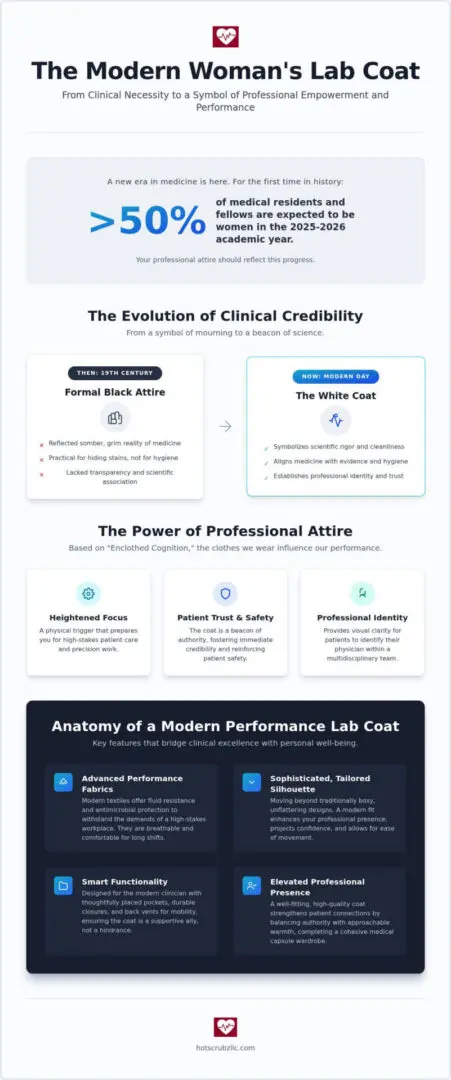
Did you know that for the first time in history, women are expected to represent more than half of all medical residents and fellows in the 2025-2026 academic year? As medicine evolves to become more inclusive, the garments you wear should reflect that same progress. You’ve likely spent years in standard-issue lab coats for women that felt heavy, boxy, and entirely too clinical. It’s frustrating to feel like your professional identity is hidden behind a stiff, unflattering layer that lacks breathability and stains far too easily.
We believe your attire should be a supportive ally in your demanding workday. This article explores how the iconic white coat has transformed from a sterile necessity into a sophisticated symbol of professional empowerment and modern performance. You’ll discover the rich history and symbolic power behind this garment while identifying the performance fabrics that withstand the longest shifts. We’ll guide you toward finding a coat that enhances your professional confidence and strengthens patient trust. It’s time to bridge the gap between clinical excellence and your personal well-being through design that truly sees you.
Key Takeaways
- Uncover the historical shift from formal black attire to the white coat as a definitive symbol of scientific rigor and professional visibility.
- Identify modern performance fabrics that offer fluid resistance and antimicrobial protection to withstand the demands of a high-stakes workplace.
- Master the art of selecting the ideal fit for lab coats for women, moving beyond boxy designs to a more sophisticated and tailored silhouette.
- Explore how a professional lab jacket serves as a supportive ally, bridging the gap between your physical ease and clinical responsibility.
- Learn how to integrate your outerwear into a cohesive medical capsule wardrobe that elevates your confidence and strengthens patient connections.
The Symbolic Power of the White Coat: More Than a Uniform
Your lab coat is far more than a barrier against clinical spills. It’s a visual shorthand for your expertise and a testament to the years of dedication you’ve invested in your craft. When you drape that fabric over your shoulders, you aren’t just putting on a uniform; you’re stepping into a legacy of healing and scientific rigor. For the modern clinician, lab coats for women have transitioned from being a clinical necessity to a profound symbol of professional readiness and personal pride. For organizations looking to honor this level of dedication, KP Innovations provides guidance on elevating professional recognition through custom corporate awards.
This psychological shift is rooted in what researchers call enclothed cognition. This concept suggests that the clothes we wear can actually influence our mental processes and performance. When you button up a professional doctor lab coat, your brain naturally shifts into a state of heightened focus and increased attention to detail. It’s a physical trigger that prepares you for the high-stakes environment of patient care, helping you perform with the precision your role demands.
The White Coat Ceremony and Professional Identity
The journey often begins with the White Coat Ceremony, a rite of passage that defines the moment a student truly becomes a clinician. It’s a heavy moment filled with expectation. That first crisp, white garment symbolizes the immense responsibility you’ve chosen to carry. The white coat serves as the ultimate bridge between science and empathy. It represents your commitment to applying rigorous evidence while maintaining a deeply human connection with those in your care.
Understanding the history of the white coat helps us appreciate this weight. Historically, the garment was adopted to mirror the cleanliness of the laboratory, signaling a move toward evidence-based medicine. Today, it remains the primary tool for establishing your professional identity in a crowded healthcare landscape where visibility is key to your impact.
Patient Perception and the Authority of Style
In a fast-paced clinical setting, first impressions happen in seconds. Your attire fosters immediate credibility, especially in high-stakes environments where trust must be established quickly. Patients often look to the white coat as a beacon of authority and safety. However, the modern approach is about more than just looking the part; it’s about balancing that authority with approachable warmth through a polished, professional silhouette.
A tailored appearance helps you stand out within multidisciplinary teams. Because many staff members wear similar scrubs, lab coats for women provide the visual clarity needed for patients to identify their physician or specialist easily. Choosing a coat that fits well ensures you look like the leader you are, reinforcing patient trust while allowing you to move through your shift with total confidence and ease.
From Black to White: The Evolution of Clinical Credibility
Before the late 19th century, a physician’s wardrobe looked vastly different than the bright, crisp silhouettes we see today. Medicine was a somber, often grim affair, and practitioners typically wore black to reflect the formal mourning associated with their work. These dark garments were practical for hiding stains, but they lacked the scientific transparency we value in modern care. The shift from black to white wasn’t just a change in fashion; it was a radical declaration of a new era in healthcare.
The Scientific Revolution in Medical Apparel
The transformation began with the rise of antisepsis and the groundbreaking work of Joseph Lister. As the medical community embraced germ theory, the need for a sterile, visible environment became paramount. White fabric was chosen because it showed every speck of dirt, forcing a standard of cleanliness that black could never provide. This period saw the coat evolve from a simple protective apron, used to keep street clothes clean, into a symbol of laboratory precision and clinical rigor.
By adopting the white coat, physicians aligned themselves with the prestige of the laboratory scientist. It signaled to patients that their care was rooted in evidence and hygiene rather than tradition alone. Today, choosing professional lab coats means honoring this legacy of transparency while benefiting from modern textile innovations that the early pioneers could only imagine.
The Modern Aesthetic: Style Meets Science
In 2026, the design of lab coats for women has moved far beyond the sterile, boxy silhouettes of the past. Modern healthcare is a dynamic, fast-paced environment, and your apparel should reflect that energy. We’ve seen a transition toward lifestyle-oriented designs that prioritize the emotional state and physical ease of the wearer. It’s no longer about hiding behind a clinical barrier; it’s about wearing a garment that functions as a canvas for professional pride and personal expression.
Modern iterations distinguish clearly between diagnostic and procedural attire. While surgical gowns are built for the intense, sterile requirements of an operating room, the lab coat remains the primary tool for consultation and patient interaction. Today’s lab coats for women utilize high-performance fabrics that offer antimicrobial properties and fluid resistance, ensuring you stay protected without sacrificing a polished appearance. These tailored designs reflect the sophisticated nature of 21st-century medicine, where style and science work in harmony to elevate your professional presence.
Evaluating Modern Lab Coat Fabrics: Performance and Endurance
The symbolic power of your attire relies heavily on its physical integrity. While traditional 100% cotton was once the gold standard, it often fails the modern clinician by wrinkling instantly and absorbing stains. Today, the choice of lab coats for women has evolved to prioritize functional endurance without sacrificing the sensory experience. High-performance fabrics now bridge the gap between clinical safety and personal ease, ensuring you remain focused on your patients rather than your uniform.
The Technical Edge: Fluid Repellency and Hygiene
Modern textile engineering has introduced coatings that act as an invisible shield. These advanced finishes allow liquids to bead up and roll off the surface, preventing clinical contaminants from soaking into the fibers. This isn’t just about aesthetics; it’s a matter of professional readiness. The global antimicrobial apparel segment is projected to reach $8.97 billion in 2026, reflecting a massive industry shift toward hygiene-focused design. Advanced fluid-resistant technology is a non-negotiable for modern safety because it provides a critical barrier between your professional attire and unpredictable clinical contaminants. By choosing easy-care fabrics that resist wrinkling, you maintain a sharp, authoritative presence from the start of your rounds until your final consultation.
Sensory Comfort: The Intersection of Softness and Strength
A 12-hour shift demands a garment that moves with you. The industry is moving away from stiff, boxy materials toward four-way stretch fabrics that revolutionize the feel of professional lab jackets. These materials offer the structure of a classic coat but with the flexibility of high-performance activewear. When you’re moving between patient rooms and the laboratory, you need that physical ease to support your mental focus. It’s about feeling agile and capable in every interaction.
To regulate body temperature, many premium designs now incorporate moisture-wicking linings. These technical layers pull sweat away from the skin, keeping you cool under the pressure of high-stakes environments. The goal is to achieve a professional heavy drape that looks polished while maintaining a lightweight, breathable feel. This balance of softness and strength ensures your coat remains a supportive ally throughout the day. Finally, modern blends excel in color retention, ensuring your signature white stays bright and crisp even after repeated high-temperature laundering.
Selecting Your Signature Look: Length, Fit, and Functionality
Your lab coat is the anchor of your professional capsule wardrobe. It’s the final layer that pulls your look together, signaling readiness and authority to everyone you encounter. Choosing the right piece involves more than just picking a size; it requires understanding how different lengths and silhouettes support your specific clinical role. Whether you prefer a traditional 40 inch full length coat for maximum coverage or a modern 30 inch lab jacket for increased mobility, your choice should reflect the pace of your workday.
Consultation coats, typically falling between 28 and 33 inches, offer a tailored appearance that works beautifully for outpatient settings and administrative duties. These shorter styles provide a crisp, approachable look that bridges the gap between formal and functional. In contrast, full length lab coats remain the standard for high stakes clinical environments where maximum protection and a traditional professional profile are required. Finding the right balance ensures you feel prepared for every patient interaction.
The Anatomy of the Perfect Fit
A professional silhouette begins with precise shoulder alignment. The seams should sit exactly where your shoulders end, providing a structured look that avoids the sagging appearance of oversized, unisex garments. Historically, clinical attire was often boxy and ill fitting for female professionals. Modern lab coats for women respect your silhouette, offering contoured seams and tailored waistlines that provide a polished look without restricting your movement. This isn’t just about aesthetics; it’s about the psychological boost that comes from wearing a garment designed for your specific body type.
Back vents and side slits are essential features for active clinicians. A well placed vent allows you to sit, reach, and move between patient rooms without the fabric pulling or bunching. When your coat fits correctly, you project a sense of self assurance that strengthens patient trust and reinforces your clinical authority. It allows you to focus entirely on your expertise rather than adjusting your clothes throughout a long shift.
Pockets and Utility: Designing for the Daily Routine
Functionality is defined by how well your coat organizes your clinical tools. Evaluating pocket placement is critical for a busy resident or attending. You need dedicated spaces for stethoscopes, tablets, and essential diagnostic tools that are easy to reach but won’t weigh you down. Internal pockets offer a secure place for personal items, while external patch pockets provide quick access to frequently used supplies. This level of organization is what transforms a simple garment into a high performance tool.
The inclusion of a side access slit is a game changer for modern professionals. It allows you to reach your trouser pockets without unbuttoning your coat, maintaining your polished appearance while providing instant utility. Balancing a sleek design with these storage needs ensures you stay efficient during rapid movement. Explore our collection of professional lab coats to find a piece that fits your role and your signature style.
Elevating Your Presence with HotScrubz Professional Apparel
You’ve dedicated your life to the care of others, and your professional attire should honor that commitment. HotScrubz LLC serves as your stylish, supportive ally, ensuring your appearance reflects the depth of your expertise. By building a medical capsule wardrobe, you create a foundation of reliability and style. This strategic approach to dressing helps you transition seamlessly from the internal state of preparation to the external reality of a demanding shift. It’s about feeling prepared, visible, and completely at ease in your role.
Our commitment to quality means your lab coats for women will maintain their crisp, white integrity shift after shift. We understand that a well-fitted coat is more than just a garment; it’s a tool for visibility and professional pride. Shopping for professional lab coats online should be an inspiring experience, not a chore. We provide the guidance you need to choose with confidence, ensuring you find a piece that offers both aesthetic appeal and functional endurance. Your wardrobe should be a source of strength, not a clinical afterthought.
A Cohesive Vision: Pairing Coats with Premium Scrubs
Projecting confidence requires a sense of professional harmony that starts the moment you get dressed. When you pair high-performance lab coats for women with premium scrubs, you create a unified look that signals readiness to your patients and colleagues alike. There is a distinct aesthetic benefit to matching high-performance fabrics across your entire uniform, as it creates a cohesive vision of excellence. This polished appearance functions as a quiet form of self-care for the clinician. It provides a sense of personal ease and professional responsibility, allowing you to focus on your patients while feeling completely supported by your gear. You deserve to feel as sophisticated as the care you provide, and for those who value craftsmanship in every detail of their professional presence, you can discover Luxury Time NYC to find a high-end timepiece that matches your dedication to excellence.
We prioritize the emotional state of the wearer through modern, polished designs that move away from sterile, boxy traditions. Our national reach ensures that healthcare heroes across the United States have access to apparel that values the person behind the profession. We act as an authoritative expert and a friendly guide, helping you navigate your daily routine with more self-assurance. This balance of professional warmth and innovative design is what sets us apart. We believe that when you look your best, you’re empowered to perform your best. It’s time to elevate your daily experience with apparel that understands the rigors of your world.
Elevate your professional wardrobe with HotScrubz LLC lab coats.
Step Into Your Professional Future
The journey of the white coat from a 19th-century clinical necessity to a 21st-century symbol of empowerment is complete. You’ve seen how modern performance fabrics and tailored silhouettes have replaced the heavy, sterile garments of the past. Choosing the right lab coats for women is no longer just about utility; it’s about honoring your hard work with attire that reflects your clinical excellence. It’s about finding that perfect balance between sophisticated design and the functional endurance required for the longest shifts.
We’re proud to be your supportive ally as you navigate the rigors of a high-stakes workplace. Our collection features high-performance fabrics and sophisticated designs that prioritize your comfort and style. Trusted by healthcare professionals nationwide, we believe you deserve a professional appearance that matches your expertise. Discover the HotScrubz collection of professional lab coats and elevate your daily routine. Step into your next shift with a renewed sense of visibility and pride; you’ve earned it.
Frequently Asked Questions
What is the difference between a consultation coat and a standard lab coat?
A consultation coat is defined by its shorter length, usually falling around the hip or mid-thigh at 28 to 33 inches. It’s designed for outpatient environments or administrative days where heavy clinical protection isn’t the primary focus. Standard lab coats offer a longer silhouette, often reaching 40 inches. This provides a more traditional professional profile and increased coverage for your clothing during procedures or rounds in high-stakes hospital wards.
How often should a doctor wash their lab coat to maintain hygiene and appearance?
To maintain clinical hygiene and a crisp appearance, you should wash your coat after every one or two shifts. If you’ve been in high-contact areas or experienced a spill, launder it immediately. Modern performance fabrics are designed to withstand frequent, high-temperature washing without losing their shape or brightness. Regular cleaning ensures you always project a sense of readiness and scientific rigor while protecting yourself and your patients from contaminants.
Why do some medical students wear shorter lab coats than attending physicians?
The length of the coat often serves as a visual marker of your current stage in medical training. In many institutions, medical students wear short coats to signify they’re still in the learning phase. Attending physicians and residents wear the full-length version as a symbol of their completed degree and clinical authority. This tradition helps patients and staff quickly identify the level of expertise within a multidisciplinary healthcare team.
Are white lab coats still required in most modern hospitals in 2026?
White coats remain a powerful symbol of medical authority and are still widely required in many health systems in 2026. While some specialized departments like pediatrics or psychiatry move toward a “scrubs-only” approach to appear more approachable, the coat is still the standard for consultations. It provides patients with a clear visual cue of who is in charge of their care, fostering immediate trust and professional visibility during high-stakes interactions.
Can modern lab coat fabrics really resist stains and fluids effectively?
Modern lab coats for women utilize advanced textile technology to create an effective barrier against clinical spills. These high-performance fabrics often feature fluid-repellent coatings that cause liquids to bead up and roll off the surface rather than soaking in. This innovation significantly reduces the risk of permanent staining and cross-contamination. You’ll find that these technical materials maintain their polished look throughout a long shift, even in the most demanding environments.
What features should I look for in a lab coat if I carry a lot of medical tools?
If you carry a heavy load of diagnostic tools, prioritize a coat with reinforced, oversized pockets. Look for dedicated internal compartments for tablets and stethoscopes to distribute weight evenly across your frame. Side access slits are another essential feature, as they allow you to reach your scrub pockets without unbuttoning your coat. This level of organization ensures you stay efficient and prepared while moving quickly between patient rooms and the laboratory.
Is it better to choose a 100% cotton lab coat or a synthetic blend?
While 100% cotton is breathable, a high-quality synthetic blend is usually the superior choice for the modern clinician. These technical blends offer better durability, wrinkle resistance, and the four-way stretch needed for physical ease during a 12-hour shift. Cotton tends to lose its shape and stain more easily. A blend provides the professional heavy drape you want with the functional endurance required to stay looking sharp and feeling comfortable all day.
How should a professional lab coat fit around the shoulders and chest?
Your lab coats for women should fit precisely at the shoulder, with the seam sitting exactly where your natural shoulder ends. The chest area should be tailored to follow your silhouette but must allow for a full range of motion. You shouldn’t feel any pulling across the back or under the arms when you reach forward. A proper fit ensures you project a sense of self-assurance and authority without being restricted by your apparel.