Sub-Total: $0.00

Surgical Scrubs: The 2026 Reference Guide to Standards, Style, and Selection
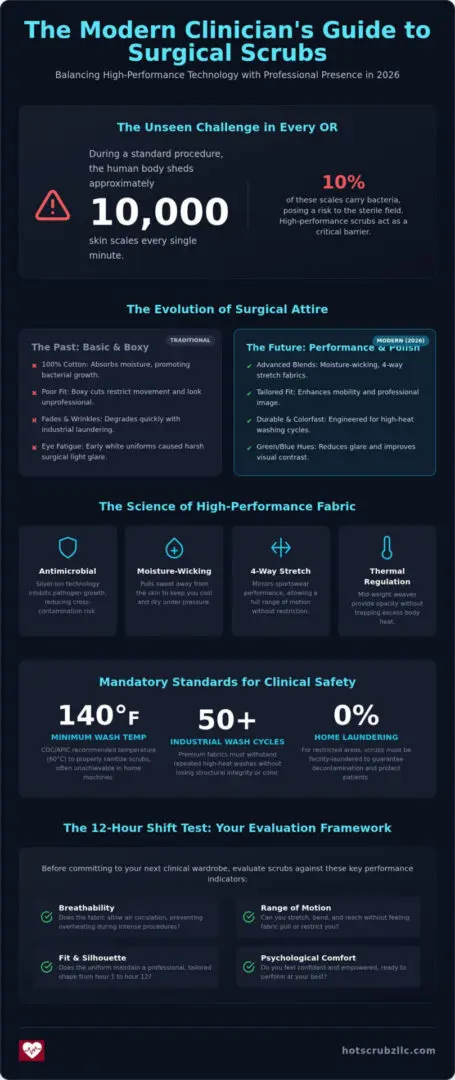
Did you know that during a standard procedure, your body sheds approximately 10,000 skin scales every single minute? It’s a startling reality of the 2026 operating theater, yet many practitioners spend more time selecting their instruments than the fabric protecting their skin. You understand the grueling physical demand of a 12-hour shift. You’ve likely felt the frustration of surgical scrubs that lose their shape by midday or fabric that feels abrasive after hours of constant movement. You deserve to feel seen and supported in your vital work, not hidden behind a generic, boxy uniform that fades and pales after just a few cycles in the wash.
Your attire should be a high-performance interface that empowers your clinical precision and boosts your confidence. This guide will help you master the latest technical standards for medical apparel while discovering how to balance essential protection with a polished, professional style. We’ll walk through the current AORN guidelines, antimicrobial fabric breakthroughs, and the smart selection strategies that ensure your gear feels like a second skin. It’s time to project an image that matches your expertise and your dedication to care.
Key Takeaways
- Learn how modern fabric technology, including high-performance weaves and moisture-wicking properties, maintains hygiene while keeping you cool under pressure.
- Discover how transitioning from boxy, generic cuts to tailored silhouettes can enhance your professional visibility and build deeper patient trust.
- Master the “12-hour shift test” to evaluate breathability and range of motion before committing to your next clinical wardrobe.
- Navigate the 2026 technical standards for surgical scrubs to ensure your apparel meets the rigorous safety requirements of the modern operating room.
- Understand how choosing high-performance medical apparel honors the person behind the profession, combining physical ease with professional responsibility.
Defining Surgical Scrubs: The Foundation of Clinical Readiness
A modern medical uniform is far more than just fabric and thread. It’s a high-performance tool designed to meet the extreme demands of the operating room. When we talk about surgical scrubs, we’re describing a specialized category of clinical attire engineered for sterile environments. These garments serve as the primary interface between your body and a high-stakes workplace. They prioritize fluid resistance, microbial barriers, and physical ease, ensuring you remain focused on your patient rather than your discomfort.
While selecting the right apparel is the first step, ensuring your facility is equipped with reliable tools is equally critical; you can visit OmniMedSource to explore a wide range of essential medical supplies.
The history of surgical scrubs reveals a journey from simple white linens to the advanced, synthetic blends we rely on in 2026. Originally, white was chosen to signify cleanliness, but the harsh glare of surgical lights against white fabric caused significant eye fatigue for surgeons. This led to the adoption of greens and blues, which provide better visual contrast. Today, the evolution continues with fabrics that mirror the performance of elite sportswear, offering four-way stretch and moisture management that older cotton blends simply couldn’t provide.
Slipping into your uniform acts as a psychological on-switch. It signals a transition from your personal life to your professional identity. This ritual prepares your mind for the precision required in the theater. When your gear fits perfectly and looks polished, it reinforces your confidence. You aren’t just wearing a uniform; you’re stepping into a role that demands excellence.
The Role of Scrubs in Infection Control
Infection prevention is the core purpose of surgical attire. Research indicates that surgical staff shed approximately 10,000 skin scales every minute, and roughly 10% of those scales carry bacteria. Premium surgical scrubs are crafted from non-shedding, tightly woven materials that act as a filter, containing these particles to protect the sterile field. Modern fabrics often include antimicrobial finishes, such as silver-ion technology, to further reduce the risk of cross-contamination during long shifts.
Surgical vs. Non-Surgical Environments
It’s vital to distinguish between general medical apparel and scrubs destined for restricted zones. While ward scrubs might prioritize pocket placement for daily tasks, surgical-grade attire must adhere to stricter standards. Many hospitals utilize color-coding systems to maintain these boundaries. For example, a facility might reserve misty blue for the operating team while using charcoal for general nursing staff. This helps identify roles and ensures that only those in the correct, facility-laundered attire enter sterile processing departments.
Laundering is where the safety standards become most visible. The CDC and APIC recommend a minimum wash temperature of 140°F (60°C) with EPA-registered detergents to properly sanitize clinical wear. Most home washing machines fail to reach these temperatures consistently. Because of this, many healthcare systems now mandate that scrubs worn in restricted areas must be laundered through an industrial process rather than at home. This ensures every fiber is decontaminated, protecting both you and your patients from invisible threats.
The Science of Protection: Fabric Technology and Hygiene Standards
Professional attire isn’t just about appearance; it’s about endurance. The anatomy of premium surgical scrubs involves a delicate calculation of thread count, weave, and weight. A higher thread count provides a smoother feel against the skin, while a mid-weight weave ensures the garment remains opaque without trapping excess heat. Durability is non-negotiable. Because clinical apparel must withstand 50 or more industrial wash cycles at temperatures reaching 140°F, the structural integrity of every fiber is paramount to your safety.
High-pressure environments naturally cause perspiration. Modern moisture-wicking technology pulls sweat away from your body, allowing it to evaporate quickly so you stay dry during intense procedures. Antimicrobial treatments serve as a frontline defense against healthcare-associated infections (HAIs). These finishes, often utilizing silver-ion technology, inhibit the growth of pathogens on the fabric surface. This adds a layer of invisible protection that supports your well-being throughout a demanding shift.
Modern Fabric Blends: Cotton, Polyester, and Spandex
Traditional 100% cotton was once the standard for its breathability. However, it absorbs moisture, wrinkles easily, and loses its shape over time. Poly-spandex blends have emerged as the 2026 gold standard for active clinicians. These materials offer four-way stretch, which allows you to reach, bend, and move with total freedom. This elasticity prevents the restrictive, boxy feel of older designs. It transforms your uniform into high-performance gear that moves with you, rather than against you.
Fluid Resistance and Barrier Standards
Safety depends on consistent barrier performance. The ANSI/AAMI PB70 standards categorize protection levels to help you match your gear to your clinical risk. Level 1 attire is suitable for basic care with minimal fluid exposure. Level 2 provides a more robust barrier for procedures with low to moderate fluid risk. Fluid repellency acts as a critical safety shield by preventing liquid penetration during surgical procedures. Following the AORN guidelines on surgical attire ensures that your surgical scrubs meet the highest benchmarks for infection control.
Your comfort is the foundation of your performance. If you’re ready to upgrade your clinical experience, explore our latest high-performance scrub tops designed for both protection and poise. Choosing the right fabric blend is a small decision that makes a significant difference in how you feel at the end of a long day.
Form Meets Function: The Shift Toward Stylish Surgical Apparel
The days of the ‘one-size-fits-none’ uniform are over. In 2026, the evolution of surgical scrubs has moved beyond basic utility to embrace tailored, flattering silhouettes that honor your physical form. This shift isn’t just about aesthetics; it’s about eliminating the ‘invisible’ feeling that often comes with generic, boxy attire. When your clothing fits your body, you move with more agility and less distraction. You’re ready for the rigors of the workplace without the mental drag caused by excess fabric or restrictive cuts.
Style is a tool for professional readiness. Looking polished increases patient trust and reinforces your own confidence. The psychology of style suggests that when you feel professional, you perform with more self-assurance. This internal state of readiness is vital in high-stakes environments where every second counts. Your uniform should be a source of pride, acting as a supportive ally that recognizes the person behind the profession.
The Aesthetic of Professional Empowerment
The ASA Statement on Surgical Attire highlights the importance of materials that limit infectious spread, but modern design proves that safety and style can coexist. Professional empowerment begins with a uniform that reflects your dedication. A well-fitted silhouette reduces physical fatigue by moving with your natural stride. It bridges the gap between lifestyle-oriented design and clinical utility, allowing you to maintain your sense of identity within institutional standards. Color psychology also plays a vital role; softer, low-saturation tones like misty blue and warm gray promote calm and project authority without the sterile harshness of traditional palettes.
Functional Design Elements to Look For
Every detail of your uniform should serve a purpose. Ergonomic design means placing pockets and seams exactly where you need them most. Look for reinforced seams that withstand strenuous movement and frequent industrial laundering. Strategic pocket placement is essential for keeping your stethoscope, pens, and mobile devices secure yet accessible during a fast-paced shift. For a deeper dive into how these design specifics impact your daily performance, explore our scrub tops guide. When form meets function, your gear works as hard as you do, ensuring you stay focused on providing exceptional care.
Selection Framework: How to Evaluate Your Clinical Wardrobe
Choosing your professional attire is a strategic investment in your daily well-being. It’s not just about picking a color you like; it’s about selecting a high-performance system that supports you through the most demanding hours of your shift. When evaluating surgical scrubs, start by assessing your specific environment. If you work in restricted zones, you need surgical-grade apparel that meets facility laundering standards. For general ward duties, you might prioritize pocket accessibility and stylistic flair. Use this medical scrubs checklist to ensure you’ve covered every essential requirement for your role.
The 12-hour shift test is your most reliable metric for success. Before committing to a new brand, evaluate how the fabric handles a full range of motion. Does the waistband stay secure during a reach? Does the material remain breathable when the pressure rises? Maintenance is equally critical. Premium apparel may have a higher initial cost, but its longevity often results in a lower “cost-per-wear” compared to generic alternatives. High-quality fibers that resist fading and pilling ensure you look as professional on wash fifty as you did on day one.
Finding Your Perfect Fit
Success begins with a precise fit. Size charts vary significantly across premium brands, so always measure yourself before ordering. Look for “squat-proof” and “stretch-ready” scrub pants that offer a four-way stretch for total mobility. You’ll also need to decide between a pre-matched scrub set or purchasing individual pieces. Sets provide a cohesive look, while individual pieces allow you to customize sizes if you require a different fit for your top and bottom.
The Professional Capsule Wardrobe Concept
Building a capsule wardrobe simplifies your morning routine and ensures you always project a confident image. Start with a core color palette that allows for maximum mix-and-match potential. Neutral tones like navy, charcoal, or misty blue serve as a versatile foundation. Your essential collection should include several tops, durable bottoms, and layering jackets for cooler clinical environments. For a step-by-step approach, follow our guide on building a medical capsule wardrobe. This method helps you create a professional look that is both affordable and exceptionally functional.
Your wardrobe should be your greatest ally in the workplace. If you’re ready to experience the difference that premium design makes, explore our premium collection and find the pieces that move with you. High-performance gear is the first step toward a more comfortable and confident shift.
Empowering Your Shift: Why HotScrubz Redefines the Surgical Experience
You dedicate your life to the care of others. We dedicate our work to you. HotScrubz operates on a simple, powerful philosophy: we champion the person behind the profession. We understand that in a high-stakes environment, your uniform is more than just fabric. It’s your armor. It should reflect the prestige of your role while providing the physical ease you need to perform at your peak. We move away from the sterile, clinical atmosphere of the past to offer a lifestyle-oriented approach that prioritizes how you feel during every minute of your shift.
Our design process honors the rigorous demands of your workplace. We don’t just create apparel; we engineer a sensory experience that supports you through the most challenging hours. Your professional endurance is legendary. Your surgical scrubs should mirror that strength. By focusing on the intersection of aesthetic appeal and functional endurance, we ensure you feel both seen in your hard work and inspired to elevate your appearance. We act as your stylish, supportive ally, helping you navigate your daily routine with total self-assurance.
Uncompromising Comfort for Long Hours
Comfort isn’t a luxury in the medical field; it’s a necessity for sustained focus. Skin irritation from abrasive, low-quality fabrics can be a significant distraction during a delicate procedure. We utilize soft-touch fabrics that prevent friction, acting as a gentle second skin that moves with you. High-performance apparel plays a vital role in reducing the physical fatigue and mental drag that often contribute to clinician burnout. Because we utilize a direct-to-consumer model, we ensure this premium quality reaches you without the traditional retail markup. You receive the best fabric technology and sophisticated design with national US shipping, making professional excellence accessible. For nurses and clinicians looking to complete their professional ensemble, our 2026 guide to premium medical apparel covers everything from breathable lab coats to functional medical tote bags for nurses that match the quality of your scrubs.
Ready for Every Challenge
A great uniform transitions seamlessly with your day. Whether you’re in the intensity of the OR or moving to the administrative ward for charting, you should feel equally poised and professional. There is a profound confidence that comes from wearing gear designed for visibility and pride. You aren’t just a face in a generic uniform; you’re a dedicated professional who deserves to look as capable as you are. Projecting a polished image builds patient trust and reinforces your own sense of authority. It’s time to choose apparel that works as hard as you do. Explore our full collection of surgical scrubs and elevate your shift today.
Step Into Your Most Confident Shift
Mastering the technical standards of modern surgical scrubs is about more than just compliance; it’s about protecting your focus and your patients. You’ve learned that the right fabric technology can transform a grueling 12-hour shift into a showcase of professional precision. By choosing apparel that balances rigorous hygiene requirements with a sophisticated, tailored fit, you move beyond the generic, boxy uniform. You step into a role that values both your clinical expertise and your personal identity.
This expertise extends beyond your wardrobe to the very tools you use daily; learn more about M.D. Surgical & Healthcare Supplies to see how they assist clinics in navigating the complexities of modern diagnostic equipment procurement.
Your dedication to care deserves gear that works as hard as you do. Our premium fabric is specifically designed for endurance, ensuring you feel as fresh at hour twelve as you did at hour one. With sophisticated styles and free shipping on qualifying orders, it’s easier than ever to build a wardrobe that reflects your commitment to excellence. Elevate your professional presence with HotScrubz and experience the difference of a uniform designed with your sensory experience in mind. You dedicate your life to others; let us support the person behind the profession. You’re ready for whatever the next challenge brings.
Frequently Asked Questions
What is the difference between surgical and medical scrubs?
Surgical scrubs are specialized garments designed for the high-stakes environment of the operating room, where infection control is paramount. While standard medical scrubs serve general clinical duties, surgical versions often adhere to stricter barrier standards and are frequently subjected to industrial laundering processes. These garments prioritize fluid resistance and antimicrobial properties to protect both the wearer and the sterile field. Selecting the right category ensures you meet institutional safety requirements while maintaining your professional edge.
What are surgical scrubs typically made of?
Modern surgical scrubs are typically crafted from advanced synthetic blends that prioritize performance and durability. Poly-spandex is the current industry gold standard, offering a four-way stretch that moves with your body during intense shifts. These fabrics often include moisture-wicking technology to keep you cool under surgical lights. Unlike traditional 100% cotton, these high-performance materials resist wrinkles and maintain their professional shape after dozens of high-temperature wash cycles, ensuring you always look polished.
How should surgical scrubs fit for maximum comfort?
Your scrubs should offer a tailored fit that provides a full range of motion without feeling restrictive or overly boxy. A successful fit is squat-proof and stretch-ready, ensuring you can bend and reach with confidence. Look for silhouettes that follow your natural form while allowing enough room for air circulation. When your gear fits like a second skin, it reduces the mental drag caused by excess fabric, letting you focus entirely on patient care.
Do surgical scrubs have to be a specific color like blue or green?
While many facilities mandate specific colors like misty blue or ceil for role identification, the choice isn’t purely aesthetic. These shades are historically preferred in the operating room because they provide high visual contrast and minimize eye fatigue under bright surgical lights. However, modern healthcare environments are increasingly embracing low-saturation tones like warm gray or charcoal for non-restricted areas. Always check your institution’s specific color-coding policy to ensure your surgical scrubs align with departmental standards.
How often should I replace my surgical scrubs?
You should consider replacing your surgical scrubs when they show signs of pilling, significant fading, or loss of elasticity. High-performance apparel is designed to withstand approximately 50 to 70 industrial wash cycles before the technical properties, such as antimicrobial finishes, begin to degrade. If your uniform no longer holds its shape or feels abrasive against your skin, it’s time for an upgrade. Investing in fresh gear ensures you maintain a confident, professional image every day.
Can I wear my own surgical scrubs in a sterile operating room?
Hospital policies vary, but many restricted surgical zones require staff to wear facility-provided and industrially laundered attire. This protocol ensures that every garment meets the strict 140°F sanitization standards necessary for sterile environments. If your facility allows personal surgical scrubs in the OR, they must still meet specific fluid-barrier and non-shedding requirements. Always verify with your department’s infection control officer before wearing your favorite personal sets into a high-stakes sterile processing area.
How do I properly wash and sanitize surgical scrubs at home?
For a demanding 12-hour shift, prioritize moisture-wicking fabrics and four-way stretch for ultimate physical ease. Look for ergonomic features like strategic pocket placement for your stethoscope and mobile devices, along with reinforced seams that handle constant movement. A soft-touch finish is also essential to prevent skin irritation during long hours of wear. Choosing gear with these high-performance features reduces physical fatigue and helps you project a sense of readiness and professional pride throughout your entire shift.